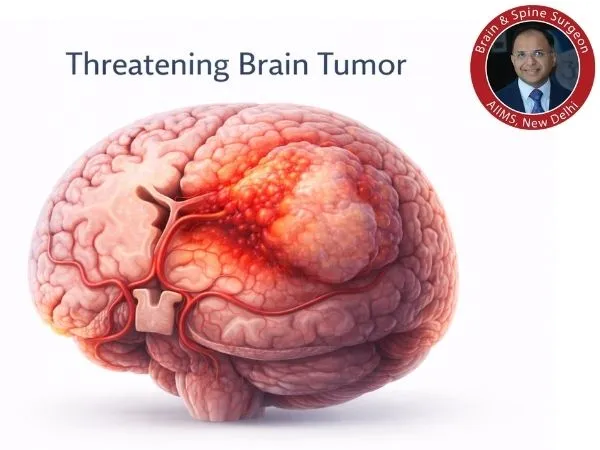
Brain tumours can be aggressive and potentially fatal, or they can be slow-growing and benign. When medical professionals refer to a brain tumour as “Threatening Brain Tumor,” they typically indicate one that is expanding rapidly, is putting pressure on important brain structures, or exhibits characteristics that may threaten life or neurological function.
Results can be greatly enhanced by prompt expert care and early warning sign identification. Everything a person needs to know is covered in this guide, from causes and symptoms to treatment and recovery.
What Forms a Severe Brain Tumour?
A Brain Tumour is considered threatening if it exhibits one or more of the following symptoms; this is a clinical description rather than a formal medical word.
Faster development
Considerable pressure (increased intracranial pressure) on the brain
Involvement of important brain regions
Behaviour that is malignant (cancerous)
Progressive decline in cerebral function
Depending on their size and location, both benign (non-cancerous) and malignant (cancerous) tumours can become dangerous.
Brain Tumour Types That Could Become Dangerous
Aggressive behaviour is more common in some tumours:
1. Brain tumours that are malignant
Astrocytoma anaplastica
Medulloblastoma
CNS primary lymphoma
2. Non-threatening but potentially dangerous tumours
If they squeeze important structures, even non-cancerous tumours might be hazardous.
(Big or strategically positioned) Meningioma
Macroadenoma of the pituitary
The vestibular schwannoma, or acoustic neuroma
A craniopharyngioma
Note: Whether a tumour is benign or malignant is frequently less important than its location.
Indications of a Dangerous Brain Tumour
Early symptom recognition is essential. Seek medical help if you observe:
Typical Signs
An ongoing or getting worse headache
Headache and vomiting in the early morning
Frequent vomiting without a gastrointestinal ailment
Seizures with a recent onset
Increasing arm or leg weakness
Issues with vision or double vision
Speech or comprehension difficulties
Changes in behaviour or personality
Issues with memory
Loss of coordination or balance
Red Flag Signs (Needs Immediate Assessment)
A sudden, intense headache
Frequent seizures
Changes in consciousness
Quick deterioration of the nervous system
Severe nausea and drowsiness
What Makes a Brain Tumour Highly Risky?
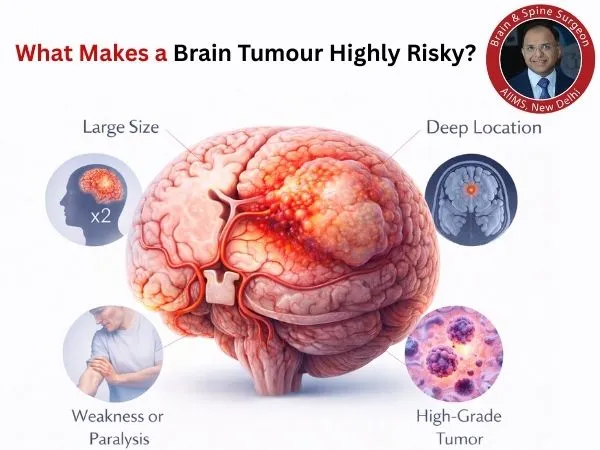
Brain pressure and the bulk effect are the key reasons why a tumour becomes harmful.
Mechanisms
1. Increased ICP (intracranial pressure)
The skull is a sealed container. Pressure increases as the tumour grows.
2. Compression of the Brain
Vital centres that regulate speech, movement, and breathing may be impacted.
3. Edema (swelling) of the brain
Tumours frequently result in surrounding swelling, which exacerbates symptoms.
4. The condition of hydrocephalus
Fluid buildup results from obstruction of the cerebrospinal fluid channels.
5. Malignant Behaviour
Nearby brain tissue gets invaded by malignant tumours.
Risk Elements
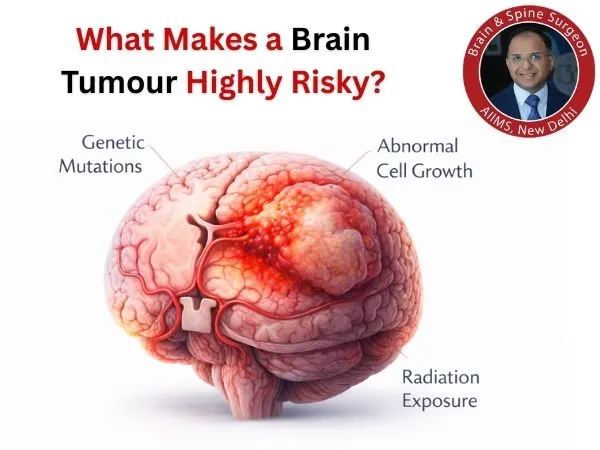
The majority of Brain Tumours have no known root cause, although the following factors raise the risk:
Previous head radiation exposure
Some genetic disorders
Family history (infrequent)
Growing older (for some tumours)
Immune system weakness
How Can a Dangerous Brain Tumour Be Identified?
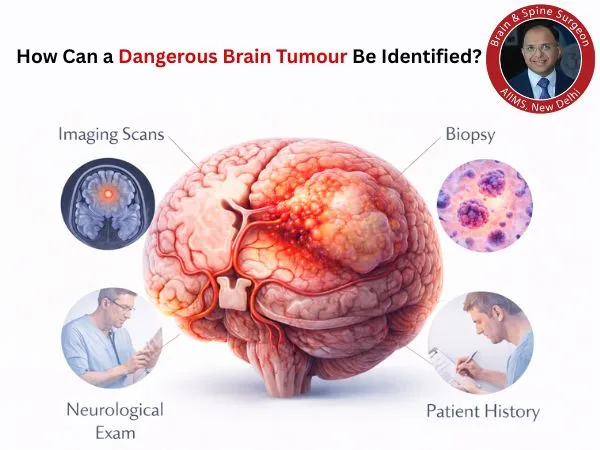
A precise and timely diagnosis is crucial.
Step-by-Step Assessment
1. Clinical Assessment
Neurological impairments are assessed by a neurosurgeon.
2. The Gold Standard MRI Brain
Displays the size of the tumour
Where/Location
Edema surrounding
Pattern of contrast enhancement
3. A CT scan
Helpful in case of an emergency.
4. Functional MRI and MR Spectroscopy
Aids in surgical planning and tumour biology characterisation.
5. The biopsy
Verifies the nature and grade of the tumour.
Options for Treatment
Tumour type, size, location, and patient condition all affect treatment.
1. Emergency Management (if there is a lot of pressure)
Steroids for edema reduction
Medications that prevent seizures
CSF diversion in the event of hydrocephalus
ICU monitoring when necessary
2. Surgery for Brain Tumours
The first and most crucial step is frequent Surgery for Brain Tumours.
Objectives of Surgery
Maximum safe tumour excision
Reduction of cerebral pressure
Tissue diagnosis
Reduction of symptoms
Current neurosurgery makes use of:
Using an operating microscope
Navigating Neurones
Monitoring during surgery
Endoscopic methods (for certain tumours)
3. Treatment with Radiation
When to use it:
The tumour is cancerous.
Tumour leftovers
The tumour cannot be operated on.
Recurrence happens.
Types consist of:
Traditional radiotherapy
Stereotactic radiosurgery with a CyberKnife or Gamma Knife
4. Targeted treatment and chemotherapy
Frequently applied to malignant tumours like lymphomas and gliomas.
5. Recovery
Recovery following therapy could involve:
Physical therapy
Speech therapy
Cognitive recovery
Occupational therapy
Prognosis: Can a Dangerous Brain Tumour Be Cured?
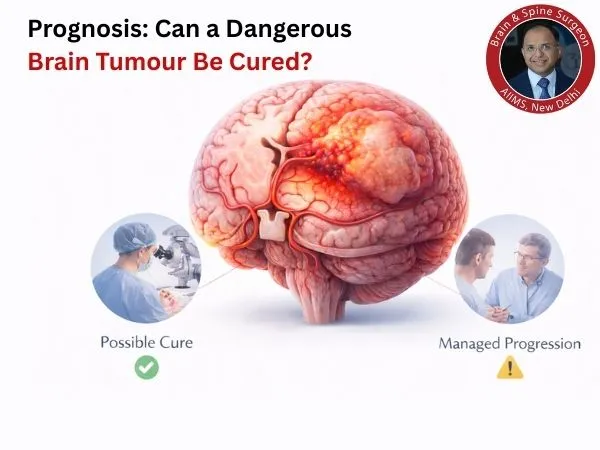
Several things determine the outcome:
Type and grade of tumour
Loaction
Completeness of the removal
Age and health of the patient
Reaction to treatment
Overall Outlook
Surgery can treat many benign tumours.
Certain cancerous growths can be managed for years.
Early detection greatly increases life expectancy and quality of life.
Important: With contemporary neurosurgical care, even aggressive tumours can frequently be successfully controlled.
Can Brain Tumours Be Prevented?
Although prevention of Brain Tumours cannot be ensured, recommended precautions include:
Prevention of needless radiation exposure.
Protect general health
Frequent health examinations if at high risk
Early assessment of neurological symptoms
When Is the Right Time to See a Neurosurgeon?
Seek immediate advice if you or a loved one has:
Headaches that don’t go away
Seizures for the first time
Increasing weakness
Speech or vision issues
Modifications in behaviour
MRI revealing a brain lesion
Early professional assessment can save lives.
FAQ’s
1. Why is a brain tumour dangerous?
When a tumour grows quickly, increases brain pressure, compresses important areas, or exhibits malignant behaviour, it becomes dangerous.
2. Are all tumours in the brain malignant?
No, a lot of brain tumours are harmless. However, depending on their location and size, even benign tumours might pose a threat.
3. What is a dangerous brain tumor’s initial symptom?
An early warning symptom is frequently a persistent, worsening headache, particularly when accompanied by morning vomiting or new seizures.
4. Is it possible to heal a dangerous brain tumour?
Many are successfully treatable, particularly if caught early. After surgery, benign tumours frequently have very good results.
5. How quickly do harmful brain tumours spread?
The rate of growth varies greatly. Aggressive tumours like Glioblastoma can spread in a matter of weeks to months, while others develop slowly over years.
6. Is surgery for brain tumours dangerous?
Although there is danger associated with all brain surgery, contemporary neurosurgical methods have greatly increased safety and results in skilled facilities.
7. When is emergency care necessary?
Care must be given right away if there are:
Frequent vomiting
Terrible headache accompanied by fatigue
Abrupt weakness
Changes in consciousness
Several seizures
Last Thought
If detected early and treated by a skilled neurosurgery team, a Threatening Brain Tumor is a serious but frequently curable condition. Neurological complaints that persist should never be disregarded. A timely MRI Brain assessment and consultation with a professional can save a life.
Consult a neurosurgeon right away if you or a loved one exhibits any warning signs of a Brain Tumour.