


A rare tumour of the spinal cord, spinal ependymoma can affect both adults and children, though how it develops and is treated may vary depending on the age group. Delays in diagnosis can result in severe neurological complications, even though they are frequently slow-growing and treatable.
This guide provides a straightforward, patient-friendly explanation of spinal ependymoma, emphasising the symptoms, diagnosis, distinctions between adults and children, and the most recent methods of therapy.
Spinal Ependymoma: What Is It?
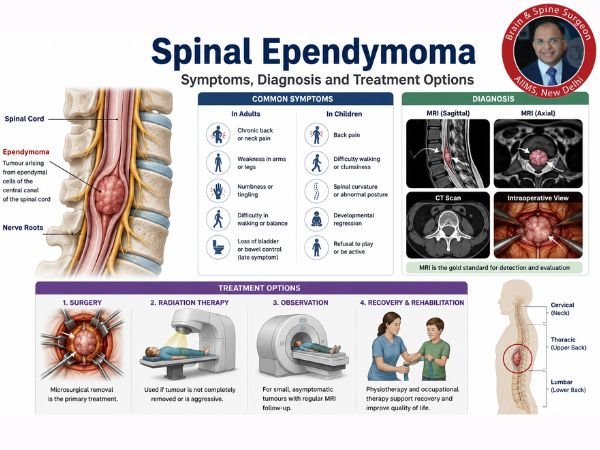
A tumour called spinal ependymoma develops from the ependymal cells lining the spinal cord’s central canal. It is among the most prevalent intramedullary (found inside the spinal cord) tumours.
Important Points:
- Typically benign or low-grade
- Slow-growing but capable of compressing nerves
- Occurs in patients of all ages
- Frequently treatable with good results
Adults vs. Children with Spinal Ependymoma
Early detection and treatment of this illness depend on an understanding of how it varies by age.
In Adults:
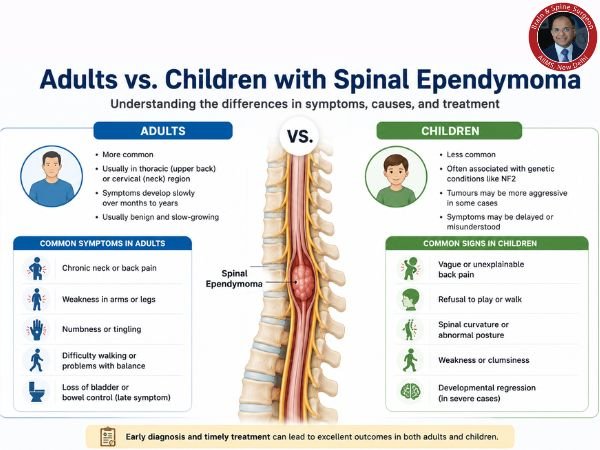
- The most prevalent spinal cord tumour
- Usually found in the thoracic (upper back) or cervical (neck) regions
- The symptoms appear gradually over several months to years
In Kids:
- Less frequent but more difficult
- Frequently linked to hereditary disorders such as Neurofibromatosis Type 2 (NF2)
- In certain instances, tumours may act more aggressively
- Symptoms could be delayed or incorrectly understood
Spinal Ependymoma Types
Intramedullary Ependymoma
- Most prevalent in adults
- Situated within the spinal cord
Myxopapillary Ependymoma
- Common in teenagers and young adults
- Located in the lumbar region of the lower spine
Anaplastic Ependymoma
- Uncommon and more aggressive
- Needs intensive care
Spinal Ependymoma Symptoms
The location and size of the tumour determine the symptoms, which may vary slightly between adults and children.
Typical Adult Symptoms:
- Chronic neck or back discomfort
- Progressive weakening in the legs or arms
- Tingling or numbness
- Walking difficulties or problems with balance
- Loss of control over one’s bowels or bladder (late symptom)
Typical Signs in Kids:
- Back pain that cannot be described
- Refusal to play or go for a walk
- Spinal curvature or abnormal posture
- Weakness or clumsiness
- Regression in development (in extreme circumstances)
Note: Children often exhibit mild early indications, therefore fast evaluation is essential.
Risk Factors and Causes
Although the precise cause is yet unknown, the following factors may raise the risk:
- Genetic conditions, particularly NF2
- The spinal cord’s aberrant cell growth
- No recognised lifestyle factors associated
Spinal Ependymoma Diagnosis
Preventing long-term consequences requires prompt and correct diagnosis.
Important Diagnostic Instruments:
Magnetic Resonance Imaging (MRI)
- The gold standard for spinal tumour detection
- Provides precise pictures of the location and size of the tumour
CT Scan
- Could aid in determining bone involvement
A Biopsy
- Verifies the kind and grade of the tumour
Neurological Assessment
- Assesses sensitivity, strength, and reflexes
Treatment Options
Age, tumour type, and neurological status all influence the course of treatment.
1. Primary Treatment: Surgery
- The preferred course of treatment is microsurgical tumour removal
- The goal is total removal while maintaining spinal cord function
- In both adults and children, results are typically outstanding
2. Radiation Treatment
Suggested if:
- The tumour is not entirely eliminated
- The tumour is persistent or aggressive
- Used carefully in kids to reduce long-term effects
3. Observation
- Certain individuals have little, asymptomatic tumours
- Frequent MRI follow-up is necessary
4. Recovery
- Occupational therapy and physiotherapy
- Supporting children’s growth and development is very crucial
Prognosis: What Can Be Expected?
In Adults:
- Excellent prognosis if the tumour is removed entirely
- Low rates of recurrence
In Kids:
- Positive results from early intervention
- Long-term monitoring is necessary because of growth and development variables
Potential Issues
- Recurrence of the tumour
- Sensory loss or weakness
- Deformities of the spine (particularly prevalent in youngsters)
- Complications following surgery
When Is It Time to See a Physician?
Get medical help if you observe:
- Back discomfort that is ongoing or getting worse
- Limb weakness
- Walking with difficulty
- Alterations in bowel or bladder function
- Any odd symptoms that impact a child’s posture or movement
In Conclusion
When detected early, spinal ependymoma is a curable illness with favourable results for both adults and children. Recovery and quality of life can be greatly enhanced by being aware of symptoms and seeking prompt advice from a skilled neurosurgeon.
Do not put off getting professional medical help if you or your child has ongoing neurological issues.
FAQ’s
1. Are children and adults with spinal ependymoma different?
Indeed, even though the tumour type is similar, children’s growth may cause differences in symptoms, progression, and therapeutic considerations.
2. Is there a treatment for spinal ependymoma?
Complete surgical removal often results in a cure, particularly if it is discovered early.
3. Can kids recover completely from treatment?
Indeed, a lot of kids make a full recovery, especially if they receive early diagnosis and appropriate treatment.
4. Are kids safe from radiation?
Because of the possible long-term effects, children should only be exposed to radiation when absolutely required.
5. How long does it take to recuperate from surgery?
Recuperation differs:
- Adults: Several weeks to several months
- Children: Because of developmental factors, it could take longer
6. Does spinal ependymoma recur?
Regular follow-up MRI scans are crucial because recurrence is a possibility.
7. Are these tumours malignant?
There are uncommon aggressive variants, although the majority are benign or low-grade.
Sources
- https://www.ncbi.nlm.nih.gov/books/NBK538244/
- https://pmc.ncbi.nlm.nih.gov/articles/PMC5705940/
- https://pubmed.ncbi.nlm.nih.gov/42264664/
- https://pmc.ncbi.nlm.nih.gov/articles/PMC10704349/
- https://pubmed.ncbi.nlm.nih.gov/23575076/
- https://pubmed.ncbi.nlm.nih.gov/38555652/
- https://www.ncbi.nlm.nih.gov/books/NBK65935/
- https://pmc.ncbi.nlm.nih.gov/articles/PMC10731541/