Microvascular Decompression (MVD) Surgery: Surgical Cure for Facial Pain
Severe facial pain can be extremely distressing for individuals. For those suffering from trigeminal neuralgia, even basic daily tasks like brushing teeth, washing the face, chewing, talking, or feeling a gentle breeze can lead to sudden and intense electric shock-like pain.
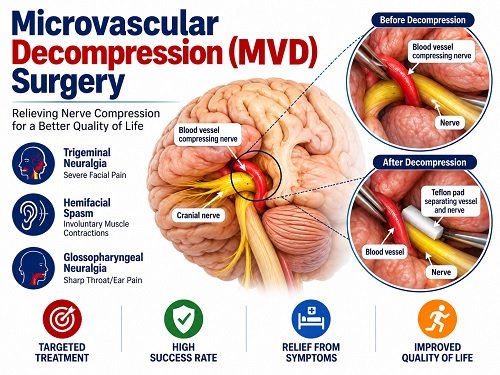
Although medications are typically the initial approach, they may not be effective for everyone or could result in troublesome side effects. In some cases, Microvascular Decompression (MVD) surgery can provide prolonged relief by addressing the root cause of the pain rather than just masking the symptoms.
MVD is widely recognized as a significant surgical choice for patients experiencing classic trigeminal neuralgia due to neurovascular compression, especially when medications are not working well or are poorly tolerated. This procedure involves alleviating pressure on the trigeminal nerve caused by a nearby blood vessel.
This guide covers all the essential information that patients and their families should be aware of regarding Microvascular Decompression surgery for facial pain, including who might benefit from it, the surgical process, potential risks, recovery period, and anticipated outcomes.
Microvascular Decompression (MVD) Surgery: What is it?
Microvascular Decompression (MVD) Surgery, known as MVD surgery, is a type of neurosurgical procedure carried out to alleviate abnormal pressure resulting from a blood vessel pressing on a cranial nerve.
MVD is primarily used to address trigeminal neuralgia, a condition affecting the trigeminal nerve, which is responsible for transmitting sensations from the face to the brain.
In individuals with classical trigeminal neuralgia, a vein or artery may be situated close to the trigeminal nerve near its junction with the brainstem. The pulsations of this blood vessel can cause irritation or compression of the nerve, leading to the transmission of abnormal pain signals.
During the MVD surgery, the surgeon locates the problematic blood vessel and gently moves it away from the nerve. A thin protective material may be inserted between the vessel and nerve to prevent them from touching again. The primary objective is to alleviate the nerve’s pressure while safeguarding its integrity.
Trigeminal Neuralgia: What is it?
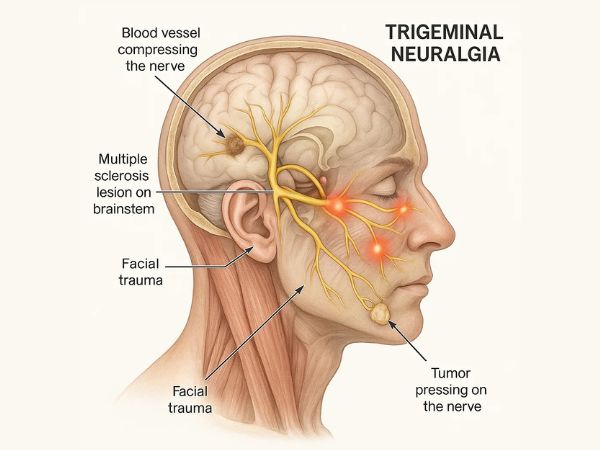
Trigeminal neuralgia is commonly known as one of the most intense facial pain conditions. The pain usually manifests on a single side of the face and can be likened to:
- A sudden jolt of electricity
- A sharp, piercing feeling
- Intense, shooting pain
- Severe facial twitches
- Recurring episodes of severe pain
The trigeminal nerve consists of three primary divisions that provide feeling to various facial regions:
- Ophthalmic branch (V1): Forehead and upper portion of the face
- Maxillary branch (V2): Cheek and upper jaw
- Mandibular branch (V3): Lower jaw and bottom part of the face
The pain may impact one or multiple of these areas.
Frequent Causes of Facial Pain
Episodes of trigeminal neuralgia could be initiated by routine actions like:
- Brushing teeth
- Cleansing the face
- Putting on makeup
- Shaving
- Eating or biting
- Consuming beverages
- Conversing
- Smiling
- Touching a specific facial area
- Being exposed to wind or chilly air
As these attacks can happen repeatedly and unexpectedly, this ailment can greatly impact activities such as eating, talking, working, sleeping, and overall well-being.
How Can Facial Pain be Triggered by a Blood Vessel?
The brainstem is a region where numerous crucial cranial nerves originate from the brain. In certain individuals, a nearby artery or vein comes into close proximity with the trigeminal nerve.
Visualize the nerve as a cable conducting electricity. If a throbbing blood vessel continuously pushes against or agitates the cable, the nerve might start sending irregular signals.
Over time, this irregular nerve activity can result in intense episodes of facial pain.
This phenomenon is known as neurovascular compression.
Microvascular decompression (MVD) surgery aims to rectify this mechanical issue by separating the blood vessel from the trigeminal nerve. Unlike procedures that purposely harm or obstruct pain-transmitting nerve fibers, MVD is crafted to safeguard the nerve while alleviating the compression source.
Who Could Benefit From Microvascular Decompression (MVD) Surgery?
Not all individuals experiencing facial pain are suitable candidates for MVD surgery. Accurate diagnosis is crucial as facial pain can stem from various sources.
MVD surgery might be an option for individuals who:
- Exhibit Classic Trigeminal Neuralgia
- The symptoms displayed by the patient should align with classic trigeminal neuralgia, especially sudden, intense, shock-like episodes.
- Find Insufficient Relief with Medications
- Typically, medications are the initial treatment choice. Surgery could be considered if medicines no longer effectively manage the pain.
- Encounter Significant Adverse Effects from Medications
- Certain patients face side effects that hinder long-term medication use.
- Display Evidence of Neurovascular Compression
- Utilizing MRI and specialized imaging can aid in identifying a blood vessel that is in contact with or pressing on the trigeminal nerve.
- Nevertheless, imaging results should always be assessed in conjunction with the patient’s symptoms and clinical evaluation. Not every blood vessel observed touching a nerve on a scan is necessarily the root cause of the pain.
- Possess Good Overall Health for Surgery
- Given that MVD is a major neurosurgical intervention conducted under general anesthesia, the patient’s general well-being and suitability for surgery need to be evaluated meticulously.
How Is Microvascular Decompression Surgery Carried Out?
The specific method may differ depending on the patient’s body structure and surgical discoveries. Typically, the process includes the subsequent stages.
- Step 1. Administration of General Anesthesia
The individual is given general anesthesia to remain unconscious during the entire procedure. - Step 2. Making a Small Cut Behind the Ear
The surgeon creates a cut behind the ear on the side experiencing facial pain. - Step 3. Creating a Small Opening in the Skull
A minor opening, referred to as a craniotomy or craniectomy depending on the approach used, is made to reach the region surrounding the trigeminal nerve. - Step 4. Accessing the Trigeminal Nerve
Utilizing microsurgery methods and specialized tools, the surgeon cautiously accesses the spot where the trigeminal nerve exits the brainstem. - Step 5. Detecting the Compression
The surgeon identifies an artery, vein, or other element that is significantly compressing or irritating the nerve. - Step 6. Relieving the Compression on the Nerve
The vessel responsible is delicately repositioned away from the nerve whenever feasible. A small cushioning material might be inserted to maintain separation. - Step 7. Closing the Surgical Area
The surgical site is closed, and the patient is moved to the recovery section for observation.
The surgery typically lasts a few hours, although the timeframe varies based on individual anatomy and surgical intricacy.
What Sets MVD Apart From Other Treatments for Facial Pain?
Various procedures exist for trigeminal neuralgia that doesn’t respond to medication. These options can involve radiosurgery and interventions that purposely disrupt or harm a portion of the trigeminal pain pathway.
MVD stands out due to its main goal of eliminating the vascular compression source without deliberately causing harm to the trigeminal nerve.
This aspect can be particularly appealing for appropriate, medically eligible individuals with typical trigeminal neuralgia and a clear neurovascular conflict.
According to guidelines, there is significant evidence supporting the lasting effectiveness of MVD for classic trigeminal neuralgia, although outcomes can differ from person to person. In a review of evidence, sustained relief from pain without the need for medication in the long term was noted in various studies, with MVD demonstrating the most favorable surgical results for eligible patients with classic trigeminal neuralgia.
What Are the Advantages of Microvascular Decompression Surgery?
Benefits of MVD may include:
- Prolonged Pain Alleviation: Many individuals witness significant enhancement in facial pain following a successful operation.
- Quick Relief Post-Surgery: Some patients observe immediate or prompt pain relief after the procedure.
- Addressing the Root Compression: MVD targets the neurovascular compression accountable for numerous instances of classical trigeminal neuralgia.
- Nerve Preservation: In contrast to damaging methods, MVD is designed to maintain normal trigeminal nerve function.
- Decreased Reliance on Drugs: Effective surgery might enable some patients to lessen or eventually discontinue pain medication under medical supervision.
According to studies, around 8 to 9 out of 10 patients encounter improvement shortly after MVD, with ongoing positive outcomes for many patients in the long term. Nonetheless, the results are contingent on factors like the diagnosis, type of vascular compression, surgical discoveries, and duration of postoperative monitoring.
Can Microvascular Decompression (MVD) Surgery Eliminate Facial Pain Permanently?
MVD surgery can offer prolonged and at times complete alleviation, however, no surgical procedure can assure a permanent solution for all patients.
Certain individuals may stay without pain for numerous years. On the other hand, in some cases, facial pain might come back after a period of progress. The reappearance of pain can be due to alterations in the connection between the nerve and nearby blood vessels or other factors associated with the primary condition.
Hence, it is more precise to characterize MVD as a process that holds the potential for lasting, extended pain relief, rather than pledging an assured remedy in every situation.
Research conducted over extended periods and summaries of evidence demonstrate that a relapse is feasible even following a successful initial surgery.
What Are the Dangers of Microvascular Decompression Surgery?
MVD is a surgical procedure within the skull that should only be carried out following a thorough conversation about the possible advantages and dangers.
Potential risks involve:
- Hemorrhaging
- Infection
- Leakage of cerebrospinal fluid (CSF)
- Head pain
- Alterations in hearing or hearing loss
- Numbness in the face or changes in facial sensation
- Problems with balance or feeling dizzy
- Harm to nearby nerves or blood vessels
- Stroke
- Complications due to anesthesia
- Persistent facial discomfort
- Return of facial pain
- Uncommon, severe complications, such as mortality
The actual chance for a specific patient is influenced by various factors, such as age, overall health, physical structure, existing medical conditions, and surgical discoveries. Available recommendations and materials for patients portray MVD as extremely effective, but underscore that it is still a significant operation with significant potential risks.
Post MVD Surgery Monitoring Process
Following the surgical procedure, the patient is carefully observed during their stay in the hospital, although the length of this stay can vary.
During this time, the medical team keeps a close watch on:
- Level of alertness and neurological function
- Blood pressure and other essential signs
- Sensation and movement in the face
- Hearing and equilibrium
- State of the incision wound
- Occurrence of headaches or nausea
- Symptoms indicating infection or leakage of cerebrospinal fluid
- Reaction to facial pain
If necessary, pain relief medication might be administered to address any discomfort associated with the surgical cut.
While some individuals may experience immediate relief from trigeminal neuralgia post-surgery, others might need some time before the final outcome becomes evident.
Recovery after MVD Surgery: What to Anticipate as a Patient
The recovery process varies from one individual to another.
In the initial days post-surgery, patients might encounter:
- Headache or soreness near the surgical cut
- Fatigue
- Stiffness in the neck
- Short-term queasiness
- Vertigo or balance issues
As the weeks progress, energy levels typically increase gradually.
Patients are advised to adhere to the recommendations of their surgeon concerning:
- Care of the wound
- Showering and cleanliness
- Physical movements
- Avoiding lifting heavy items
- Resuming work
- Driving
- Adjusting medications
- Attending follow-up appointments
It is crucial not to abruptly discontinue pain medications for trigeminal neuralgia without consulting a medical professional. The medical team will oversee any reduction in medication based on the patient’s recovery progress and pain management.
How Is MVD Distinct From Gamma Knife and Other Therapies?
Treatment for trigeminal neuralgia is personalized.
- Medication: Typically the initial step, medication can effectively manage pain in numerous patients.
- Microvascular Decompression: MVD is a surgical procedure aiming to alleviate neurovascular pressure while safeguarding the nerve.
- Stereotactic Radiosurgery: Radiosurgery is a non-invasive treatment utilizing precisely focused radiation like Gamma Knife radiosurgery. Pain relief might take time to manifest, and its effects differ from MVD.
- Percutaneous Procedures: Techniques like balloon compression, radiofrequency thermocoagulation, and glycerol-based methods function differently and may intentionally impact pain-conveying nerve fibers. They can be beneficial for specific patients but may offer distinct pain relief, recurrence, and sensory side effects.
Selecting the most suitable treatment depends on various factors such as the type of trigeminal neuralgia, MRI results, age, general health, past treatments, patient preferences, and the pros and cons of each approach.
How Do Doctors Determine If MVD Is Appropriate for You?
Before suggesting surgery, a neurosurgeon typically evaluates:
- The specific facial pain pattern
- Duration and severity of symptoms
- Triggers for pain
- Response to medication
- Medication side effects
- MRI findings
- Evidence of neurovascular compression
- Past procedures
- Age and overall health
- Suitability for surgery
- Patient expectations and choices
An accurate diagnosis is crucial. Facial pain stemming from dental issues, sinus problems, temporomandibular disorders, post-herpetic neuralgia, migraines, or other neurological conditions may necessitate entirely different treatments.
Hence, it is important for patients not to assume that all severe facial pain is trigeminal neuralgia.
Preparation for Microvascular Decompression Surgery
Your medical team might recommend:
- Medical Assessment
- Imaging
- Medication Review
- Discussion on Expectations
An informed conversation assists patients and their families in making informed decisions.
Life After Successful MVD Surgery
For individuals experiencing considerable pain relief post-MVD, their quality of life can significantly improve.
Tasks that previously induced excruciating pain, like eating or speaking, may become more manageable.
However, continuous follow-up is crucial. Some patients might require ongoing monitoring, medication adjustments, or additional treatment if pain persists or reoccurs.
The objective is not solely to decrease pain levels but to aid patients in regaining confidence and resuming normal activities.
Key Points on Microvascular Decompression Surgery for Facial Pain
- MVD is a vital surgical treatment for specific patients with classical trigeminal neuralgia.
- It aims to alleviate pressure from a blood vessel compressing the trigeminal nerve.
- The procedure focuses on addressing the underlying neurovascular conflict while safeguarding the nerve.
- Numerous patients experience substantial and enduring pain relief.
- MVD is a significant brain surgery with potential risks that necessitate careful discussion.
- Not all patients with facial pain or trigeminal neuralgia are suitable candidates for MVD.
- Accurate diagnosis, suitable imaging, and meticulous patient selection are crucial.
- Recurrence is possible, even after successful initial pain relief.
- Treatment should always be personalized following consultation with an experienced neurosurgical team.
The Importance of Professional Assessment
Intense facial pain can significantly impact an individual’s capacity to eat, communicate, work, and function normally. However, finding the right solution depends on pinpointing the exact source of the pain.
For individuals struggling with challenging trigeminal neuralgia caused from neurovascular compression, Microvascular Decompression might provide a chance for significant and long-lasting pain alleviation.
Dr. Deepak Agrawal, a Neurosurgeon at AIIMS New Delhi, possesses vast expertise in intricate neurosurgery, microneurosurgery, and pain procedures for chronic pain relief. His website highlights his proficiency in microneurosurgery and managing pain, underscoring the importance of seeking specialized assessment when exploring advanced options for severe nerve-related pain.
A thorough evaluation can help determine whether MVD, medication, radiosurgery, or another treatment strategy is best suited for a particular patient.
To schedule an appointment or learn more about neurosurgical consultations, patients can refer to the AIIMS appointment information page.
Disclaimer: This content aims to provide general educational insights and should not substitute an individual medical consultation. The appropriateness of Microvascular Decompression surgery can solely be ascertained following a comprehensive medical assessment by a specialist.
FAQ’s
What does Microvascular Decompression (MVD) surgery involve?
Microvascular Decompression is a type of neurosurgical procedure designed to alleviate pressure caused by a blood vessel compressing a cranial nerve. In the case of trigeminal neuralgia, the surgery entails moving the responsible blood vessel away from the trigeminal nerve to lessen abnormal pain signaling.
Is MVD surgery a permanent solution for trigeminal neuralgia?
MVD surgery can offer complete and long-lasting pain relief for many patients, especially those with classical trigeminal neuralgia resulting from neurovascular compression. Nevertheless, it cannot assure a permanent cure for all patients as some may still experience persistent or recurring pain.
Who is an ideal candidate for MVD surgery?
Typically, candidates for MVD surgery are patients with classical trigeminal neuralgia, especially when medication proves ineffective or leads to significant side effects, and clinical evaluation indicates neurovascular compression. Additionally, the patient must be in good medical condition to undergo major surgery.
What is the success rate of MVD surgery?
MVD surgery boasts high success rates in appropriately selected patients. According to Cleveland Clinic, roughly 8 to 9 out of 10 individuals may experience improvement shortly after the surgery, with many continuing to benefit for years. However, outcomes may vary from person to person.
How long does Microvascular Decompression surgery typically last?
The duration of the surgery varies depending on the patient’s anatomy and the complexity of the procedure. Information provided by Cleveland Clinic suggests that the surgery usually lasts around two to three hours, although the surgical team can offer a more precise estimate for each case.
Will I experience facial numbness post MVD surgery?
While MVD aims to protect the trigeminal nerve and generally carries a lower risk of sensory changes compared to procedures that intentionally harm the nerve, there is still a possibility of facial numbness or altered sensation as a potential complication.
Is MVD considered a major surgical procedure?
Yes, MVD is classified as a major neurosurgical procedure that involves operating inside the skull under general anesthesia. Patients should be well-informed about both the potential advantages and risks before opting for treatment.
What are the primary risks associated with MVD surgery?
Potential risks encompass bleeding, infection, cerebrospinal fluid (CSF) leakage, hearing problems, facial numbness, stroke, recurrence of pain, and other rare yet severe neurological complications.
What is the typical recovery period following MVD surgery?
Recovery duration varies among individuals. Initial recovery occurs in the hospital over the first few days, while a return to full energy levels and normal activities may take several weeks. Patients will receive personalized recovery instructions from their surgeon based on their specific condition.
Can trigeminal neuralgia return after MVD surgery?
Yes, although MVD surgery can offer long-lasting relief, there is a possibility of recurrence after several months or years. Therefore, long-term follow-up is crucial.
Is an MRI scan necessary before undergoing MVD surgery?
An MRI scan is commonly utilized to assess the trigeminal nerve and nearby blood vessels, as well as to rule out other causes of facial pain. However, the decision to proceed with MVD surgery is based on a comprehensive clinical evaluation rather than solely on the MRI results.
Can MVD surgery be performed for all types of facial pain?
No, MVD surgery is not suitable for all forms of facial pain. It is primarily recommended when symptoms and evaluations support a diagnosis such as classical trigeminal neuralgia associated with neurovascular compression.
What sets MVD apart from Gamma Knife surgery for trigeminal neuralgia?
MVD is an open microsurgical procedure that physically alleviates pressure on the nerve, while Gamma Knife radiosurgery is a non-invasive treatment utilizing focused radiation and operating through a different mechanism. The choice between the two depends on the individual patient.
Will I be able to discontinue my trigeminal neuralgia medications post-surgery?
Following successful surgery, some patients may be able to reduce or stop their medication, but this decision should only be made under the supervision of the treating physician. Medications should not be abruptly discontinued without medical guidance.
When should I consider consulting a neurosurgeon regarding facial pain?
Specialist evaluation should be sought when facial pain is severe, recurrent, electric shock-like, triggered by routine activities, difficult to manage with medication, or significantly impacting one’s quality of life.