Authored by Dr. Deepak Agrawal, Neurosurgeon at AIIMS Delhi
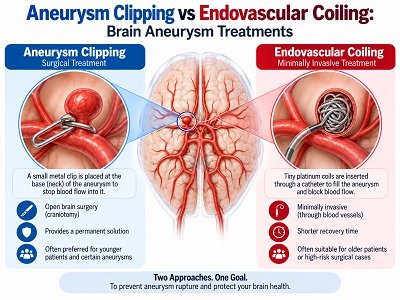
Two well-established treatments for a cerebral or brain aneurysm are aneurysm clipping and endovascular coiling. Both treatments are designed to halt blood flow into the aneurysm, thereby decreasing the chances of bleeding into the brain.
Determining whether brain aneurysm clipping or coiling is superior varies for each patient. Factors such as the aneurysm’s location, size, and shape, whether it has ruptured, the patient’s age and overall health, and the blood vessel anatomy all play a role in the treatment decision. Present recommendations stress the importance of personalized decision-making by specialists proficient in both surgical and endovascular approaches.
This guide explains the differences between aneurysm clipping and coiling, the mechanisms of each procedure, their benefits and drawbacks, the recovery process, and the factors doctors consider when selecting the most suitable treatment.
Brain Aneurysm: What is it?
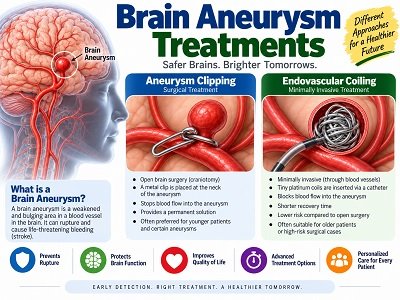
A brain aneurysm, also known as an intracranial or cerebral aneurysm, refers to a weakened section in the blood vessel wall within the brain. Gradually, this weakened area can protrude outward, creating a sac resembling a balloon.
Numerous brain aneurysms remain intact and might be incidentally detected during a brain scan conducted for a different purpose. However, certain aneurysms have the potential to enlarge or burst.
If a brain aneurysm bursts, it can trigger subarachnoid hemorrhage (SAH), a kind of stroke that can be life-threatening. A sudden and extremely intense headache, often described as the “worst headache of my life,” serves as a typical warning sign. Additional symptoms may involve nausea, vomiting, neck rigidity, loss of consciousness, seizures, weakness, vision issues, or disorientation.
Any abrupt and severe headache, sometimes referred to as a thunderclap headache, should be promptly addressed as a medical emergency. To understand more about severe cranial pain, learn when is headache dangerous.
Why is Treatment Necessary for a Brain Aneurysm?
Not all intact brain aneurysms demand immediate intervention.
Medical professionals evaluate the likelihood of a rupture in comparison to the dangers linked with treatment. Factors that might impact this choice include:
- Size of the aneurysm
- Location of the aneurysm
- Shape and structure of the aneurysm
- Growth of the aneurysm
- Presence of symptoms
- History of aneurysm rupture
- Family history of brain aneurysm or subarachnoid hemorrhage
- Patient’s age and overall health
- Smoking and hypertension
- General structure of the brain’s blood vessels
For some individuals, routine imaging and observation might be suitable. For others, preventative treatment could offer a more favorable balance of advantages and disadvantages.
Aneurysm Clipping versus Coiling: What Sets Them Apart?
To distinguish between the two methods:
- Aneurysm clipping:
- A neurosurgeon places a small metallic clamp at the base of the aneurysm to obstruct blood flow into it.
- Endovascular coiling:
- A specialist accesses the aneurysm internally through blood vessels with a slender catheter and fills it with small soft coils to obstruct blood flow into the aneurysm.
Both procedures share the same primary objective: to separate the aneurysm from the regular blood circulation to prevent rupture or re-bleeding.
Aneurysm Clipping Explanation
Aneurysm clipping is a precise surgical procedure conducted by a brain surgeon. You can read more about what to expect before and after brain surgery to better prepare for the intervention.
How does the process of aneurysm clipping function?
Throughout the clipping surgery:
- The patient is put under general anesthesia.
- The surgeon creates an opening in the skull to reach the brain.
- By utilizing microsurgical methods, the surgeon cautiously approaches the aneurysm.
- A small clip made of titanium or other compatible material is positioned at the base of the aneurysm.
- The clip stops blood flow into the aneurysm while ensuring the regular blood flow through the artery.
- The surgeon verifies the secure placement of the clip on the aneurysm.
- After the operation, the skull is closed.
Typically, the clip is left permanently in its position.
Advantages of aneurysm clipping:
One significant benefit of clipping is its ability to effectively block off the aneurysm from blood circulation for a lasting period.
Clipping can be especially advantageous for specific aneurysms based on factors such as:
- Location
- Shape
- Size
- Broad opening
- Connection with neighboring blood vessels
- Vascular branching
It can also be beneficial in cases where the aneurysm is challenging to reach or not suitable for endovascular therapy.
Limitations of aneurysm clipping:
Clipping is generally more intrusive than endovascular coiling as it involves surgery through a skull opening.
Potential issues to consider are:
- Extended recovery period
- Complications related to the surgical wound
- Possible harm to the brain or blood vessels
- Infection
- Hemorrhaging
- Stroke
- Seizures
- Adverse reactions to anesthesia
The actual risk level can vary significantly depending on the specific aneurysm and the patient’s overall health.
What Does Endovascular Coiling Involve?
Endovascular coiling is a minimally invasive procedure carried out from within the blood vessels. This technique is often discussed alongside other complex vascular treatments like those for arteriovenous malformations.
Instead of opening the skull, the physician utilizes the body’s blood vessels as a route to access the aneurysm.
How Does Aneurysm Coiling Function?
During coiling:
- The patient is typically administered anesthesia or sedation based on the situation.
- A small tube is inserted into an artery, often through the groin or wrist.
- The tube is carefully directed through the blood vessels towards the brain.
- A tiny tube is positioned inside the aneurysm.
- Small, flexible platinum coils are inserted into the aneurysm.
- The coils stimulate the formation of a clot within the aneurysm.
- This lessens or halts blood flow into the aneurysm.
- Imaging is employed to validate the treatment outcome.
For certain aneurysms, supplementary tools like balloon-assisted or stent-assisted methods might be employed. More intricate aneurysms might necessitate modern flow-diverting devices or alternative endovascular approaches.
Comparison between Aneurysm Clipping and Coiling
| Feature | Aneurysm Clipping | Endovascular Coiling |
|---|---|---|
| Approach | Open neurosurgery | Minimally invasive, through blood vessels |
| Skull opening | Required | Not usually required |
| Main treatment | Clip seals aneurysm neck | Coil fills aneurysm |
| Recovery | Usually longer | Usually shorter initial recovery |
| Invasiveness | More invasive | Less invasive |
| Long-term imaging | May still be recommended | Particularly important |
| Retreatment | Generally less common for some aneurysm | Maybe required in some cases |
| Suitable for | Selected aneurysm location/spaces | Selected aneurysm location/spaces |
| Best choice | Depends on individual anatomy | Depends on individual anatomy |
Crucial: There is no one-size-fits-all “optimal” treatment. The most secure and efficient choice varies based on the specific aneurysm and patient.
Deciding Between Clipping and Coiling: Which Option is Superior?
This is a frequently asked query by patients.
The response is:
No single treatment is universally superior for all patients.
The approach to treating aneurysms has become more personalized. Instead of viewing clipping and coiling as universally applicable options, specialists evaluate the aneurysm’s structure and the patient’s overall health.
Clipping may be preferred when:
- The aneurysm has a wide or intricate neck.
- The location allows for favorable surgical access.
- Achieving a lasting surgical outcome is crucial.
- The aneurysm’s structure is not conducive to coiling.
- The patient requires open surgery for another condition in the same area.
Coiling may be favored when:
- The aneurysm is suitable for catheter-based therapy.
- A less invasive approach is desired.
- The patient’s age or health condition makes open surgery less favorable.
- The aneurysm’s position makes endovascular treatment advantageous.
- The anatomy enables effective and long-lasting embolization.
These are general guidelines, not strict rules. A team of experts in cerebrovascular care should evaluate each case on an individual basis.
What happens if the Aneurysm has Already Burst?
If a brain aneurysm has ruptured, it is considered a critical medical situation.
The bleeding could result in subarachnoid hemorrhage, which might cause complications like:
- Rebleeding
- Swelling of the brain
- Hydrocephalus
- Vasospasm and delayed reduction of blood flow to the brain
- Seizures
- Stroke (Explore details on brain stroke causes & symptoms)
- Cognitive or neurological issues
It is generally recommended to secure the aneurysm as swiftly and safely as possible to minimize the chances of further bleeding. According to the 2023 AHA/ASA guideline, it is advised to promptly identify and treat the ruptured aneurysm, preferably within 24 hours if feasible.
The decision between using clips or coils relies on the anatomy of the aneurysm, the patient’s neurological status, age, overall health condition, and the available expertise.
What Occurs Prior to Brain Aneurysm Treatment?
Before suggesting surgery or coiling, the medical team might conduct various examinations.
- Computed Tomography (CT) scan
- A CT scan can rapidly identify bleeding, especially if a burst aneurysm is suspected.
- CT angiography (CTA)
- CTA offers comprehensive visuals of the blood vessels and can assist in pinpointing the aneurysm’s position, dimensions, and structure.
- Magnetic Resonance Imaging/Magnetic Resonance Angiography (MRI/MRA)
- MRI and MRA could be utilized in specific cases, particularly for the assessment or monitoring of intact aneurysms.
- Digital subtraction angiography (DSA)
- DSA produces highly detailed images of the brain’s blood vessels and is frequently employed when precise vascular structure is required for treatment strategy.
The suitable imaging method is determined by the individual’s medical condition. Advanced neuroimaging forms an integral part of cerebrovascular diseases and brain haemorrhage evaluation.
Recovery post aneurysm clipping
Recovery post aneurysm clipping can differ based on whether the aneurysm was ruptured and the patient’s neurological state.
Post-clipping, individuals might encounter:
- Head pain
- Fatigue
- Short-term scalp pain
- Exhaustion
- Focus issues
- Neck pain
Individuals with an uncomplicated unruptured aneurysm may have a speedier recovery compared to those recuperating from a ruptured aneurysm and subarachnoid hemorrhage.
Subsequent check-ups and scans are crucial to evaluate the treatment outcome and general brain well-being.
Recovery Following Endovascular Coiling
Recovery from endovascular coiling is typically faster compared to procedures that involve opening the skull.
Patients may experience:
- Temporary discomfort at the site where the catheter was inserted
- Fatigue
- Headache
- Bruising at the insertion site
Patients treated for a ruptured aneurysm might require extended hospitalization due to the brain damage caused by subarachnoid hemorrhage, which plays a significant role in the recovery process, rather than just the procedure itself.
Risks Associated with Brain Aneurysm Treatment
Both clipping and coiling procedures are specialized and carry potential risks, such as:
- Stroke
- Bleeding
- Injury to blood vessels
- Infection
- Seizures
- Blood clots
- Neurological issues
- Aneurysm recurrence or residual presence
- Complications related to anesthesia
- Severe cases could lead to death
The likelihood of these risks occurring depends on various factors, including whether the aneurysm has ruptured, its location and structure, the patient’s age and health condition, and the complexity of the procedure.
Therefore, seeking treatment at a proficient cerebrovascular center that is skilled in both surgical and endovascular methods is crucial.
Can a Brain Aneurysm Return After Treatment?
Treatment significantly reduces the risk of a rupture, but ongoing monitoring is essential.
Following coiling, some aneurysms may still show filling, recurrence, or reopening, requiring additional treatment on occasion.
After clipping, recurrence is less common for many aneurysms, although surveillance may be needed for residual aneurysms or new ones.
The 2023 AHA/ASA guidelines stress the importance of follow-up imaging post-aneurysm treatment to detect remnants, recurrence, regrowth, and changes in other known aneurysms.
Can an Unruptured Brain Aneurysm Be Monitored?
Certainly.
Not all unruptured aneurysms necessitate immediate surgery or coiling.
For some patients, regular monitoring through CT angiography, MR angiography, or other suitable imaging methods may be recommended.
Monitoring could be considered when the risk associated with treatment outweighs the potential rupture risk of the aneurysm.
However, an aneurysm that grows, changes shape, or causes symptoms may require treatment, a decision that should be made following a thorough evaluation of the aneurysm and the patient’s specific risk factors.
How to Lower the Risk of Brain Aneurysm Complications
While some risk factors are unchangeable, certain lifestyle and medical factors can be addressed to reduce risks:
- Manage blood pressure
- Quit smoking (Learn more about the impact of smoking on cognitive function)
- Maintain a healthy lifestyle
- Adhere to imaging schedules as advised by your doctor
- Understand your family medical history
When to Seek Emergency Medical Attention?
If you experience any of the following symptoms, seek immediate medical help:
- Sudden, severe headache
- “Thunderclap” or “worst-ever” headache
- Loss of consciousness
- New weakness or numbness
- Difficulty speaking
- Sudden vision issues
- Seizure
- Severe nausea and vomiting with a sudden headache
- Sudden neck stiffness accompanied by a severe headache
A ruptured brain aneurysm can be life-threatening, emphasizing the importance of prompt diagnosis and treatment.
Final Thoughts: Choosing Between Clipping and Coiling Is a Personal Decision
Aneurysm clipping and endovascular coiling are not in competition, as one is not definitively superior to the other. They are complementary methods that allow doctors to choose the most suitable treatment for each patient’s aneurysm.
Clipping involves a direct surgical closure of the aneurysm, while coiling treats the aneurysm internally without the need to open the skull. The decision on which method to use depends on various factors such as the aneurysm’s structure, location, whether it has ruptured, the patient’s condition, and the expertise of the medical team.
For individuals with a ruptured aneurysm, prompt treatment is crucial as rebleeding can have severe consequences. Current AHA/ASA guidelines stress the importance of swift treatment at facilities with skilled cerebrovascular and neurocritical care teams.
If you or a loved one has been diagnosed with a brain aneurysm, it is advisable to consult with a neurosurgeon and endovascular specialist to explore the available treatment options. A thorough assessment of the patient’s scans and overall health is vital before deciding between clipping, coiling, or another treatment approach.
Dr. Deepak Agrawal, a Neurosurgeon at AIIMS Delhi, offers specialized care for intricate neurological and cerebrovascular conditions. A personalized assessment can assist patients in understanding their diagnosis, treatment choices, and anticipated recovery.
Medical Disclaimer: This guide is meant for general educational purposes and should not be used as a substitute for a proper evaluation, diagnosis, or treatment advice from a qualified medical practitioner. Treatment decisions for brain aneurysms should be made based on individual imaging, clinical observations, and consultation with an experienced cerebrovascular specialist.
FAQ’s
1. Is brain aneurysm clipping more effective than coiling?
It’s not necessarily the case that one is superior to the other. Both methods are well-established treatments. The best choice depends on factors such as the aneurysm’s size, shape, location, neck anatomy, whether it has ruptured, and the patient’s overall health.
2. Is coiling a safer option compared to clipping?
Coiling is considered less invasive since it typically does not require skull opening. However, it may not always be the safest choice for every aneurysm. The safest approach varies depending on the individual case and the expertise available for treatment.
3. Which treatment allows for a quicker recovery—clipping or coiling?
Endovascular coiling generally leads to a swifter initial recovery as it does not necessitate a craniotomy. However, the recovery process after a ruptured aneurysm is heavily influenced by the severity of brain damage caused by the hemorrhage.
4. How long does brain aneurysm clipping surgery typically last?
The duration of the surgery varies based on the aneurysm’s location and complexity. Some procedures might take several hours. Your neurosurgical team can offer a more specific estimate tailored to your case.
5. What is the usual duration of aneurysm coiling?
The time taken for coiling varies depending on the complexity of the aneurysm and the required devices. Complex aneurysms may necessitate longer procedures.
6. Can a brain aneurysm be treated without traditional surgery methods?
Yes, endovascular procedures like coiling can address many aneurysms without the need to open the skull. Other endovascular devices might also be considered for specific aneurysms.
7. Do aneurysm coils remain permanently in the brain?
The coils are designed to stay inside the aneurysm and encourage clot formation that obstructs blood flow into it.
8. Are aneurysm clips intended to be permanent?
In most cases, the clip is meant to remain in place permanently to seal off the aneurysm.
9. Is there a possibility of a brain aneurysm recurring after coiling treatment?
Sometimes, there can be residual filling or recurrence of an aneurysm after coiling. This underscores the importance of follow-up imaging.
10. Can a clipped aneurysm reappear?
While recurrence after clipping is possible, it is uncommon for many aneurysms. Nonetheless, follow-up remains crucial, especially for patients with residual aneurysms or additional aneurysms.
11. Can an unruptured brain aneurysm be managed?
Yes, depending on the estimated risk of rupture and treatment, an unruptured aneurysm may be treated with clipping, endovascular therapy, or monitored with regular imaging.
12. What is the primary symptom of a ruptured brain aneurysm?
A sudden, intense headache, often described as a thunderclap headache or the most severe headache one has experienced, is a typical symptom. It may be accompanied by vomiting, neck stiffness, loss of consciousness, seizures, or neurological issues.
13. Is brain aneurysm surgery risky?
Both clipping and coiling carry risks, such as stroke, bleeding, and neurological complications. However, an untreated aneurysm rupture can also pose a life-threatening situation. The decision involves carefully weighing the inherent risk of the aneurysm against the treatment risk.
14. What are some key questions to ask the neurosurgeon?
Relevant questions include:
- Has my aneurysm ruptured?
- Where is the aneurysm located?
- What are its size and shape?
- What is my estimated risk of rupture?
- Do I require treatment or monitoring?
- Am I suitable for clipping, coiling, or another treatment?
- Why do you recommend one treatment over another?
- What are the risks specific to my case?
- How long will recovery take?
- What follow-up scans will be necessary?
- Is there a possibility of another aneurysm?