One of the most frequent causes of wrist nerve discomfort, tingling, numbness, and hand weakness is Carpal Tunnel Syndrome (CTS). Even though many individuals are afraid of surgery, most instances can be successfully treated with carpal tunnel syndrome without the need for surgery if they are identified early and treated properly. We’ll explain all you need to know in simple, useful language in this guide.
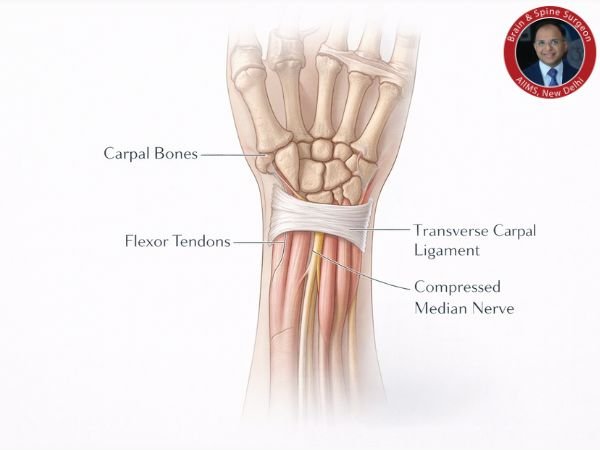
Carpal Tunnel in its early stages
When the median nerve, which connects your forearm to your palm, is squeezed at the wrist, carpal tunnel syndrome begins. The thumb, index, middle, and a portion of the ring fingers are all under the control of this nerve.

Typical early indicators consist of:
Finger numbness or tingling, particularly at night
Pain or pain when holding something
“Needles and pins” in the hand
Soreness in the forearm or wrist
Initially, these sensations could be intermittent, particularly while using your hands repeatedly, but if you don’t get help right away, they could get worse over time.
Workplace and Lifestyle Factors
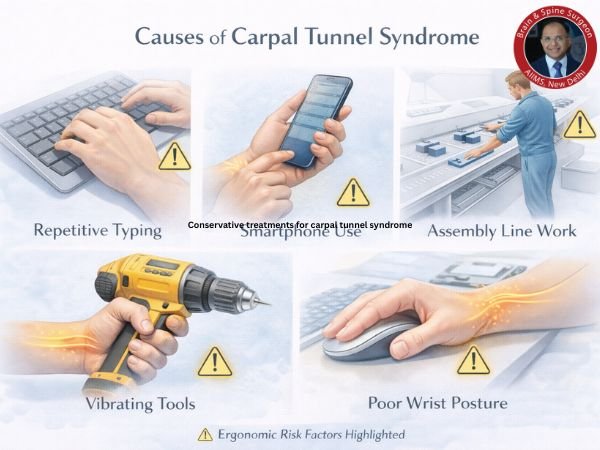
The median nerve may experience increased pressure from a variety of daily activities:
Motions that are repeated
Wrist strain can result from typing, texting, working on an assembly line, and using vibrating instruments frequently.
Bad posture of the wrists
Long-term wrist bending, such as when typing or sleeping, can compress the nerve.
Additional contributors
Being overweight
Rheumatoid arthritis, diabetes, or thyroid conditions
Pregnancy (symptoms may intensify due to fluid retention)
Modification Tip: Without surgery, carpal tunnel syndrome can be supported and symptoms can be greatly reduced with little changes like ergonomic keyboards, frequent breaks, and wrist posture awareness.
Physiotherapy & Wrist Splint
Splints for the wrists
An easy-to-use yet very powerful first-line utility. By maintaining your wrist in a neutral position, especially at night, wearing a splint can relieve pain and minimise pressure on the nerve.
Physiotherapy
Stretches and strengthening activities that a therapist can lead include:
Increase the flexibility of your wrists
Cut down on swelling
Improve nerve gliding, or the nerve’s movement through its tube.
For instance:
Gliding of the median nerve
Stretches for the wrist flexors and extensors
Exercises to strengthen the muscles in the hands and forearms
These non-invasive methods are essential for treating wrist nerve pain and, if initiated early, can stop the condition from getting worse.
Related Post: Carpal Tunnel Syndrome Management: Symptoms, Causes & Treatment
Drugs and Injections
Medicines that Reduce Inflammation
In moderate situations, non-steroidal anti-inflammatory medications (NSAIDs) may help reduce discomfort and swelling.
Injections of Corticosteroids
A doctor might suggest injections if symptoms don’t go away with splints and exercise. By lowering inflammation surrounding the median nerve, they can provide focused comfort. For weeks to months, many patients report a considerable improvement in their symptoms.
The majority of these non-surgical carpal tunnel therapies are well tolerated when administered under appropriate physician care.
When Surgery Is Not an Option
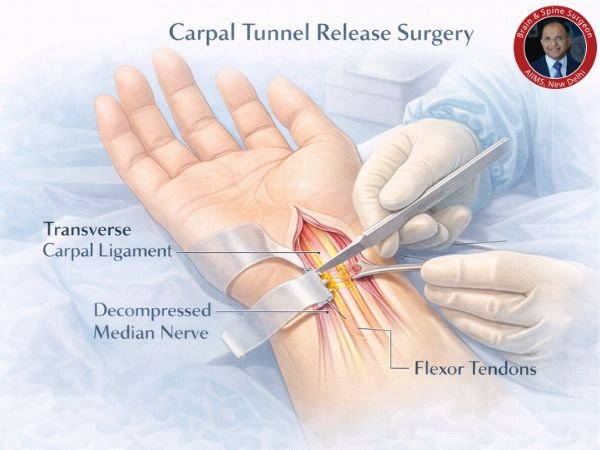
When is surgery considered?
Even with conservative treatment, symptoms continue.
There is severe muscle atrophy or hand weakness.
Daily activities are drastically reduced.
By removing the ligament that is pressing on the nerve, the surgical technique known as carpal tunnel release expands the wrist tunnel’s volume. When non-surgical care is insufficient, it is still a safe alternative, and the majority of patients recover successfully.
It’s crucial to remember that not all CTS cases call for surgery, and many people are able to resume their regular activities using only non-surgical methods.
Concluding Thoughts
Despite its high incidence, carpal tunnel syndrome is not something you have to “live with.” Many patients can avoid surgery entirely and experience significant wrist nerve pain alleviation with early detection and the appropriate treatment.
See a professional right away if you’re suffering from any of the symptoms of CTS, particularly persistent numbness, tingling, or weakness. Plans that are specific to your severity and lifestyle make a huge difference.
FAQ’s
1. Is surgery necessary to treat carpal tunnel syndrome?
Indeed! Physiotherapy, splinting, lifestyle modifications, and other non-surgical treatments can result in a significant improvement in symptoms, particularly in moderate and early cases.
2. What is the duration of non-surgical treatment?
It differs. While some patients see relief after a few weeks, others require several months of regular therapy and lifestyle changes.
3. Will it help if I rest my hands?
Without a doubt. Nerve irritation can be lessened by avoiding repetitive wrist motions and taking regular pauses.
4. Do workouts actually work?
When performed properly, guided, therapeutic activities can enhance nerve mobility and lessen discomfort.
5. When should I visit a physician?
A professional evaluation is necessary if symptoms include weakness, worsen at night, or are chronic.