Overview
Brain swelling, including traumatic brain injury (TBI), is a significant medical emergency that needs to be treated precisely and promptly. Mannitol, an osmotic diuretic that lowers intracranial pressure, is one of the most commonly utilised drugs in these situations.
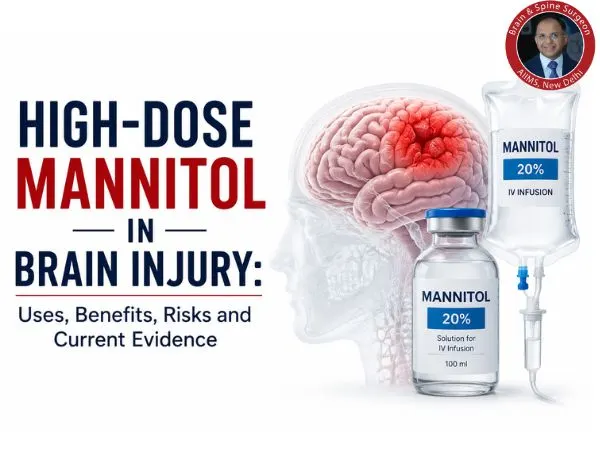
However, what occurs when medical professionals administer excessive doses of mannitol? Does it work better? Are there any hazards?
Everything you need to know about high-dose mannitol is covered in this guide.
Mannitol: What is it?
In neurosurgery and emergency situations, mannitol is a drug that is frequently used to lower intracranial pressure (ICP), or the pressure inside the skull.
How does it operate?
- Excess fluid from brain tissue is drawn into the bloodstream by mannitol.
- This lessens cerebral oedema, or swelling of the brain.
- It enhances the brain’s blood flow and oxygen delivery.
Why Does Brain Injury Use Mannitol?
Under circumstances such as:
- TBI, or traumatic brain injury
- Brain cancers
- A stroke
- Infections of the brain
Because the skull is a closed region, swelling within it can be fatal. Elevated pressure can lower blood flow and harm brain cells.
Mannitol aids in:
- Reducing intracranial pressure
- Avoiding the deadly consequence of brain herniation
- When utilised properly, improving neurological outcomes
High-Dose Mannitol: What Is It?
The term “high-dose mannitol” describes the administration of higher-than-normal doses, typically in emergency scenarios requiring a quick drop in brain pressure.
Standard dosage:
- 0.25–1 g/kg body weight is the standard dosage.
- High dose: Depending on clinical judgement, up to 1–1.5 g/kg
Physicians carefully consider the following while determining the dosage:
- Condition of the patient
- Brain swelling severity
- Kidney function and blood pressure
High-Dose Mannitol’s Advantages
- Quick Decrease in Brain Pressure
- Intracranial pressure can be rapidly lowered by high doses, which is important in emergency situations.
- Enhanced Blood Flow to the Brain
- Mannitol improves blood flow to critical brain regions by decreasing swelling.
- Effects on Neuroprotection
- By enhancing oxygen flow, it might help shield brain cells from more damage.
- Life-Saving in Serious Situations
- High-dose mannitol can save lives in situations of severe traumatic brain injury or impending brain herniation.
Hazards and Adverse Reactions to High-Dose Mannitol
High-dose mannitol is beneficial, but it should be administered carefully.
- Lack of fluids
- Dehydration can result from excessive fluid loss.
- Unbalanced Electrolytes
- The body’s sodium and potassium levels may be disrupted.
- Damage to the Kidneys
- The kidneys may be strained by high doses, particularly in susceptible individuals.
- Swelling of the Rebound Brain
- Sometimes excessive or frequent use may increase swelling later on.
- Low Blood Pressure
- Rapid fluid changes can result in hypotension, which lowers the brain’s blood flow.
What Is Shown by Current Evidence?
Clinical guidelines and recent research indicate:
- The first-line treatment for elevated intracranial pressure is still mannitol.
- In acute emergency situations, high-dose mannitol may be useful.
- However, it is not advised to utilise heavy doses frequently or for extended periods of time.
- Monitoring is essential; electrolytes, renal function, and serum osmolality must be routinely assessed.
Hypertonic Saline vs. Mannitol
Mannitol and hypertonic saline are compared in present-day research and critical protocols like severe head injury management:
- Both lessen swelling in the brain.
- In certain situations, hypertonic saline may have longer-lasting effects.
- The patient’s condition and the clinician’s experience determine the choice.
When Is High-Dose Mannitol Applied?
High-dose mannitol may be used by physicians in:
- Severe brain damage caused by trauma
- Abrupt decline in neurological function
- Brain herniation symptoms
- When performing neurosurgical operations
Crucial Monitoring Throughout Therapy
High-dose mannitol patients are closely observed for:
- Urine production
- Blood pressure
- Electrolytes in serum
- Kidney function
- Osmolality of serum
This guarantees the treatment’s efficacy and safety.
Important Points
- One essential medication for controlling brain swelling is mannitol.
- In an emergency, high-dose mannitol may save lives.
- Because of the possible hazards, it must be used carefully.
- During treatment, close observation is crucial.
- Research is still ongoing to improve its ideal application.
In conclusion
By quickly lowering intracranial pressure and avoiding potentially fatal consequences (such as critical conditions like brain death or coma), high-dose mannitol is essential in the emergency treatment of brain injuries. However, in order to prevent any negative effects, its use necessitates professional judgement and careful observation.
Doctors continue to assess whether and how to administer mannitol to improve patient outcomes in light of advances in neurocritical care.
Consult Dr. Deepak Agrawal, a neurosurgeon at AIIMS Delhi, for professional care in brain damage and neurosurgical problems. He blends modern research with extensive clinical knowledge to give patients the best possible results.
FAQ’s
- Is mannitol safe for those with brain injuries?
Yes, it is usually safe and effective when used under medical supervision. - Why is mannitol administered?
to lessen intracranial pressure and brain oedema. - Is mannitol at high doses harmful?
If not properly monitored, it may have risks like electrolyte imbalance and kidney damage. - How fast does mannitol take effect?
It typically begins to lower brain pressure in a matter of minutes. - Is mannitol superior to hypertonic saline?
Both are effective; the decision is based on the doctor’s judgement and the patient’s condition. - How is mannitol administered?
It is delivered intravenously (via a vein) in a hospital setting. - Is mannitol suitable for long-term use?
Instead of long-term therapy, it is typically utilised for short-term emergency management.