Brain function, cognition, mobility, and general quality of life can all be negatively impacted by traumatic brain injury (TBI), a dangerous medical condition. Even if the initial injury is crucial, recovery depends just as much on what occurs inside the brain following the trauma.
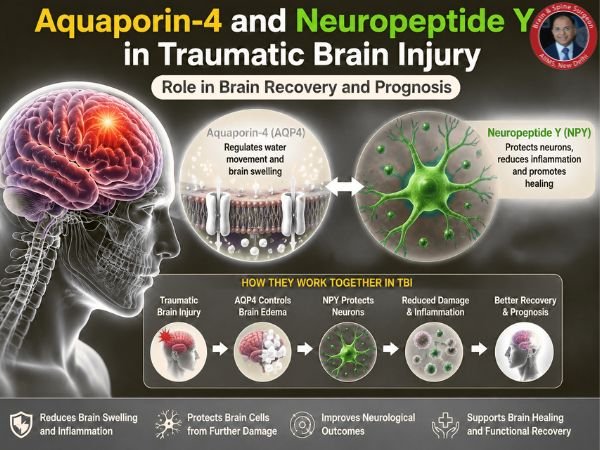
In recent years, Aquaporin-4 (AQP4) and Neuropeptide Y (NPY), two significant biological variables, have drawn attention for their roles in brain swelling, healing, and long-term prognosis following traumatic brain injury.
This guide highlights the significance of these ideas in brain healing and future treatment approaches while providing an easy-to-understand explanation for patients.
What Takes Place in the Brain Following Traumatic Injury?
Two stages take place when the brain is traumatised (by violence, falls, or accidents):
1. The primary injury
- Impact-related immediate harm
- Includes fractures to the skull, blood, or bruises.
2. Secondary Damage
- Develops over several hours or days.
- Include inflammation, chemical alterations, and cerebral oedema.
Molecules like Aquaporin-4 and Neuropeptide Y become crucial during this secondary phase.
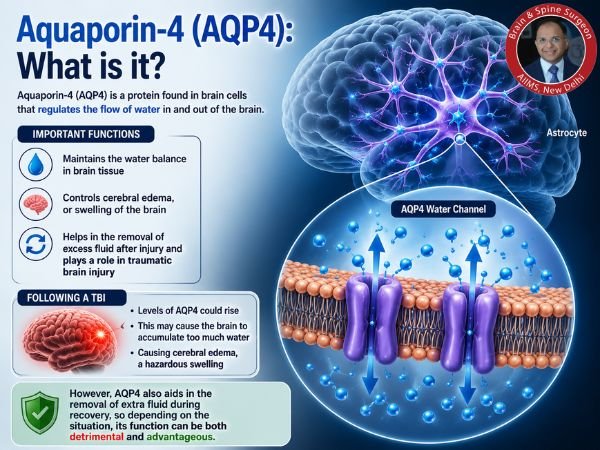
Aquaporin-4 (AQP4): What is it?
Brain cells contain a protein called aquaporin-4, which regulates the flow of water into and out of the brain.
Important Functions:
- Preserves the equilibrium of water in brain tissue
- Controls cerebral oedema, or swelling of the brain.
- Aids in the removal of extra fluid following an injury and plays a part in traumatic brain injury
Following a TBI:
- Levels of AQP4 could rise
- This may cause the brain to accumulate too much water
- Causing cerebral oedema, a hazardous swelling
However, AQP4 also aids in the removal of extra fluid during recuperation, so depending on the situation, its function can be both detrimental and advantageous.
Note: Your content contains the Aquaporin-4 (AQP4): What is it? section twice. This appears to be a duplicate. Remove the repeated section to avoid duplicate content and improve readability.
Neuropeptide Y (NPY): What is it?
A naturally occurring chemical messenger in the brain, neuropeptide Y is involved in:
- Reaction to stress
- Control of appetite
- Neuroprotection, or the defence of brain cells
Function in Traumatic Brain Injury
Following TBI, NPY:
- Aids with reducing inflammation
- Prevents harm to brain cells
- Can reduce the symptoms of stress and anxiety after an injury
- Promotes brain repair and healing
Better neurological outcomes are frequently linked to higher NPY levels.
How Do Neuropeptide Y and Aquaporin-4 Interact?
Despite having distinct responsibilities, both are essential to healing:
| A factor | Function | Effects on traumatic brain injury |
|---|---|---|
| Aquaporin-4 | Regulates the flow of water | Affects the enlargement of the brain |
| Neuropeptide Y | Safeguards neurones | Minimises harm and enhances healing |
Total Impact:
- AQP4 controls oedema.
- NPY promotes cell repair and survival.
Collectively, they have an impact on:
- Speed of recovery
- The intensity of the symptoms
- Long-term brain activity
Why Do These Biomolecules Matter for Prognosis?
Predicting a patient’s prognosis involves determining their chances of recovery.
Aquaporin-4:
- Elevated levels in the early stages could suggest significant cerebral oedema.
- Better recuperation results from balanced regulation.
Neuropeptide Y
- Improved neuroprotection at higher levels
- Increased risk of problems due to lower levels
Clinical Significance:
Researchers and medical professionals are examining these markers to:
- Forecast the results of recovery
- Create targeted treatments
- Enhance ICU management techniques
Is It Possible to Use These for Therapy?
AQP4 and NPY are primarily employed in research and experimental medicine at the moment, but potential uses in the future include:
Possible Treatments:
- Medications that control AQP4 → decrease brain edema
- NPY-based therapies improve brain healing
- Biomarker-based personalised medicine
Traumatic Brain Injury Symptoms
Concussion-related mild TBI:
- Headache, lightheadedness, and confusion
- Temporary loss of memory
Severe to Moderate TBI:
- Diminished awareness
- Continuous vomiting
- Seizures
- Paralysis or weakness
- Modifications in behaviour
TBI diagnosis
Physicians employ a mix of:
- Clinical assessment
- Brain MRI/CT Scan
- Systems of neurological scoring (such as GCS)
Biomarker analysis, such as AQP4 and NPY, may be used in advanced research.
Therapy and Rehabilitation
The intensity determines the course of treatment.
Emergency Medical Services:
- Maintaining blood pressure and breathing stability
- Preventing more harm
Medical Administration:
- ICU monitoring
- Medication to control swelling
Surgical Intervention:
- Eliminating clots of blood
- Decompressive surgery to reduce swelling
Rehabilitation
- Physical therapy
- Cognitive treatment
- Psychological assistance
Advanced Neurosurgical Care’s Function
Advanced methods are employed at specialised facilities such as AIIMS Delhi to:
- Keep an eye on your head pressure.
- Effectively control oedema
- Boost rates of recovery and survival
Doctors can improve therapy plans by comprehending molecular pathways such as AQP4 and NPY.
In conclusion
Recovery from traumatic brain damage is dependent on both the initial insult and the brain’s subsequent reactions. Neuropeptide Y and aquaporin-4 are becoming important factors in this healing process, affecting brain healing, protection, and swelling.
As neurology and research continue to progress, these biomarkers may soon enable medical professionals to more precisely anticipate outcomes and administer targeted treatments, enhancing TBI patients’ quality of life and survival.
Early assessment and professional neurosurgical care are essential for the best possible outcome if you or a loved one has had a head injury.
FAQ’s
1. To put it simply, what is Aquaporin-4?
A protein called aquaporin-4 regulates the flow of water in the brain and is crucial for post-injury brain swelling.
2. What role does neuropeptide Y play in brain damage?
Neuropeptide Y promotes healing following traumatic brain injury, lowers inflammation, and shields brain cells.
3. Can recovery following a traumatic brain injury be predicted by these biomarkers?
Indeed, current research indicates that AQP4 and NPY levels may be useful in predicting a patient’s likelihood of recovery.
4. Do regular hospital tests make use of these?
They are primarily utilised in research at the moment, but they might eventually be incorporated into therapeutic treatment.
5. Is it possible to manage brain swelling following a traumatic brain injury?
Yes, brain swelling can be successfully controlled with the right medical attention, drugs, and occasionally surgery.
6. How long does it take to recover from a traumatic brain injury?
Recovery times vary greatly, ranging from weeks for minor injuries to months or years for serious ones.
7. Can someone with a serious TBI fully recover?
Depending on the severity of the injury, some patients may have long-term neurological problems while others recover nicely.