Overview
Traumatic Brain Injury (TBI) is a dangerous medical disorder that happens when the brain is damaged by an external force, usually as a result of head trauma, falls, or auto accidents. While brain tissue destruction is the immediate concern, coagulopathy is a condition that affects the blood’s capacity to clot properly and is an equally important but sometimes ignored consequence.
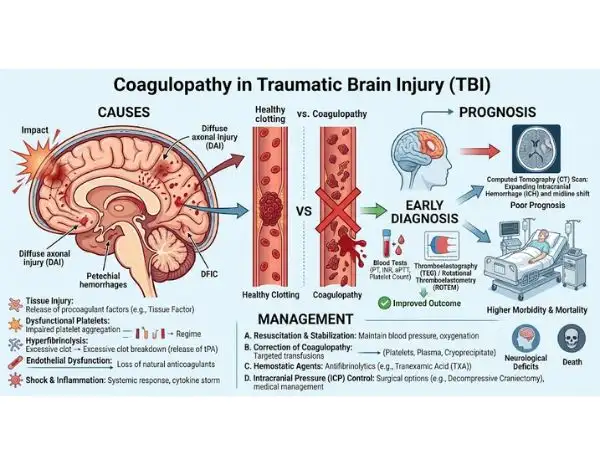
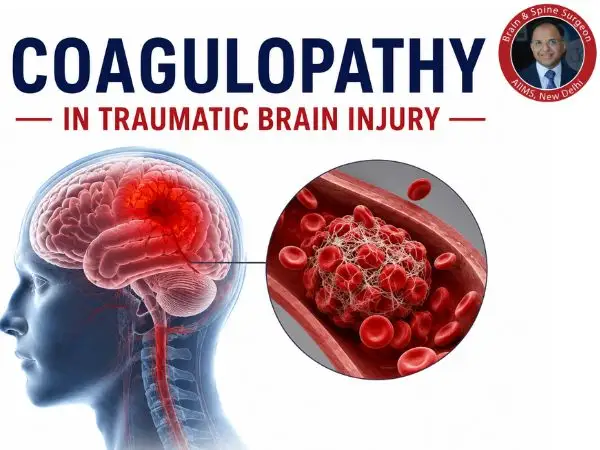
Because coagulopathy increases the likelihood of intracranial bleeding, which raises morbidity and mortality, it can greatly worsen results in traumatic brain injury. Learning about this ailment is crucial for prompt diagnosis and efficient treatment.
What Does Traumatic Brain Injury Coagulopathy Mean?
An anomaly in the blood clotting mechanism is called coagulopathy. The body in TBI sufferers may either:
- Inadequate clot formation results in heavy bleeding.
- Create aberrant clots that obstruct blood arteries.
Due to continued bleeding or decreased blood flow to essential brain tissues, this imbalance could lead to brain damage.
Why Does TBI Lead to Coagulopathy?
Following a brain injury, coagulopathy is caused by multiple mechanisms:
- Tissue Injury and Clotting Factor Release
- Damaged brain cells generate chemicals that interfere with regular clotting processes, which can be linked to traumatic endotheliopathy after brain injury.
- Inflammation
- Strong inflammation brought on by traumatic brain injury (TBI) impairs the body’s capacity to control clot formation.
- Dysfunction of Platelets
- Platelets are essential for coagulation. Their ability to reduce clot formation may be compromised with traumatic brain injury.
- Excessive Fibrinolysis
- This disorder causes clots to disintegrate excessively quickly, resulting in ongoing bleeding.
- Shock to the System
- Clotting problems can be made worse by blood loss and low blood flow to the brain.
Coagulopathy Symptoms in Traumatic Brain Injury
Although coagulopathy may not exhibit prominent symptoms, it may intensify symptoms of brain damage, such as:
- Headache that persists or gets worse
- Throwing up
- Low awareness
- Perplexity or changed mental state
- Paralysis or weakness
- Seizures
- An increase in wound bleeding
How is the Diagnosis of Coagulopathy Made?
To find clotting problems, doctors employ a number of tests:
- PT, INR, and aPTT blood tests
- Count of Platelets
- Thromboelastography (TEG): A thorough test to evaluate the production and disintegration of clots
- Imaging: brain CT scan to find haemorrhage
In order to avoid complications, early diagnosis is essential.
Prognosis: How Serious Is TBI Coagulopathy?
Coagulopathy is linked to:
- A higher chance of cerebral haemorrhage
- Brain damage that progresses quickly, including conditions like diffuse axonal injury
- An increased demand for surgery, such as a decompressive craniectomy
- Higher death rates
However, results can be greatly enhanced by early detection and timely treatment.
TBI Coagulopathy Management
A multidisciplinary approach is necessary for effective management, frequently in an intensive care unit.
- Treatment with Blood Components
- Transfusions of platelets
- FFP, or fresh frozen plasma
- The cryoprecipitate
They aid in the restoration of regular clotting.
- Drugs
- Tranexamic acid (TXA): Prevents excessive breakage of clots
- Vitamin K (in some situations)
- Using Advanced Tools for Monitoring
- Personalised treatment plans are guided by tests such as TEG.
- Surgical Procedure
- Emergency neurosurgery can be necessary if brain haemorrhage worsens.
- Assistance
- Keeping blood pressure stable
- Monitoring of the ICU with oxygen support
Early Care and Prevention
The risk of complications can be decreased, even though not all TBIs can be avoided:
- Quick medical care following a head injury
- Preventing hospital care delays
- Appropriate supervision in trauma facilities
- Wearing seatbelts and helmets
When Should You Get Medical Assistance?
If someone has a head injury, seek immediate medical attention if they:
- Diminished awareness
- Continuous vomiting
- An intense or dangerous headache
- Seizures
- Unusual sleepiness
- Continuous bleeding
In Conclusion
In traumatic brain injury, coagulopathy is a serious but controllable condition that has a big influence on patient outcomes. Timely intervention, sophisticated surveillance, and early diagnosis can save lives. Understanding conditions related to critical injury and altered states, such as coma vs brain death vs vegetative state, highlights the importance of rapid specialized care.
A skilled neurosurgeon must be consulted right once if you or a loved one has had a head injury.
Neurosurgeon Dr. Deepak Agrawal of AIIMS Delhi is renowned for his proficiency in treating complicated brain injuries and applying modern, scientifically proven therapeutic approaches. The best potential recovery and long-term results can be ensured with early consulting.
FAQ’s
- What is the primary cause of coagulopathy in traumatic brain injury?It is mostly brought on by inflammation, platelet malfunction, and brain tissue injury that interferes with normal clotting processes.
- Is coagulopathy potentially fatal?Indeed, it can cause serious brain bleeding and be fatal if left untreated.
- Is it possible to reverse coagulopathy?Yes, in a lot of situations. Clotting can be stabilised with prompt treatment, including medicines and blood transfusions.
- How soon after a traumatic brain injury can coagulopathy appear?Early monitoring is crucial because it can appear hours after an accident.
- What tests are employed to identify it?PT, INR, platelet count, and sophisticated tests like TEG are examples of common tests.
- Does coagulopathy occur in all TBI patients?No, however moderate to severe brain injuries are more likely to cause it.
- Is healing impacted by coagulopathy?Indeed, improper management can exacerbate brain injury and postpone healing.