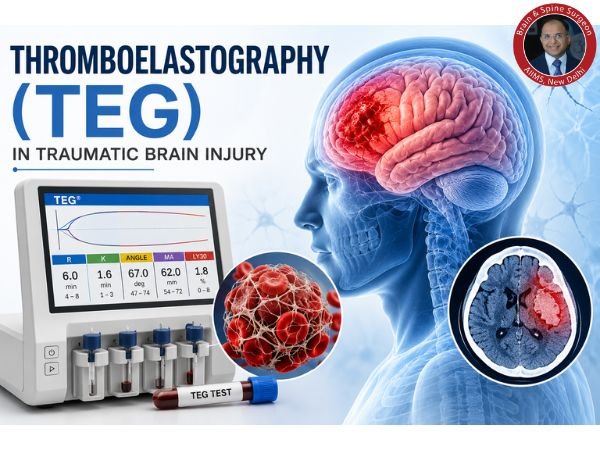
A serious medical emergency that has the potential to be fatal is traumatic brain injury (TBI). While most people concentrate on the actual brain damage, blood clotting issues are another serious condition that frequently goes unnoticed. Thromboelastography (TEG) is essential in this situation.
Using straightforward, understandable language, we describe what TEG is, how it helps with traumatic brain injury, and why it can be a game-changer in improving patient outcomes in this guide.
Traumatic Brain Injury (TBI): What is it?
When a violent hit or jolt to the head interferes with normal brain function, it is known as a traumatic brain injury (TBI). From minor concussions to serious brain damage, it can vary widely.
Typical Causes
- Falls and traffic incidents on the road
- Sports-related injuries
- Violence or assault
Symptoms to Look Out for
- Headache or lightheadedness Vomiting
- Diminished awareness
- Loss of memory or confusion
- Seizures (in extreme situations)
What is TBI-related coagulopathy?
The body’s capacity to create blood clots may become aberrant following a brain injury; this disease is called coagulopathy.
Why is this risky?
- It may result in the brain bleeding excessively.
- Raises the possibility of cerebral oedema
- May aggravate neurological consequences
- Increases the likelihood of death in extreme situations
Coagulopathy must be detected as soon as possible, and this is where TEG comes in very handy.
Thromboelastography (TEG): What is it?
A specialised blood test called thromboelastography (TEG) assesses your blood’s ability to clot in real time.
What Distinguishes TEG from Conventional Blood Tests?
| Traditional Examinations | TEG |
|---|---|
| Calculates the isolated clotting factors. | Evaluates the full clotting process. |
| Takes time to gain a comprehensive understanding. | Gives results in real time. |
| Restricted clinical insight. | Provides a comprehensive assessment of clot stability and strength. |
From the beginning of clotting to the dissolution of the clot, TEG provides physicians with a comprehensive view of clot formation.
How Does TEG Operate?
TEG examines blood’s viscoelastic characteristics, or, in essence, how blood behaves during clot formation and disintegration.
Important Measured Parameters:
- Clotting time (R-time): The rate at which clotting starts
- Clot formation (K-time): Clot development speed
- Clot strength (MA): The clot’s strength
- Clot breakdown (LY30): The rate at which the clot disintegrates
This aids physicians in determining whether a patient is:
- Excessive bleeding
- Too slow clotting
- Weak clot formation
What Makes TEG Crucial for Traumatic Brain Injury?
Clotting irregularities might appear in TBI patients minutes to hours after the injury.
TEG’s main advantages in TBI
- Early Coagulopathy Identification
- Compared to traditional tests, TEG can detect coagulation issues earlier, enabling prompt management.
- Tailored Care
Physicians can customise therapies such as:
- Blood transfusions
- Treatment with platelets
- Replacement of clotting factors
- Avoids Needless Transfusions
- Minimises difficulties by avoiding the needless use of blood products.
- Forecasts Results
TEG characteristics can be used to forecast:
- Bleeding risk
- Surgery is required
- Prospects of healing
How TEG Directs TBI Treatment
TEG data assist critical care teams and neurosurgeons in making prompt, life-saving decisions.
For instance:
- Extended clotting time: Plasma transfusion may be necessary
- Low clot strength: Transfusion of platelets may be required
- High clot breakdown: Antifibrinolytic medications may be administered
This focused strategy lowers complications and increases survival.
Comparing TEG and Traditional Coagulation Tests
| Feature | TEG | Traditional Examinations |
|---|---|---|
| Speed | Rapid, real-time | Slower |
| Accuracy/Precision | High (analysis of whole blood) | Restricted/Limited |
| Clinical Significance | Extremely actionable | Less relevant |
| Utilisation in TBI | Very helpful | Supportive |
TEG’s limitations
Despite its many benefits, TEG has certain drawbacks.
- Needs specific equipment
- Requires personnel with training
- It might not be accessible in every hospital.
However, TEG is starting to become the norm in cutting-edge facilities like AIIMS and specialised neurosurgery departments.
TEG’s Future in the Treatment of Brain Injuries
As critical care advances, TEG is anticipated to:
- Become more accessible
- Connect to AI-powered decision-making systems
- Enhance trauma care with personalised medicine
In conclusion
By offering real-time insights into blood clotting, thromboelastography (TEG) is revolutionising the way medical professionals treat traumatic brain injury.
By making it possible:
- Early coagulopathy detection
- Targeted therapy
- Improved result prediction
TEG is assisting TBI patients in improving their recuperation and saving lives.
FAQ’s
Does the TEG test hurt?
No, TEG is a straightforward blood test that is comparable to standard blood collection.
How soon do TEG results become available?
Real-time results are available, frequently in a matter of minutes.
Do all patients with brain injuries receive TEG?
When clotting problems are suspected, it is mostly employed in cases of moderate to severe traumatic brain injury.
Is survival in TBI predicted by TEG?
Indeed, patient outcomes and prognosis are related to specific TEG characteristics.
Is TEG superior to standard blood clotting tests?
TEG is very helpful in critical conditions like traumatic brain injury (TBI) because it offers a more thorough and dynamic examination.
Is TEG accessible in India?
Indeed, advanced hospitals and neurosurgery centers, such as AIIMS, offer TEG.
Sources: