Introduction
One of the most delicate and difficult conversations that families and medical professionals have following a serious brain injury is a vegetative state prognosis. Concerns over recovery, long-term results, care requirements, and quality of life become critical when a loved one appears awake but is still unresponsive.
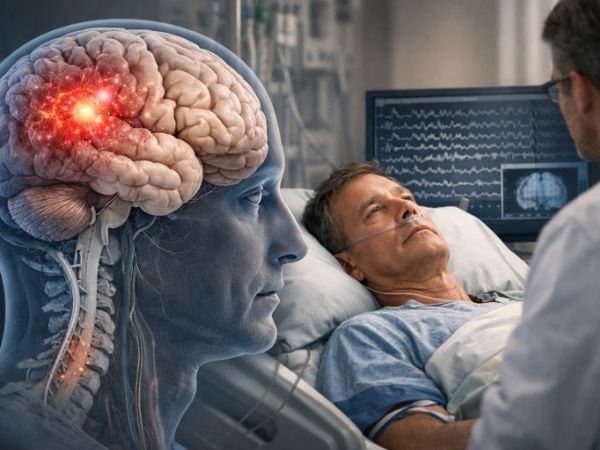
We’ll go over what determines prognosis, how recovery possibilities vary over time, and what families should know about treatment, rehabilitation, and planning in this extensive guide.
What Affects Prognosis?
When basic wakefulness and autonomic systems are unaffected, but higher brain functions are significantly compromised, a vegetative state (sometimes called unresponsive wakefulness syndrome) results. People may have sleep-wake cycles and open their eyelids, but they are unaware of their surroundings and themselves.
Important Prognostic Elements
The reason behind the injury
Compared to non-traumatic causes like chronic oxygen deprivation (anoxic injuries), traumatic brain injuries (such as those from accidents) typically have a higher likelihood of recovery.
The extent and location of the brain injury
The likelihood of a major recovery is greatly decreased by extensive brain tissue destruction.
Age and general health
Although cognition and functional outcomes with severe injury may still be limited, younger patients frequently have a little higher recovery potential.
Medical attention and prompt response
Recovery is not guaranteed, but it is influenced by how quickly and efficiently problems (such as oedema, hypoxia, and infections) are treated.
Results Based on Duration
The duration of a vegetative state is one of the best indicators of the prognosis.
Time and Recovery Prospects
The first four to six weeks
Particularly following a serious accident, some individuals may regain consciousness.
1–3 months
Over time, the likelihood of a meaningful recovery gradually declines.
Six months (non-traumatic)
Recovery from a non-traumatic injury is quite unlikely if there is no discernible improvement by this time.
Twelve months (traumatic)
The prognosis for regaining consciousness or functional recovery is typically poor for traumatic causes if there is no improvement after a year.
Note: Complete recovery to prior cognitive and functional levels is quite unlikely, even in rare instances when some consciousness returns later.
Severity and Recovery of Brain Injuries
Not every vegetative state appears equal.
Injury: Traumatic versus Non-Traumatic
Traumatic Brain Injury (TBI): Patients frequently experience severe disability; there may be a 50% chance of some improvement during the first month.
Recovery rates are typically lower for non-traumatic injuries (such as cardiac arrest and stroke), particularly when oxygen-depriving events are the cause.
Arrival in Other States
Some people move from a vegetative state to a minimally conscious state (MCS), in which they occasionally show indications of consciousness. Although it has an impact on prognosis and care plans, it does not ensure functional recovery.
Although it can occasionally identify hidden brain activity, modern imaging (such as fMRI) shouldn’t take the place of clinical evaluation in order to improve prognosis.
Neuro-rehabilitation’s Function
Neuro-rehabilitation is essential for optimising recovery potential and quality of life, even though a vegetative condition itself lacks a cure.
Methods of Rehabilitation
Programs for early stimulation
Neural networks may benefit from controlled motor and sensory stimulation, especially in the early stages.
Physical treatment
Exercises for passive range of motion can help avoid problems like blood clots and contractures.
Support for nutrition and health
It’s critical to control infections and problems, take care of the skin, and ensure appropriate nourishment.
The results of rehabilitation are quite personal, and each case has a very different rate and degree of recovery.
Family and Ethical Issues
Careful, considerate discussions are necessary when making decisions about life support, long-term care, and quality of life.
Roles in the Family and Care Team
- When available, decision-making should be guided by known preferences and advance directions.
- Ethics consultations aid in coordinating medical options with cultural and familial values.
- Goals of care must be continuously discussed, ranging from comfort-focused strategies to rehabilitative initiatives.
Planning for Long-Term Care
Whether or not they recover, people in a vegetative state frequently need:
- Expert nursing care
- Support for nutrition (feeding tubes)
- Avoiding bed-related issues
- Consistent medical observation
Financial, legal, and carer support systems are also included in long-term planning because this type of care requires substantial resources.
Conclusion
The prognosis for a vegetative state is intricate and very individualised. While some patients regain awareness, the majority do not resume their prior level of functioning, particularly if the illness lasts longer than necessary. Families can be empowered through this difficult journey by being aware of the likelihood of recovery, the function of rehabilitation, and the significance of careful care planning.
FAQs
1. Is it possible for a person in a vegetative condition to awaken?
A: Definitely, particularly in the early stages following an injury. However, it is uncommon to fully recover to pre-injury performance, and with time, significant improvement becomes less likely.
2. What are the chances of getting better?
A: The chances vary greatly depending on the cause and duration; the chances of recovering consciousness drastically decrease after three to six months if there is no improvement.
3. Does age have an impact?
A: Although age by itself does not ensure recovery, younger patients typically have somewhat better prospects.
4. Is rehabilitation beneficial?
A: Although it can’t undo the underlying brain injury, rehabilitation aims to maximise function, minimise difficulties, and encourage any potential recovery.
Sources
- https://pmc.ncbi.nlm.nih.gov/articles/PMC5726348/
- https://www.ncbi.nlm.nih.gov/books/NBK326662/
- https://www.ncbi.nlm.nih.gov/books/NBK580075/
- https://pubmed.ncbi.nlm.nih.gov/23803340/
- https://pubmed.ncbi.nlm.nih.gov/3218553/
- https://pubmed.ncbi.nlm.nih.gov/9635948/
- https://pubmed.ncbi.nlm.nih.gov/29265938/