A common spinal ailment that can affect people of all ages is kyphosis, sometimes known as a rounded upper back. Many people can improve their posture and lessen their discomfort by making specific lifestyle adjustments and exercising, even though severe cases may necessitate surgery. This guide describes how kyphosis posture correction works, when it works, and doable at-home actions.
An explanation of postural kyphosis
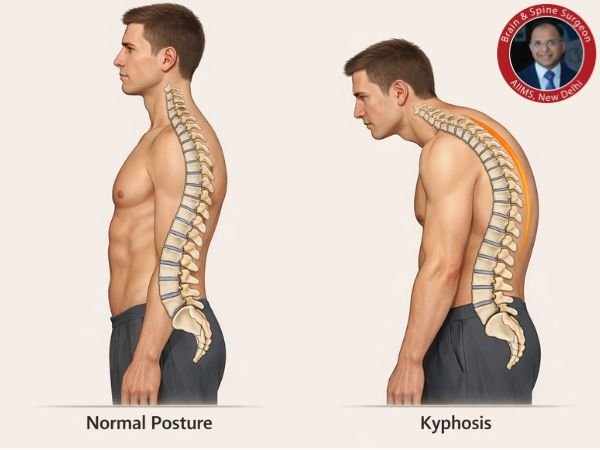
An excessive forward rounding of the upper back is known as kyphosis.
There are various kinds:
The most prevalent and frequently flexible condition is postural kyphosis, which is brought on by bad posture.
Structural Kyphosis:
]Resulting from spinal anomalies, vertebral fractures, or growth difficulties.
Scheuermann’s Kyphosis:
A more stiff type observed in teenagers due to spinal wedging.
The good news is that conservative therapy, which emphasises strengthening, flexibility, and awareness, often works for postural kyphosis.
Daily Posture’s Function
Your daily posture significantly impacts the alignment of your spine. A forward-rounded spine is reinforced by bad habits like hunching over phones, slouching at a desk, or leaning forward while walking. This can eventually cause the back muscles to weaken and the chest muscles to shorten, solidifying a kyphotic curve.
Important Kyphosis Posture Guidelines
Keep your ears above your shoulders
Gently pull your shoulders back and down
Use your core muscles
Refrain from holding your head forward for extended periods of time.
Consistent posture awareness is one of the simplest yet most powerful components of kyphosis posture repair.
Kyphosis Exercises at Home
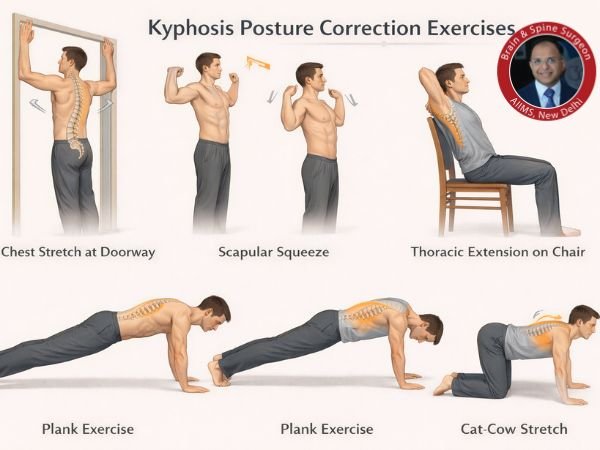
The key components of non-surgical kyphosis therapy are focused strengthening and regular movement. You can begin doing these at-home kyphosis exercises right now:
Stretch your chest
Take a position close to a door.
Gently lean forward while resting your arms on the door frame.
Hold for 20 to 30 seconds. Do this three times.
Squeezes of the Scapula
Stand or sit up straight.
Without shrugging, pinch your shoulder blades together.
Hold for five to eight seconds. Ten to fifteen times, repeat.
Extensions of the Thoracic
Take a seat in a chair with the backrest at mid-back height.
Gently reach back with your hands behind your head.
Ten repetitions.
Planks
Enhances spinal support and fortifies the core.
Hold for two to three sets of 20 to 45 seconds.
The Cat-Cow Stretch
Alternate between hollowing and arching your back while on your hands and knees.
To increase mobility, do 10–15 slow repetitions.
Lifestyle Modifications & Ergonomics
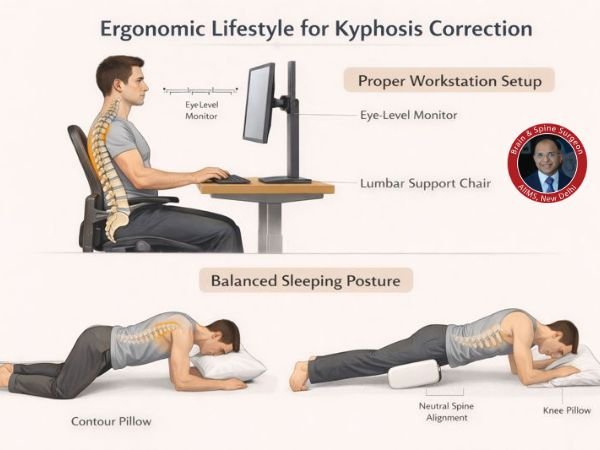
Changing your surroundings can help with kyphosis correction in addition to exercises:
Configuring a Workstation
Observe at eye level
Lumbar support chair
Flat feet on the ground
Movement & Breaks
Stand every 30 minutes
Take quick strolls
Switch up how you sit.
Daily Routines & Sleep
Use a pillow for support.
Steer clear of extremely soft mattresses
Use both shoulders to support balanced loads.
Making minor everyday changes promotes proper posture and lessens the pressure on the spinal muscles.
Know Also: Cervical Kyphosis: What is the cervical spine?
When Surgery Becomes Necessary
Surgical assessment may be necessary in certain circumstances, even though many instances resolve without surgery:
Pain that restricts day-to-day activities
Progressive deformity despite conservative treatment
Nerve compression or severe weakening
Breathing difficulties due to severe curvature
If everyday symptoms remain despite devoted posture adjustment and exercise, a spine specialist can decide whether advanced imaging or surgical consultation is recommended.
Final Thoughts
Many people can rectify their kyphosis posture with focused exercises and thoughtful daily routines. Your spinal alignment and comfort can be greatly altered at home by strengthening weak back muscles, loosening tight chest muscles, and improving daily posture, even though structural issues may need specialised therapy.
It’s always advised to speak with a spine specialist to create a strategy tailored to your needs if you’re worried about your posture or back pain.
FAQs
1. Is it possible for kyphosis to improve without surgery?
Yes, especially in postural kyphosis, where habits, strength, and flexibility are significant factors. Many people report better alignment and less discomfort when they are consistent.
2. How often should I practice kyphosis exercises at home?
Aim for at least five to six days per week, with shorter workouts (15 to 20 minutes); consistency is more important than length.
3. Will posture modification assist my pain?
For many individuals, certainly, improved alignment often lowers muscle strain and shoulder stress.
4. Is it possible for kids to straighten their kyphosis without braces or surgery?
Physical therapy, posture training, and guided exercise are frequently effective treatments for early postural kyphosis in children and adolescents.
Sources: