Knowing how blood flows through your brain is crucial because it guarantees that all of the nerve cells receive nourishment and oxygen. Cerebral hypoperfusion is the medical term for the condition when this flow diminishes, and early detection of symptoms can save lives.
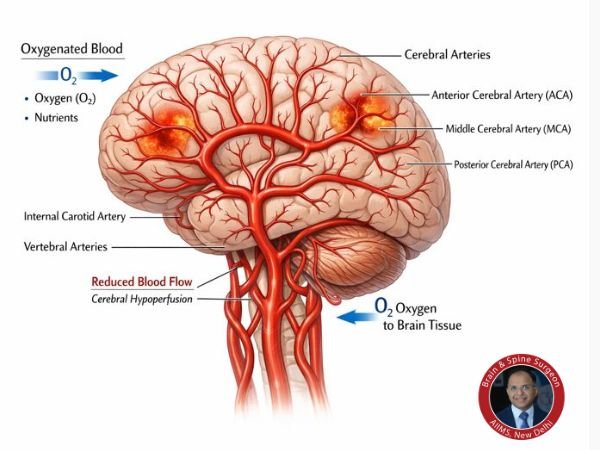
The Mechanism of Brain Circulation
Despite making up only 2% of your body weight, your brain uses up 20% of your oxygen when you’re at rest. The heart pumps blood through arteries and a convoluted network of channels to deliver this oxygen. Memory, movement, equilibrium, speech, and all other brain functions are supported by this mechanism.
Brain cells receive fewer oxygen and nutrients when blood flow is slowed or restricted, whether as a result of blockages, clots, reduced cardiac output, channel constriction (atherosclerosis), or changes in blood pressure. Warning indications from moderate dizziness to severe cognitive and motor impairment can be brought on by this decreased perfusion.
Symptoms of Cognitive and Memory
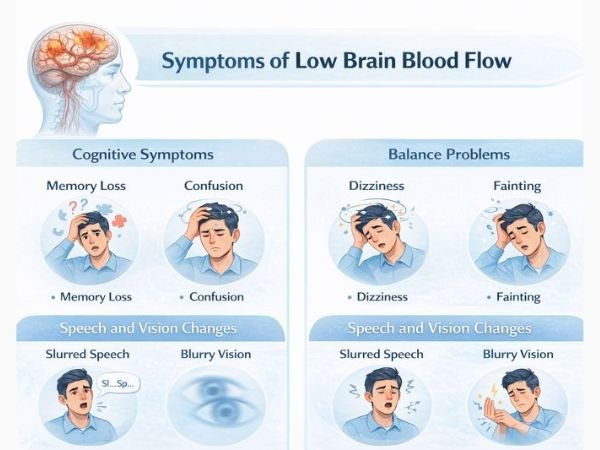
Before developing into more serious symptoms, early or mild decreased brain blood flow symptoms may appear subtly.
These could consist of:
Problems with memory or forgetfulness
Having trouble focusing or thinking clearly
Mental fog or confusion
Slow reaction to directives or enquiries
The brain finds it difficult to carry out tasks requiring prolonged mental effort when it isn’t properly perfused, particularly while under stress or physical strain.
Related Post: Low Blood Flow to the Brain: Causes, Symptoms, and Treatment
Outward Warning Indications
Reduced cerebral circulation typically creates physical symptoms that shouldn’t be ignored:
1. Neurological & Balance Problems
Unsteadiness or dizziness
Fainting or light-headedness
Loss of coordination or balance
2. Speech & Vision Changes
Slurred speech
Having trouble swallowing
Blurred or double vision
3. Sensory Changes
Numbness or tingling, especially on one side of the body
Limb weakness
Severe Alarm Symptoms
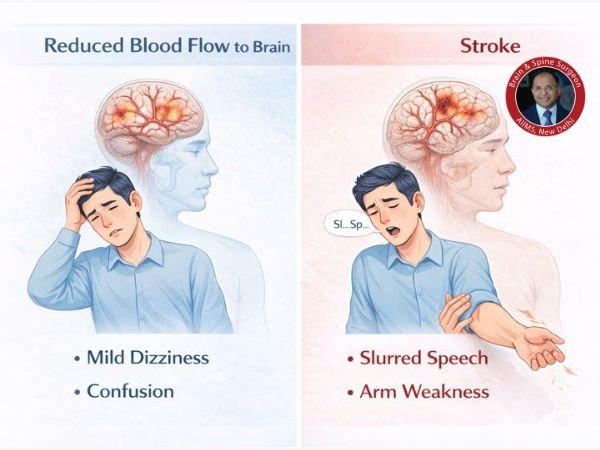
Certain symptoms can resemble a stroke and need to be treated right away:
Abrupt, intense headache
Abrupt weakness in a leg or arm
Abrupt blindness
Abrupt difficulty speaking
These are warning indicators because they may point to a stroke or significant vascular obstruction, which is associated with extremely low blood flow to certain areas of the brain.
Risk Factors
Low brain blood flow and cerebral hypoperfusion are more likely to occur in the following conditions:
High blood pressure (hypertension)
Atherosclerosis with elevated cholesterol
Diabetes
Tobacco usage and smoking
Arrhythmias or heart disease
Older age
A sedentary way of living
These elements may lower cardiac output, encourage plaque accumulation, or harm blood vessels. Risk is greatly decreased when these disorders are properly managed.
Diagnostic Examinations
Several tests may be performed to assess circulation and rule out other causes if your doctor detects inadequate blood flow to the brain:
A thorough medical history and physical examination
Blood pressure and cardiovascular risk assessment
Imaging Studies: To see brain tissue, use CT or MRI images.
Ultrasound/Doppler: To evaluate artery blood flow
Angiography: In-depth imaging of vessels
Blood tests: To measure coagulation profiles, lipids, and sugar levels
These aid in locating obstructions, vascular constriction, or other issues affecting brain perfusion.
Treatment Options
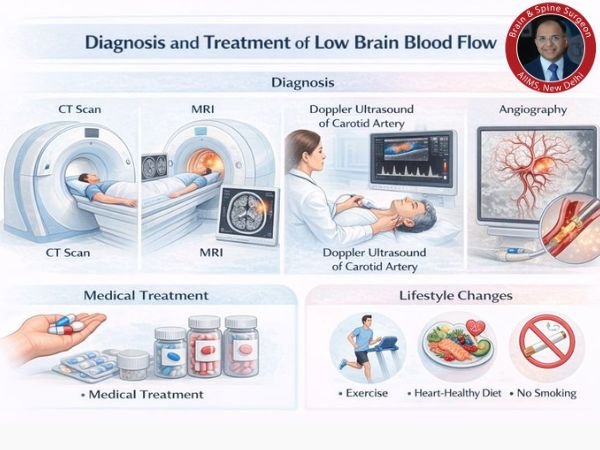
Depending on the underlying cause, treatment typically consists of:
Lifestyle Modifications
Frequent exercise
Balanced, heart-healthy diet
Smoking cessation
Controlling diabetes, blood pressure, and weight
Medications
Statins are medications that decrease cholesterol.
Antiplatelet medicines to minimise clot risk
Blood pressure drugs
Therapies for heart rhythm abnormalities
Interventional Techniques
Angioplasty or stenting for obstructed arteries
If required, bypass surgery
Early intervention can stop long-term brain damage and restore proper blood flow.
When to Consult a Physician
If you detect any persistent symptoms, even slight cognitive problems, frequent dizziness, or inexplicable weakness, consult a neurologist or vascular specialist. Early assessment guarantees that disorders like cerebral hypoperfusion are detected before they develop into serious incidents like stroke or irreversible brain damage.
FAQ’s
1. Is a stroke the same as insufficient blood flow to the brain?
Not all the time. Cerebral hypoperfusion, or reduced blood flow to the brain, can occasionally precede or resemble stroke symptoms, although they are not the same. However, if a vessel becomes completely clogged, it might result in stroke.
2. When should I make an urgent doctor’s appointment?
If you suffer sudden weakness, difficulty speaking, extreme numbness, or abrupt changes in your vision, all of which could be signs of a stroke, you should seek immediate care.
3. Is it possible to avoid reduced blood flow to the brain?
Indeed. Your risk is greatly decreased by maintaining a heart-healthy lifestyle, controlling blood pressure, cholesterol, and diabetes.