Intracranial infections: What are they?
Infections that develop inside the skull and impact the brain or the protective layers that surround it are known as intracranial infections. Since the brain is a very delicate and important organ, these are serious medical disorders that need to be treated right away.
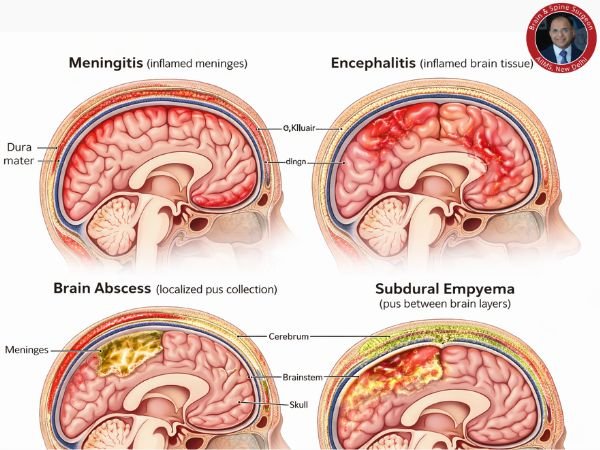
The infection could include:
The tissue of the brain (encephalitis)
The brain’s protective layer (Meningitis)
A brain abscess is a small, localised area of pus
The area between the layers of the brain and the skull (subdural empyema)
Intracerebral infections have the potential to become fatal or cause irreversible brain damage if left untreated.
Intracranial Infection Types
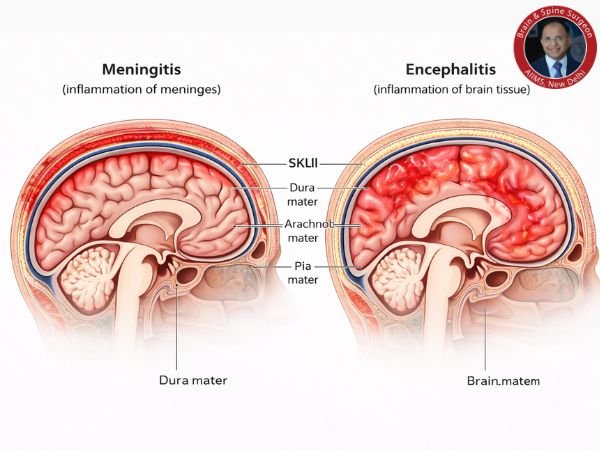
1. Meningitis
Inflammation of the meninges, which are the coverings of the brain.
Caused by viruses, bacteria, or infrequently fungus
Severe headache, fever, stiff neck, nausea, and light sensitivity are some of the symptoms.
2. Encephalitis
Inflammation of the actual brain tissue.
Frequently brought on by viral illnesses
Symptoms include altered consciousness, seizures, and confusion.
3. Abscess in the Brain
A mass of pus inside the brain.
Frequently brought on by a bacterial infection that spreads from the circulation, sinuses, or ears.
Symptoms include seizures, paralysis, speech issues, and a persistent headache.
4. Empyema Subdural or Epidural
Accumulation of pus between the brain’s layers.
It can quickly get worse
Neurosurgical intervention is urgently needed.
Reasons for Infections in the Brain
A brain infection could be brought on by:
Transmitted by adjacent infections (dental, ear, or sinusitis)
A head injury or a fractured skull
After-neurosurgical issues
Infections of the bloodstream
Immune system weakness (diabetes, HIV, cancer treatment)
In India, some people continue to develop brain abscesses as a result of untreated sinus or ear infections.
Intracranial Infection Symptoms
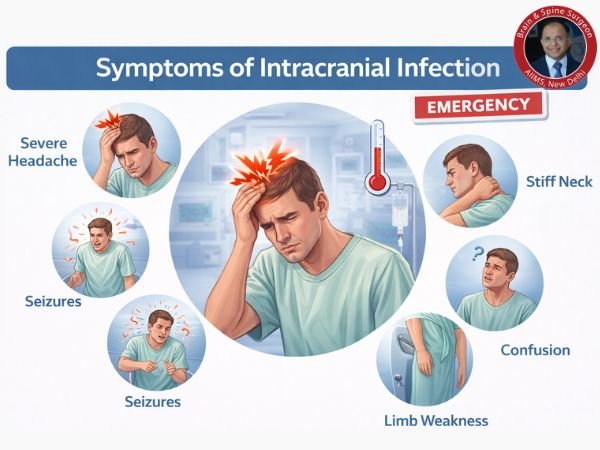
Early detection of brain infection symptoms can save lives.
Typical warning indicators consist of:
Chronic, excruciating headache
Elevated fever
Vomiting and feeling queasy
Stiffness in the neck
Seizures
Changes in consciousness
Perplexity or alterations in behavior
Weakness in the legs or arms
Speaking with difficulty
Disturbances in vision
Note: If someone gets a fever, a bad headache, or confusion, get medical help right away.
How Do They Diagnose Intracranial Infections?
Early diagnosis is essential. Typically, evaluation consists of:
1. Clinical Assessment
A thorough neurological evaluation.
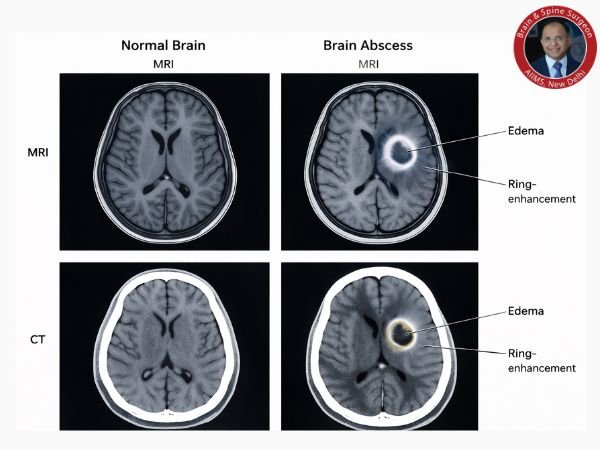
2. Imaging of the Brain
The most sensitive test is a brain MRI.
Brain CT Scan
These aid in the detection of pus accumulations, abscess formation, and swelling.
3. Examinations of the Blood
To find indicators of infection.
4. Spinal tap, or lumbar puncture
Cerebrospinal fluid (CSF) analysis is performed in certain situations, particularly in meningitis.
To provide prompt management, a skilled neurosurgeon and neurologist should make the diagnosis.
Management of Infections Inside the Brain
The kind and severity of the infection determine the course of treatment.
1. Antibiotics or drugs that fight viruses
In cases of bacterial infections, high-dose intravenous antibiotics are administered right away
Viral encephalitis is treated with antiviral medications.
The course of treatment could last anywhere from two to eight weeks.
2. Management via Surgery
Neurosurgical intervention is necessary in certain circumstances, particularly:
Abscess in the brain greater than 2.5 cm
Elevated intracranial pressure
Empyema subdural
Inability to react to medication
Procedures could consist of:
Abscess drainage
Elimination of diseased tissue
Decompression to lower blood pressure in the brain
Results are greatly improved by early surgical intervention.
Untreated Complications
Postponing therapy may lead to:
Irreversible brain damage
Immobility
Early diagnosis and specialised neurosurgery care are therefore crucial.
Recuperation and Outlook
With prompt medical attention:
Many patients fully recover.
Deficits in the nervous system may progressively improve.
In certain situations, rehabilitation could be necessary.
The outcome is dependent on:
Age
The kind of infection
Abscess size (if present)
The rate at which treatment begins
Recovery rates are higher when intervention occurs early.
When Should I Speak with a Neurosurgeon?
See a neurosurgeon right away if:
Fever aggravates the headache.
Seizures occur often.
Abrupt disorientation or unconsciousness happens
Brain infection is shown by MRI/CT.
Timely neurosurgical assessment can save lives.
Avoiding Infections Inside the Brain
Risk can be decreased by:
Early treatment of ear and sinus infections
Taking antibiotics as directed
Keeping oneself clean
Taking care of long-term conditions like diabetes
Receiving the recommended vaccines (such as the meningitis vaccine)
In conclusion
When detected early, intracranial infections are dangerous but curable illnesses. Never disregard symptoms such as a recurring headache, fever, disorientation, or seizures.
Life-threatening consequences can be avoided with prompt diagnosis with an MRI or CT scan and skilled neurosurgical therapy.
Get medical help right away if you or a loved one exhibits signs of a brain infection.
FAQ’s
1. Can an intracranial infection be fatal?
Indeed, if treatment is delayed, they may become life-threatening.
2. Is it possible for sinus infections to move to the brain?
Indeed, brain abscesses can develop from serious sinus infections that are left untreated.
3. Can someone get a brain infection?
Certain kinds, such as viral meningitis, are contagious. An abscess in the brain is not communicable.
4. How long does it take to treat a brain infection?
Depending on the severity, treatment could last anywhere from two weeks to two months.
5. Is it possible for a brain abscess to heal without surgery?
Larger abscesses frequently need surgical drainage, while smaller ones may respond to antibiotics.
6. What is the cerebral infection survival rate?
High survival rates are achieved with early treatment. Treatment delays dramatically raise danger.
7. Is it possible for cerebral infections to result in chronic issues?
Patients may experience seizures or neurological impairment in some situations, but problems are lessened with early care.