Children’s spinal injuries are uncommon but potentially dangerous illnesses. Among them, injuries that take place in the area where the thoracic (mid-back) and lumbar (lower back) spines connect are referred to as paediatric thoracolumbar spine trauma. This region is especially susceptible to high-impact collisions.
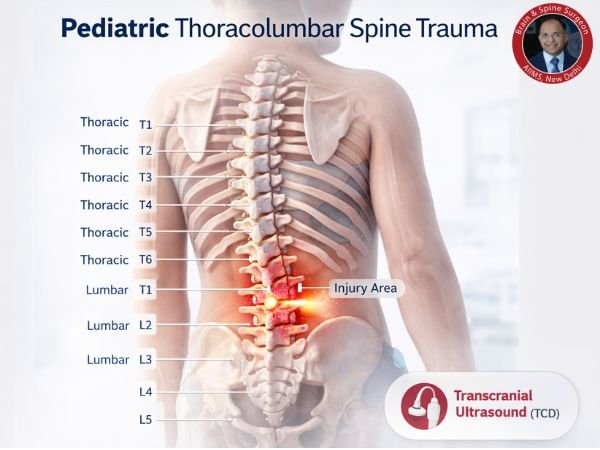
A child’s spine is still developing and more flexible than an adult’s, thus the pattern of injury, diagnosis, and therapy may differ significantly. To avoid long-term issues including neurological impairment, chronic pain, or spinal deformity, early diagnosis and adequate treatment are crucial.
For the benefit of parents and other carers, this article provides a clear explanation of thoracolumbar spine injuries in children, including their causes, symptoms, available treatments, and expectations for recovery.
Related Post:
MIS-TLIF (Minimally Invasive Transforaminal Lumbar Interbody Fusion)
Lumbar Discectomy Surgery: Procedure, Recovery, Risks & Success
What is a Child’s Thoracolumbar Spine Injury?
The area where the lumbar spine (L1–L5 vertebrae) and thoracic spine (T1–T12 vertebrae) join is known as the thoracolumbar spine. Trauma frequently occurs at this juncture because it is a transitional area between the more flexible lumbar spine and the comparatively inflexible thoracic spine.
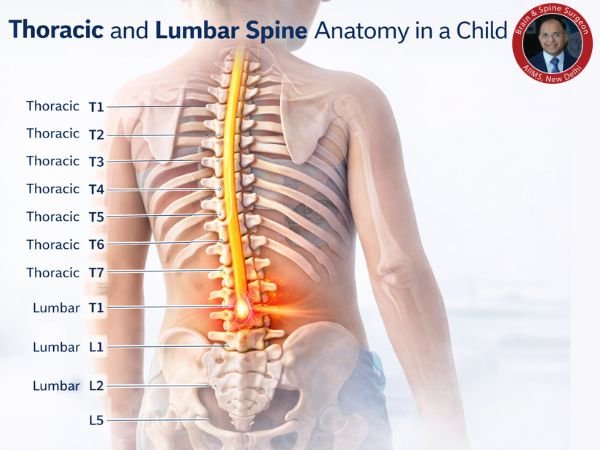
A child’s thoracolumbar spine injury could include:
Damage to the ligaments that cause the spine to become unstable
A spinal cord injury that impairs nerve function
Fractures caused by compression or burst
Children’s spinal injuries frequently differ from those of adults because their ligaments are more elastic and their bones are softer. Because of this, some injuries may result in neurological issues even though there are no visible fractures on imaging.
Paediatric Thoracolumbar Spine Trauma Causes
Among the most typical causes are:
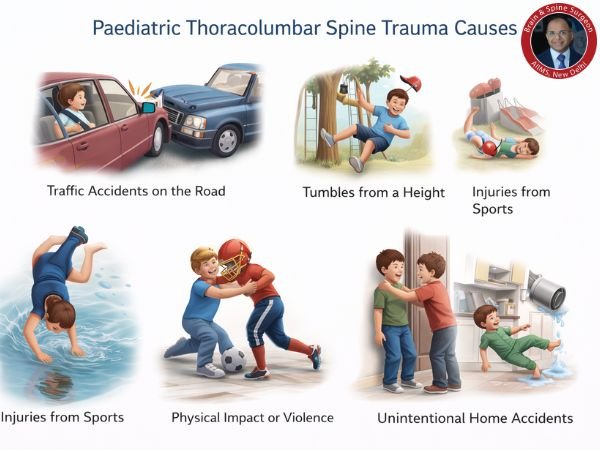
1. Traffic Accidents on the Road
One of the main causes of thoracolumbar spine injuries in children is auto or motorbike accidents.
2. Tumbles from a Height
Spinal injuries can occur from falls from stairs, playground equipment, trees, and buildings.
3. Injuries from Sports
Accidents involving diving, contact sports, and gymnastics can result in spinal damage.
4. Physical Impact or Violence
Sometimes violent assaults or direct strikes can cause spinal damage.
5. Unintentional Home Accidents
Injuries can also result from abrupt twisting motions or heavy objects falling on a youngster.
Paediatric Spinal Trauma Symptoms
Depending on the extent of the injury and whether the spinal cord is impacted, symptoms may differ.
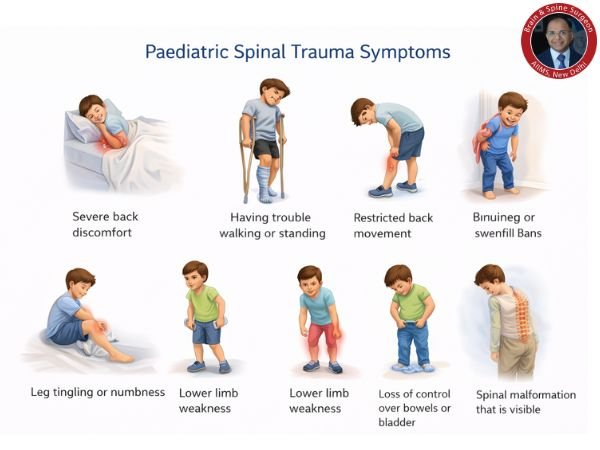
Typical Signs and Symptoms
Severe back discomfort
Having trouble walking or standing
Restricted back movement
Leg tingling or numbness
Lower limb weakness
Loss of control over one’s bowels or bladder (in severe situations)
Spinal malformation that is visible
Bruising or swelling over the spine
Children may not always be able to explain their symptoms. If a child complains of back pain following trauma, parents should take them to the doctor.
Diagnosis of Injury to the Thoracolumbar Spine
Doctors use both clinical evaluation and imaging tests.
Checkup
Doctors look for tenderness, neurological problems, and the alignment of the spine.
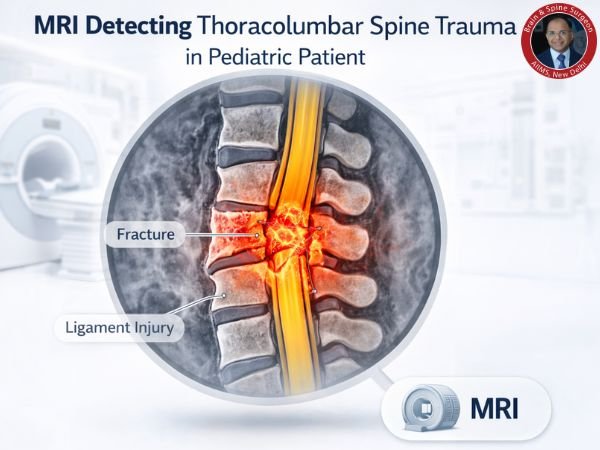
Tests that Use Imaging Pictures
Some common investigations are:
X-rays to find broken bones
CT scans for detailed imaging pictures of bones
MRI scans to check for damage to the spinal cord or ligaments
MRI is especially good at finding damage to soft tissue or the spinal cord, which happens more often in kids.
Therapy for Paediatric Thoracolumbar Fractures
Several factors determine the course of treatment:
Injury severity
The spine’s stability
Damage to the spinal cord
The child’s age
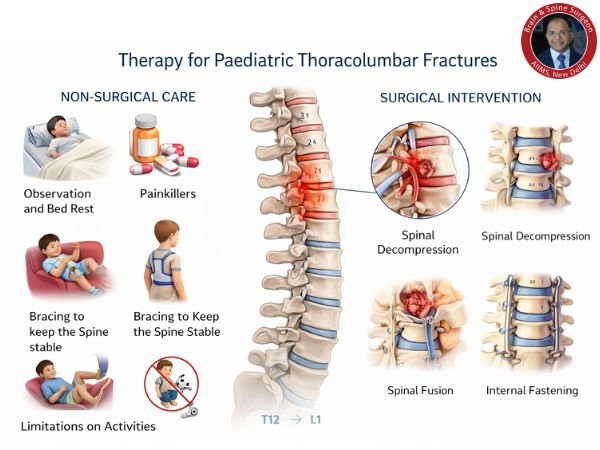
1. Non-Surgical Care
Surgery is not necessary for the treatment of many paediatric spinal injuries.
Typical Methods Include
Observation and bed rest
Painkillers
Bracing to keep the spine stable
Limitations on activities
During the healing process, braces aid in maintaining the correct alignment of the spine.
2. Surgical Intervention
Surgery might be necessary in:
The spine is not stable
The spinal cord is compressed by a fracture
The neurological problems are getting worse
There is a severe deformity
Surgical Techniques Could Include
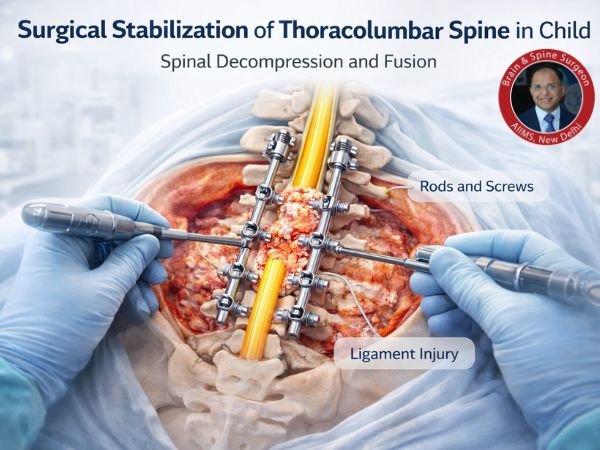
Decompression of the spine
Fusion of the spine
Internal fastening with rods and screws
The goal of contemporary surgical methods is to maintain children’s potential for growth while stabilising the spine.
Treatment for Paediatric Thoracolumbar Spine Injuries
Typically, the treatment plan consists of the following steps:
After trauma, emergency stabilisation
Precise diagnosis with imaging testing
Evaluation of neurological function and spinal stability
Depending on the severity, conservative or surgical therapy
Physiotherapy and rehabilitation
The best care is guaranteed by a multidisciplinary team that includes physiotherapists, paediatricians, orthopaedic surgeons, and neurosurgeons.
Can Children Who Have Spinal Injuries Recover?
Indeed, a lot of kids recover successfully from spinal injuries, particularly if:
The injury is diagnosed early
There is no significant injury to the spinal cord
Rehabilitation and appropriate treatment are given
Due to their developing bones and greater capacity for regeneration, children frequently have greater healing potential than adults.
Severe spinal cord injuries, however, might result in long-term issues including paralysis or weakness.
Recovery Time for Paediatric Spine Injuries
The length of recovery varies according to the injury’s severity.
Typical Timetables Consist of
4–6 weeks for minor injuries
8–12 weeks for moderate fractures
Recuperation after surgery: three to six months or more
Physiotherapy aids in the restoration of strength, mobility, and coordination, all of which are critical components of healing.
Monitoring spinal development and alignment requires routine follow-up with a spine specialist.
Rehabilitation Following Spinal Trauma in Children
Rehabilitation could involve:
Physical Therapy
Enhances muscle strength and mobility.
Occupational Therapy
Helps kids resume their regular activities.
Pain Control
Guarantees comfort while recuperating.
Psychological Assistance
After experiencing trauma, some kids could feel scared or anxious.
Preventing Children’s Spinal Injuries
While not every injury can be avoided, there are steps that can lower the risk:
Use child car seats and seat belts
Keep an eye on kids when they play sports
Promote secure play areas
Wear protective sporting equipment
Avoid diving into shallow water
Risk factors for spinal injuries can be greatly decreased by raising awareness and implementing preventative measures.
When to Consult a Spine Expert
A child needs to receive emergency medical care if they:
After trauma, severe back discomfort
Having trouble walking or moving
Leg weakness or numbness
Loss of control over the bowels or bladder
Results are significantly improved by prompt therapy.
In Conclusion
Thoracolumbar spine trauma in children is a dangerous disorder that needs prompt diagnosis and appropriate care. Many children can have great recovery results thanks to advancements in modern imaging, surgical procedures, and rehabilitation tactics.
For children to safely resume their regular activities and avoid difficulties, prompt medical intervention, suitable treatment, and close monitoring are essential.
If a kid has neurological symptoms or back discomfort after trauma, parents should always seek professional care because early intervention can significantly improve recovery.
FAQ’s
1. What is trauma to the thoracolumbar spine in children?
It describes injuries to children’s lumbar and thoracic spines that are frequently brought on by falls or accidents.
2. How frequently do children sustain thoracolumbar injuries?
Although children are less likely than adults to sustain spinal injuries, the thoracolumbar region is among the most commonly impacted.
3. Is surgery necessary for all paediatric spine fractures?
No, bracing and conservative care are effective treatments for many childhood spine fractures.
4. Can a youngster who has had a spinal damage resume walking?
The degree of spinal cord damage determines how well a person recovers. If the spinal cord is not seriously damaged, many kids make a full recovery.
5. How long does it take a youngster to heal from a spinal fracture?
While serious injuries may take longer, most youngsters heal in 6–12 weeks.
6. After a spinal injury, is physiotherapy required?
Indeed, recovering movement, strength, and coordination requires physiotherapy.
Sources:
- https://pubmed.ncbi.nlm.nih.gov/36412366/
- https://www.ncbi.nlm.nih.gov/books/NBK442027/
- https://pubmed.ncbi.nlm.nih.gov/38885326/
- https://pmc.ncbi.nlm.nih.gov/articles/PMC5696655/
- https://pubmed.ncbi.nlm.nih.gov/24292927/
- https://journals.lww.com/neur/fulltext/2022/70002/management_of_pediatric_and_adolescent_traumatic.14.aspx