Patients with movement problems, particularly dystonia, have found that Deep Brain Stimulation (DBS) is a transformative treatment. By reducing symptoms and improving quality of life, DBS provides hope for people who do not react well to medicine.
Everything a patient or carer needs to know about DBS for dystonia is covered in this guide, including how it operates, who is eligible, advantages, risks, and rehabilitation.
Dystonia: What is it?
Involuntary muscle contractions cause dystonia, a neurological movement disease that can cause twisting motions, strange postures, and even excruciating pain.
Typical Symptoms:
- Stiffness and spasms in the muscles
- Repetitive motions or twisting
- Unusual positions (trunk, limbs, or neck)
- Speech or gait difficulties (in severe situations)
Focal dystonia affects only one area of the body, whereas generalised dystonia affects several areas.
Deep Brain Stimulation (DBS): What is it?
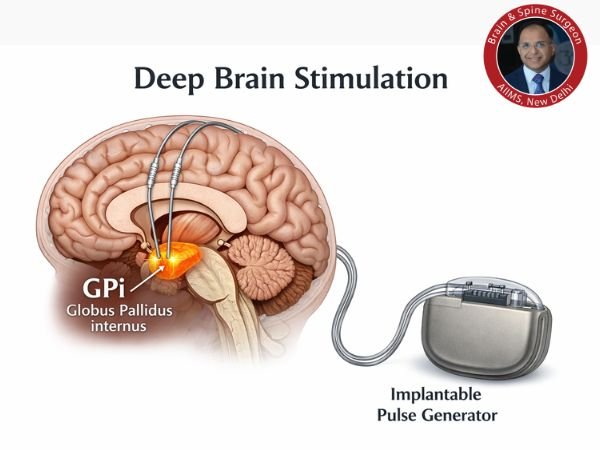
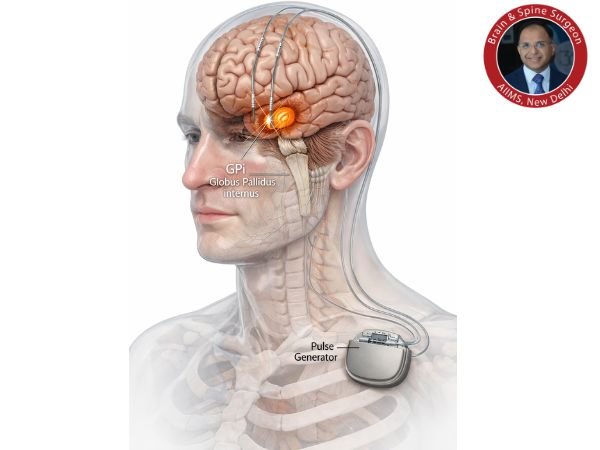
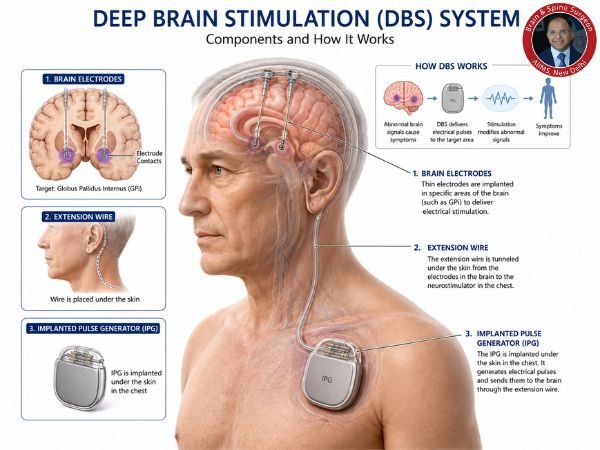
In order to control aberrant signals, electrodes are inserted into particular brain regions via a minimally invasive neurosurgery technique called Deep Brain Stimulation (DBS).
These electrodes are linked to a tiny, pacemaker-like device that is implanted beneath the skin in the chest and transmits regulated electrical impulses to the brain.
How Does Dystonia’s DBS Operate?
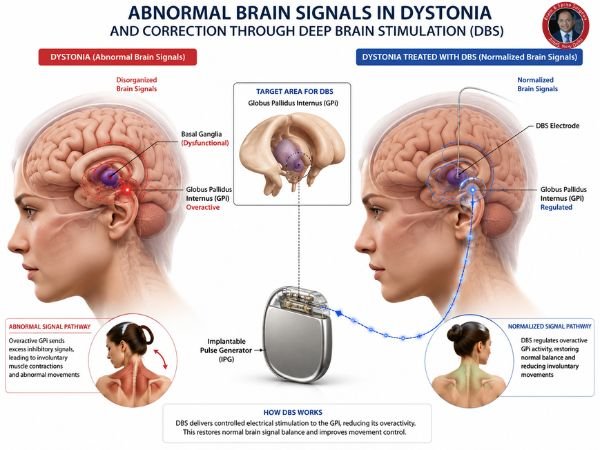
Uncontrolled muscular contractions in dystonia are caused by aberrant brain impulses. DBS targets regions such as the globus pallidus internus (GPi) in order to:
- Restore normalcy to aberrant brain activity
- Cut down on unintentional motions
- Boost the control of your muscles
DBS directly alters the brain circuits that control movement, in contrast to drugs.
Who Qualifies for DBS?
DBS is typically advised for individuals who:
- Have dystonia that is mild to severe
- Don’t react well to drugs
- Have a severe disability on a daily basis
- Medically capable of undergoing surgery
Before surgery, a thorough evaluation that includes imaging, neurological assessment, and multidisciplinary consultation is necessary.
The DBS Process: Detailed
1. Pre-operative Assessment
- MRI/CT scans of the brain
- Neurological assessment
- Assessment of movement disorders
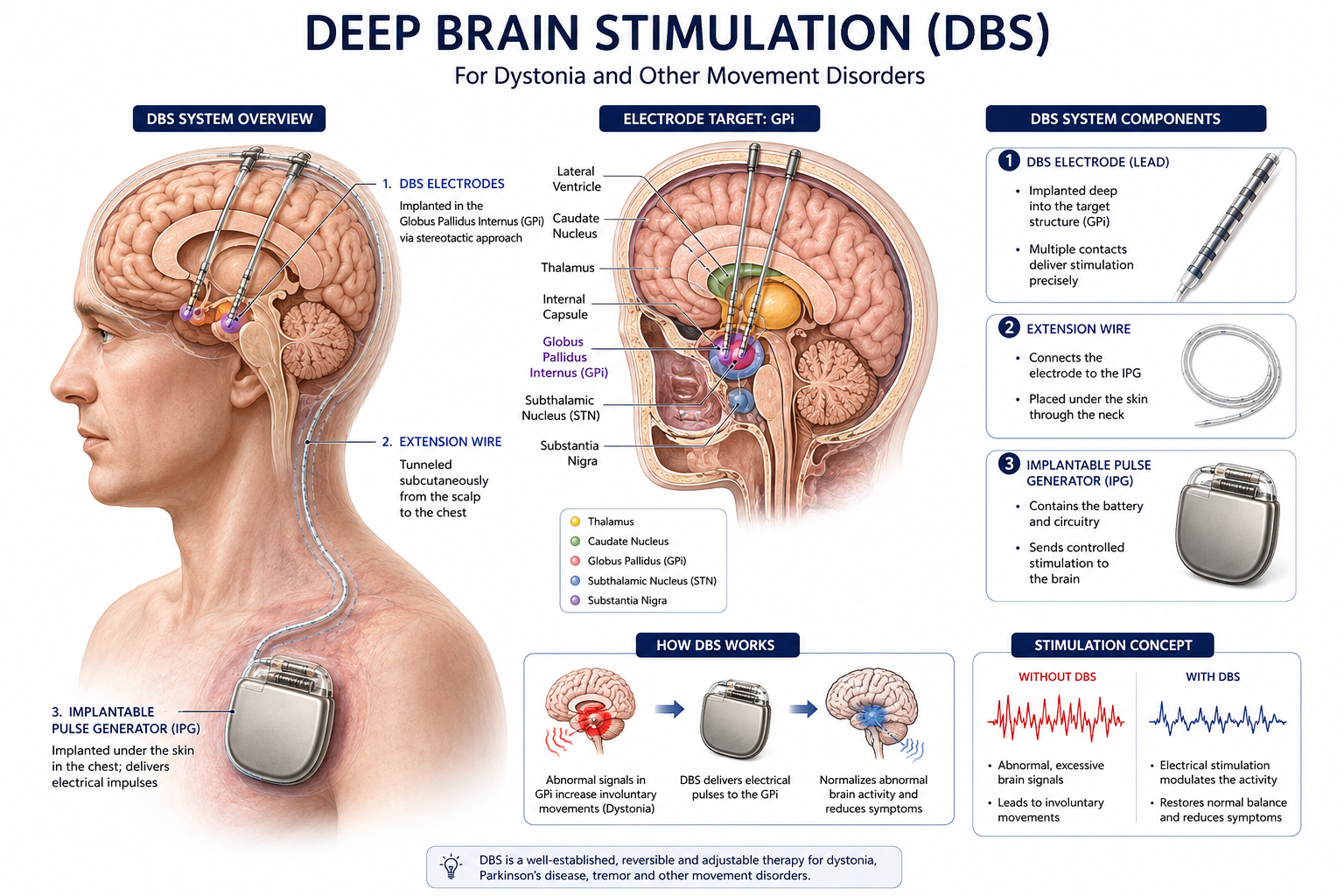
2. Implantation of Electrodes
- Targeted brain regions are covered with thin electrodes
- Advanced imaging is used to perform the procedure with excellent precision
3. Location of the Pulse Generator
- An implanted battery-operated gadget is placed in the chest
- Wired to the electrodes in the brain
4. Programming and Modification
- After surgery, device settings are adjusted
- Over time, modifications are made for the best outcomes
Deep Brain Stimulation’s Advantages
For those with dystonia, Deep Brain Stimulation has a number of benefits.
- Notable decrease of muscular spasms
- Better mobility and posture
- A higher standard of living
- Decreased reliance on drugs
- Adjustable and reversible therapy
Patients frequently see a slow improvement over a period of weeks to months.
Hazards and Difficulties
Although major complications are uncommon, DBS includes some risks, much like any surgical surgery.
Potential Dangers:
- An infection
- Brain bleeding
- Hardware-related problems
- Issues with speech or balance (temporary)
These hazards are greatly decreased by selecting a specialised neurosurgery team.
Recuperation Following DBS Surgery
Quick Recuperation:
- Two to five days in the hospital
- Slight soreness at the surgical sites
Extended Recuperation:
- After healing, device programming starts
- Progressive alleviation of symptoms over several weeks or months
- Frequent optimisation follow-ups
In a few weeks, patients can typically resume their regular activities.
Life Following DBS
DBS efficiently manages dystonia symptoms but does not cure the condition.
Patients frequently observe:
- Greater self-reliance
- Better day-to-day performance
- Improved emotional health
Long-term success is ensured by routine monitoring.
In Conclusion
For patients with severe dystonia symptoms, Deep Brain Stimulation (DBS) is a highly successful and cutting-edge therapy option. DBS can significantly enhance mobility, independence, and general quality of life with careful patient selection and skilled surgical care.
Seeing a professional can help assess whether DBS is the best course of action if you or a loved one has dystonia and is not responding to medicines.
FAQ’s
1. Can dystonia be cured with deep brain stimulation?
DBS greatly lessens symptoms and enhances quality of life, but it is not a cure.
2. What is the duration of DBS?
Although the effects are long-lasting, depending on usage, the battery may need to be changed every three to five years.
3. How painful is DBS surgery?
With the right care, the surgery is usually well tolerated and causes very little pain.
4. After DBS, when will I notice an improvement?
While some people may experience relief in a matter of weeks, others may need several months.
5. Is it possible to reverse DBS?
Indeed, DBS is a safer long-term choice because it is reversible and customisable.
6. How effective is DBS for dystonia?
The majority of patients get significant symptom alleviation, and success rates are excellent, particularly in primary dystonia.
7. Are there DBS substitutes?
Alternatives including medication, physical therapy, and botulinum toxin injections might not be effective in extreme situations.
Sources
- https://pmc.ncbi.nlm.nih.gov/articles/PMC3902434/
- https://pubmed.ncbi.nlm.nih.gov/15097291/
- https://pubmed.ncbi.nlm.nih.gov/30629283/
- https://pmc.ncbi.nlm.nih.gov/articles/PMC3197009/
- https://www.ninds.nih.gov/health-information/disorders/deep-brain-stimulation-dbs
- https://pubmed.ncbi.nlm.nih.gov/12652041/
- https://pmc.ncbi.nlm.nih.gov/articles/PMC3174341/