One of the body’s most intricate structures is the human brain. Understanding brain anatomy is a life-saving ability for neurosurgeons, not just a necessary academic competence. When working on sensitive brain areas, every millimetre counts.
However, how do neurosurgeons accomplish this level of accuracy?
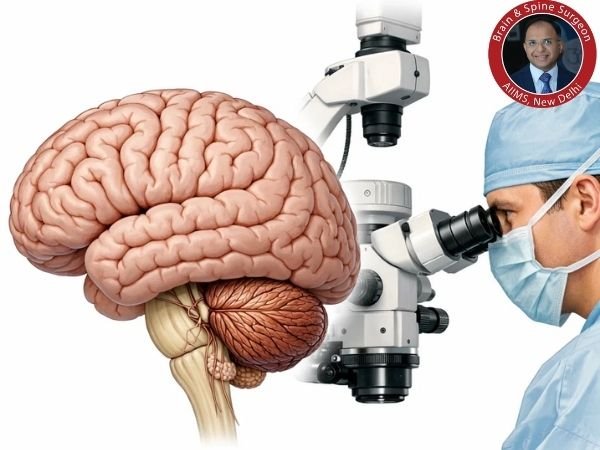
Advanced dissection techniques, which are the foundation of neurosurgery education around the world, including at prestigious schools like All India Institute of Medical Sciences under specialists like Dr. Deepak Agrawal, hold the key to the solution.
how neurosurgeons learn brain anatomy becomes crucial for understanding surgical precision.
What does Brain Anatomy Training in Neurosurgery involve?
Brain anatomy training is the methodical study of the structure of the brain, encompassing:
- Hemispheres of the brain
- Cerebellum and brainstem
- The cranial nerves
- Microstructures and blood vessels
In contrast to normal anatomy, neurosurgeons need to comprehend:
- 3D spatial connections
- Microscopic formations
- Brain area functional mapping
Their profound comprehension enables them to carry out intricate operations such as epilepsy surgery, tumour excision, and aneurysm clipping.
For neurosurgeons, why is brain anatomy so crucial?
When doing neurosurgery on extremely delicate structures, even a tiny mistake could result in:
- Paralysis
- Speech loss
- Impaired memory
- Potentially fatal complications
Neurosurgeons with advanced anatomical knowledge are able to:
- Safely navigate the brain
- Avoid critical areas
- Reduce harm to healthy tissue
- Boost surgical results
Advanced Dissection Techniques’ Function
1. Dissection of a cadaveric brain
In neurosurgical teaching, cadaveric dissection is still the gold standard.
What it includes
- Examining preserved human brains
- Dissection layer by layer
- Recognising vascular structures and neuronal pathways
Advantages
- Understanding real-world anatomical variations
- Practical experience
- Growth of confidence in surgery
2. Microsurgical Dissection Techniques
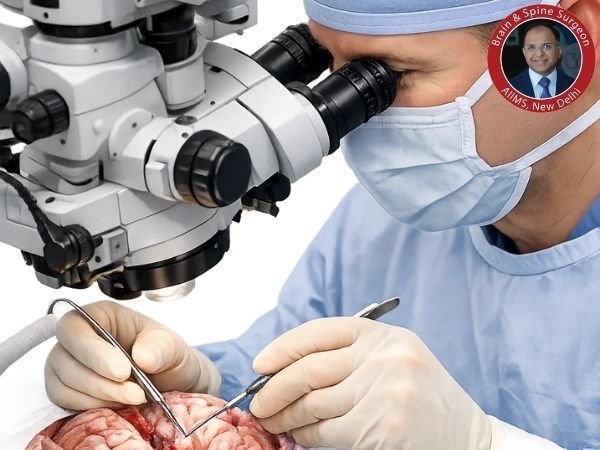
Modern neurosurgery needs microsurgical accuracy, which is accomplished through:
- Using microscopes
- Fine surgical instruments
- Replication of actual operations
Principal benefits:
- Enhances hand-eye coordination
- Increases accuracy in sensitive regions
- Simulates actual surgical situations
3. Dissection of White Matter Fibres
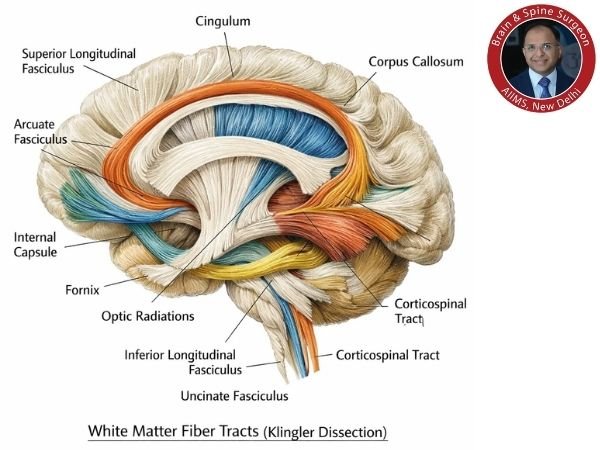
This advanced technique focuses on studying brain connectivity.
Method implemented:
Klingler’s technique (dissecting and freezing brain tissue)
Why it’s important
- Helps see fibre tracts
- Essential for the surgery of tumours and epilepsy
- Helps surgeons maintain brain function.
4. Virtual Reality (VR) and 3D Simulation

Neurosurgical education is changing as a result of technology.
Among the tools are:
- 3D models of the brain
- Labs for virtual dissection
- Platforms for augmented reality (AR)
Advantages:
- A secure setting for learning
- Practice that is repeated
- Better spatial understanding
5. Integration of Neuroimaging
Neurosurgeons use their expertise in dissection with imaging methods like:
- Magnetic Resonance Imaging, or MRI
- CT scans
- fMRI, or functional MRI
This helps link anatomy with real patient data, boosting surgical planning.
A Step-by-Step Guide to Neurosurgeon Training
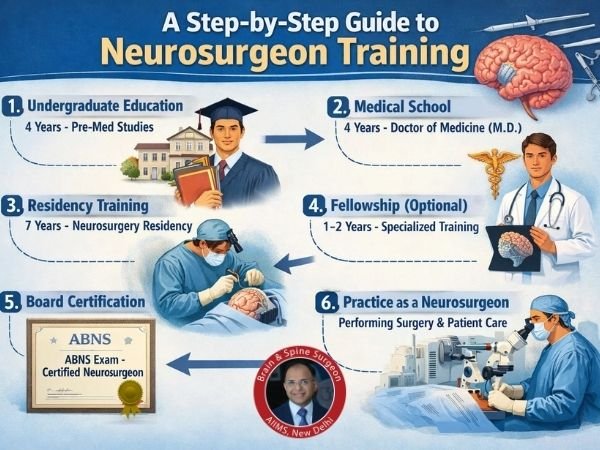
- Basic Anatomy Learning (Medical school)
- Training in Cadaveric Dissection
- Development of Microsurgical Skills
- Advanced Workshops & Courses in Dissection
- Surgical Practice Under Supervision
- Ongoing Education Using Technology
Since neurosurgery is a constantly changing subject, training continues even after qualification.
Difficulties in Understanding Brain Anatomy
- The intricacy of brain architecture
- Cadavers are few.
- Need for high precision
- Constant improvements in methods
Despite these difficulties, sophisticated dissection techniques improve the efficacy and usefulness of learning.
Training in Neurosurgical Anatomy in the Future
Innovation is what will shape the future:
- Anatomical mapping using AI
- Surgical planning in virtual reality
- 3D models tailored to each patient
- Training aided by robotics
These developments will improve the accuracy, accessibility, and safety of neurosurgical education.
In conclusion
The foundation of neurosurgery is an understanding of brain anatomy. Through advanced dissection techniques ranging from cadaveric studies to cutting-edge virtual simulations neurosurgeons learn the precision and confidence required to undertake life-saving treatments.
how neurosurgeons learn brain anatomy highlights the importance of continuous learning in improving patient outcomes.
In order to improve patient outcomes and advance the discipline of neurosurgery, professionals like Dr. Deepak Agrawal stress the importance of ongoing anatomical learning.
FAQ’s
Why is cadaver dissection still used by neurosurgeons?
Cadaver dissection provides true anatomical experience that cannot be entirely recreated by simulations.
What is the Klingler method?
It is a specialised technique for studying white matter fibre networks by freezing and cutting brain tissue.
Is it possible for neurosurgeons to understand anatomy without dissection?
Digital tools are helpful, but dissection is still necessary for practical comprehension.
How long does it take to become an expert in brain anatomy?
It requires years of education and ongoing practice, which frequently lasts the entirety of a neurosurgeon’s career.
Is virtual reality replacing traditional dissection?
No, virtual reality enhances but does not take the place of cadaveric and microsurgical training.
What are the advantages for patients of this training?
Improved knowledge of anatomy results in:
- Safer procedures
- Decreased issues
- Quicker recuperation
Sources:
- https://pmc.ncbi.nlm.nih.gov/articles/PMC8769374/
- https://pubmed.ncbi.nlm.nih.gov/39216723/
- https://pubmed.ncbi.nlm.nih.gov/35069130/
- https://pmc.ncbi.nlm.nih.gov/articles/PMC11140186/
- https://pubmed.ncbi.nlm.nih.gov/34306946/
- https://www.frontiersin.org/journals/surgery/articles/10.3389/fsurg.2023.1145881/full
- https://www.sciencedirect.com/science/article/abs/pii/S0303846721004777