



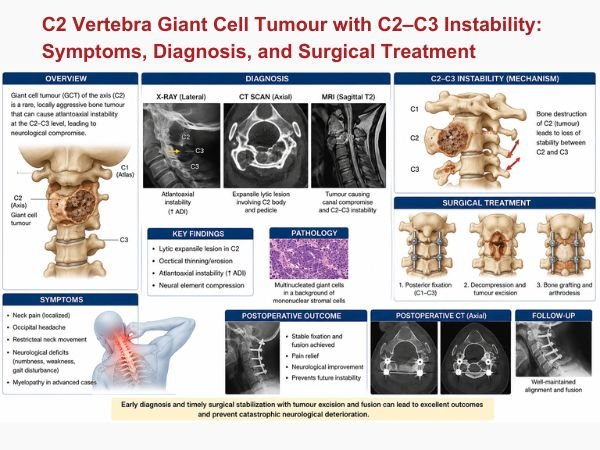
Head movement and neck stability are significantly influenced by the upper cervical spine, especially the C2 vertebra (axis). Giant cell tumours (GCTs) and C2–C3 instability are uncommon but potentially dangerous conditions that affect this area. If left untreated, these disorders can result in life-threatening consequences, neurological impairments, and excruciating agony.
Everything a patient or carer needs to know about C2 vertebra giant cell tumours and related C2–C3 instability is covered in this guide, including symptoms, diagnosis, and advanced surgical procedures.
What is a C2 vertebral giant cell tumour?
A giant cell tumour (GCT) is a type of bone tumour that is usually benign but aggressive locally. It can infrequently damage the spine, particularly the C2 vertebra, even though it is most frequently observed in long bones.
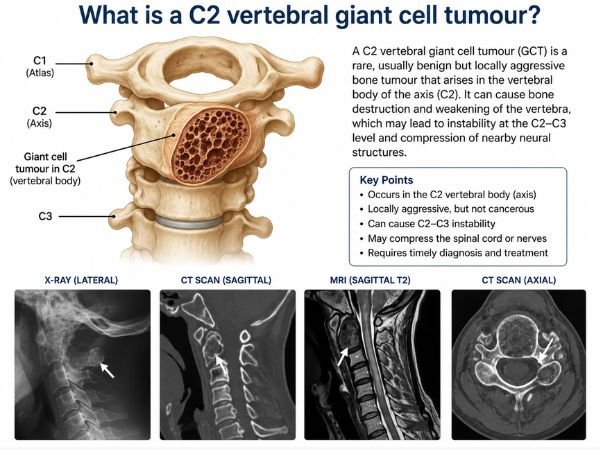
Important Features:
- Usually impacts young individuals (ages 20 to 40).
- Destructive and aggressive locally
- Can impair spinal stability and weaken the vertebrae.
- May put pressure on the nerves or spinal cord.
C2-C3 Instability: What Is It?
Abnormal movement between the second (axis) and third cervical vertebrae is referred to as C2–C3 instability. This instability may result from:
- Bone damage caused by tumours (such as GCT)
- Fractures or trauma
- Damage to a ligament
- Conditions of the degenerative spine
- Inflammatory illnesses or infections
Neurological problems and compression of the spinal cord can result from instability.
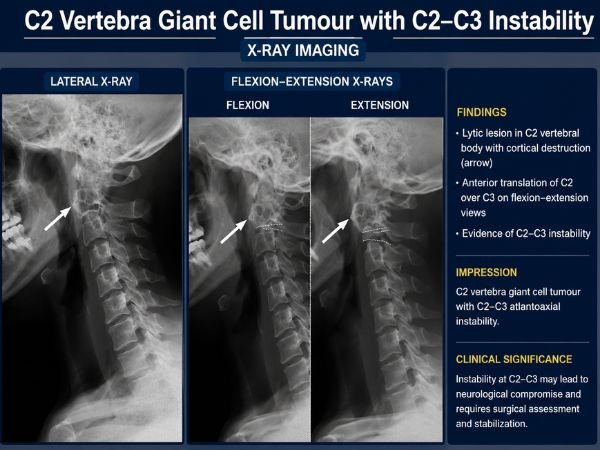
What Makes the Combination Risky?
C2–C3 instability may result directly from a large cell tumour weakening the C2 vertebra. This combination raises the possibility of:
- Compression of the spinal cord
- Abrupt decline in neurological function
- Severe malformation of the neck
- Potentially fatal complications
Symptoms to Look Out for
Individuals with instability and C2 GCT may encounter:
Symptoms Associated with the Neck
- Chronic neck discomfort
- Limited neck movement
- Pain that gets worse when you move
Symptoms of the nervous system
- Arm or leg weakness
- Tingling or numbness
- Walking difficulties (gait imbalance)
- Coordination loss
Serious Warning Indications
- Breathing difficulties (in advanced situations)
- Loss of control over the bowels or bladder
- Abrupt paralysis (medical emergency)
Diagnosis
Effective treatment depends on an early and precise diagnosis.
Clinical Assessment
- Neurological evaluation
- Assessment of neck discomfort and stability
- Imaging Research
X-ray
- First screening instrument
- May exhibit bone deterioration or instability.
CT Scan
- Detailed anatomy of the bones
- Determines the degree of tumour involvement
An MRI
Ideal for assessing:
- Compression of the spinal cord
- Involvement of soft tissues
- Spread of the tumour
- A biopsy
- Verifies the giant cell tumour diagnosis
- Aids in distinguishing it from other tumours
Options for Treatment
The goal of treatment is to:
- Take out the tumour
- Re-establish spinal stability
- Safeguard brain activity
Surgical Intervention
In most situations, surgery is the primary course of treatment.
Removal of Tumours (Resection)
- Tumour removal, either total or partial
- Due to the close proximity to important structures, sophisticated approaches may be required.
Fixation and Spinal Stabilisation
- Utilising plates, rods, and screws
- Stabilises the C2–C3 area
- Stops abnormal movement
Fusion of the Spine
- Vertebral fusion with a bone transplant
- Ensures stability throughout time.
Combined Method
Patients frequently need:
- Tumour removal, stabilisation, and fusion all in one procedure
Related Blog: Surgical Treatment for Lumbar Burst Fractures: Transpedicular Approach Explained
Additional and Non-Surgical Therapies
- Denosumab Treatment
- A specific medication for large cell tumours
- Aids in tumour reduction and recurrence prevention
- Radiation Treatment
- Used in specific situations where surgery is not possible.
Healing and Rehabilitation
Recovery following surgery consists of:
- ICU observation (first stage)
- Gradual mobilisation
- Physiotherapy to improve mobility and strength
- Regular follow-up imaging
Timeline for Recovery
- Hospital stay: Around five to ten days
- Complete recuperation: a few weeks to months
Prognosis
With prompt and professional care:
- The majority of patients report substantial symptom alleviation.
- The severity at presentation determines neurological recovery.
- GCT carries a risk of recurrence, demanding ongoing monitoring.
When Is It Time to See a Physician?
Get medical help right away if you encounter:
- Chronic neck discomfort
- Numbness or weakness in the limbs
- Walking or balance difficulties
- Abrupt deterioration of symptoms
In conclusion
A complicated but curable condition is a large cell tumour of the C2 vertebra associated with C2–C3 instability. To get the greatest results, early diagnosis, sophisticated imaging, and skilled surgical care are essential.
Seeing a neurosurgeon as soon as possible can save your life if you or a loved one is suffering from symptoms.
FAQ’s
Is a giant cell tumour malignant?
Although GCT is often benign, it can act aggressively and cause bone injury.
Is it possible for C2–C3 instability to recover without surgery?
While tumor-induced instability typically necessitates surgery, mild cases may be treated conservatively.
Is surgery dangerous in this area?
Yes, because of its close closeness to the brainstem and spinal cord, yet it is safe and efficient in skilled hands.
After surgery, will I be able to move normally again?
Although some neck movement may be limited following fusion, the majority of patients regain normal function.
Will the tumour return?
It is potential for recurrence to occur. Frequent follow-ups are crucial.
How urgent is the course of treatment?
Extremely urgent—delaying could cause irreversible brain damage.
Sources:
- https://pmc.ncbi.nlm.nih.gov/articles/PMC6187900/
- https://pmc.ncbi.nlm.nih.gov/articles/PMC8906507/
- https://pmc.ncbi.nlm.nih.gov/articles/PMC11447343/
- https://pmc.ncbi.nlm.nih.gov/articles/PMC2989139/
- https://journals.lww.com/jcjs/fulltext/2018/09030/giant_cell_tumor_with_pathological_fracture_of_c2.14.aspx
- https://pubmed.ncbi.nlm.nih.gov/18303460/\
- https://pmc.ncbi.nlm.nih.gov/articles/PMC7274363/
- https://pubmed.ncbi.nlm.nih.gov/29433185/