
One of the most prevalent nerve-related disorders affecting the hand and wrist is carpal tunnel syndrome (CTS). It can cause hand pain, numbness, tingling, and weakness, which frequently interferes with everyday tasks including typing, writing, driving, and even sleeping.
Effective hand function recovery and long-term nerve injury prevention are possible with early diagnosis and appropriate treatment.
Carpal Tunnel Syndrome: What Is It?
When the median nerve, which travels from the forearm into the hand, is squeezed at the wrist, carpal tunnel syndrome develops.
Along with tendons that aid in finger movement, the median nerve travels via the carpal tunnel, a small opening in the wrist. Symptoms result from pressure building up on the nerve when this tunnel is constricted or enlarged.
What Causes Carpal Tunnel Syndrome?

Increased pressure inside the carpal tunnel is typically the cause of CTS.
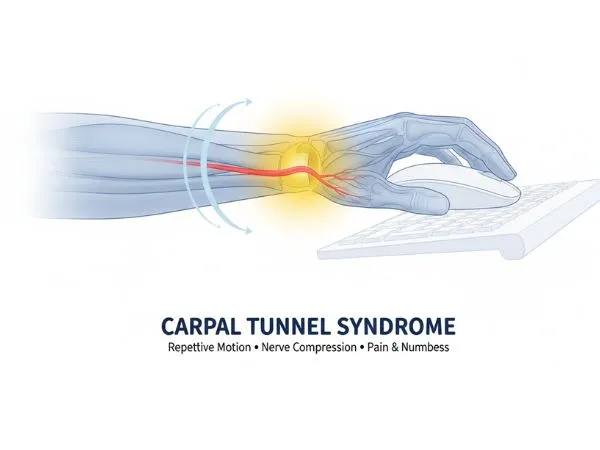
Typical reasons consist of:
Hand or wrist motions that are repeated (typing, using a phone, assembly work)
Extended use of vibrating instruments
Fractures or injuries to the wrist
Inflammatory diseases (arthritis)
Temporary fluid retention during pregnancy
Thyroid conditions and diabetes
Being overweight
Genetic susceptibility (narrow carpal tunnel by nature)
Typical Carpal Tunnel Syndrome Symptoms
Symptoms frequently start out slowly and could get worse over time:

Early Signs
Thumb, index, middle, and half of the ring finger tingling or numbness
Sensations of electric shock or burning in the hand
Symptoms are worse in the morning or at night.

Increasing Symptoms
Poor grip strength
Having trouble grasping stuff
Hand awkwardness or dropping objects
Radiating pain to the shoulder or forearm
Advanced Symptoms
Continuous numbness
Wasting of the thumb’s basal muscles
If left untreated, permanent nerve injury
How Can Carpal Tunnel Syndrome Be Identified?
The basis for diagnosis is:

Clinical assessment
Medical background and pattern of symptoms
To verify nerve compression, nerve conduction investigations (NCV/EMG)
MRI or ultrasound (in certain situations)
Options for Treating Carpal Tunnel Syndrome
The severity of nerve injury and symptoms determines the course of treatment.

Conservative (non-surgical) Therapy
Suggested for Carpal Tunnel Syndrome that is mild to moderate:
1. Splinting the wrist
Maintains a neutral wrist position
Particularly useful at night
Lowers the pressure on nerves
2. Modification of Activities
Cutting down on repeated strain
Taking regular pauses
Setting up an ergonomic workspace
3. Drugs
Anti-inflammatory drugs
Painkillers (as prescribed by the physician)
4. Physical treatment
Exercises that ease nerves
Stretching and strengthening
5. Injections of steroids
Lessens inflammation and swelling
Offers short-term to medium-term relief
Not a long-term fix in extreme situations
Surgical Treatment (Release of the Carpal Tunnel)
When is surgery recommended?
Despite cautious treatment, symptoms continue to exist.
Significant compression is shown by nerve testing.
There is loss of muscle or weakness.
Carpal Tunnel Surgery: What Is It?
Cutting the tight ligament over the carpal tunnel is a treatment that relieves pressure on the median nerve.
Surgical Types
Release the Carpal Tunnel
Minimally Invasive Endoscopic Release
When carried out by a skilled surgeon, both treatments are safe and efficient.
Rehabilitation Following Surgery
Daycare or a short hospital stay
Gradually, numbness and pain go away.
Light exercise in a few days; complete recuperation in four to six weeks (may vary)
Physiotherapy could be recommended.
Is It Possible to Prevent Carpal Tunnel Syndrome?
Although not always possible to prevent, danger can be decreased by:
Keeping your wrists in good alignment
Using ergonomic mice and keyboards
Taking frequent pauses when performing repetitious tasks
Handling underlying medical issues
Developing the muscles in the hands and wrists
When Is It Time to See a Physician?
Speak with an expert if you notice:
Hand discomfort or numbness that doesn’t go away
Symptoms at night interfering with sleep
Weakness or trouble grasping objects
Over time, symptoms get worse
Permanent nerve injury can be avoided with early therapy.
Professional Care Is Important

The key to effectively managing carpal tunnel syndrome is timely intervention, individualised treatment, and accurate diagnosis. Early consultation will help you regain your hands’ comfort, strength, and functionality if you are having symptoms.
FAQ’s
1. Does carpal tunnel syndrome pose a risk?
Early therapy is quite beneficial, but it can result in lasting nerve damage and muscular weakening if left untreated.
2. Can CTS recover on its own?
Rest and splinting may help mild cases, but medical care is often necessary.
3. Does surgery always have to be done?
No, non-surgical treatment improves a lot of patients. Surgery is only used in extreme or chronic situations.
4. What is the duration of carpal tunnel surgery?
Usually lasting 15 to 30 minutes, this process is frequently carried out as part of nursery.
5. After surgery, will symptoms recur?
If surgery is performed appropriately and underlying reasons are treated, recurrence is unlikely.
6. Can it harm both hands?
Indeed. Both hands are frequently affected by CTS, albeit one may be more affected than the other.
7. Do people who use computers often have CTS?
Indeed. Long-term, repetitive wrist motions raise the risks.
8. Can everyday tasks like cooking or driving be impacted by carpal tunnel syndrome?
Indeed. Gripping utensils, holding a steering wheel, buttoning garments, and performing precise hand movements can all be challenging for those with CTS. Without treatment, even easy chores could become dangerous or unpleasant as the illness worsens.
9. Are persons of working age the only ones affected by carpal tunnel syndrome?
No. CTS can affect homemakers, pregnant women, the elderly, and those with medical illnesses like diabetes or thyroid diseases, although it is more common in persons who use their hands frequently at work.
10. What happens if you don’t treat carpal tunnel syndrome?
Ignoring symptoms can result in persistent pain, irreparable loss of hand strength and sensation, permanent nerve injury, and muscular atrophy at the base of the thumb. Early medical assessment is very important.
Sources:
- https://www2.hse.ie/conditions/carpal-tunnel-syndrome/
- https://www.nhs.uk/conditions/carpal-tunnel-syndrome/
- https://my.clevelandclinic.org/health/diseases/4005-carpal-tunnel-syndrome
- https://www.physio-pedia.com/Carpal_Tunnel_Syndrome
- https://pubmed.ncbi.nlm.nih.gov/37082094/
- https://www.niams.nih.gov/health-topics/carpal-tunnel-syndrome/diagnosis-treatment-and-steps-to-take
- https://www.sciencedirect.com/science/article/abs/pii/S1474442216302319
- https://www.ncbi.nlm.nih.gov/books/NBK448179/
- https://pubmed.ncbi.nlm.nih.gov/37790823/
- https://pubmed.ncbi.nlm.nih.gov/31372847/