Table of Contents
Gamma Knife Radiosurgery: A Promising Non-Invasive Approach for Pain Management
At a recent pain and neuromodulation workshop, Prof. Deepak Agrawal from All India Institute of Medical Sciences spoke about something that is slowly changing the way doctors look at chronic pain treatment — Gamma Knife Radiosurgery.
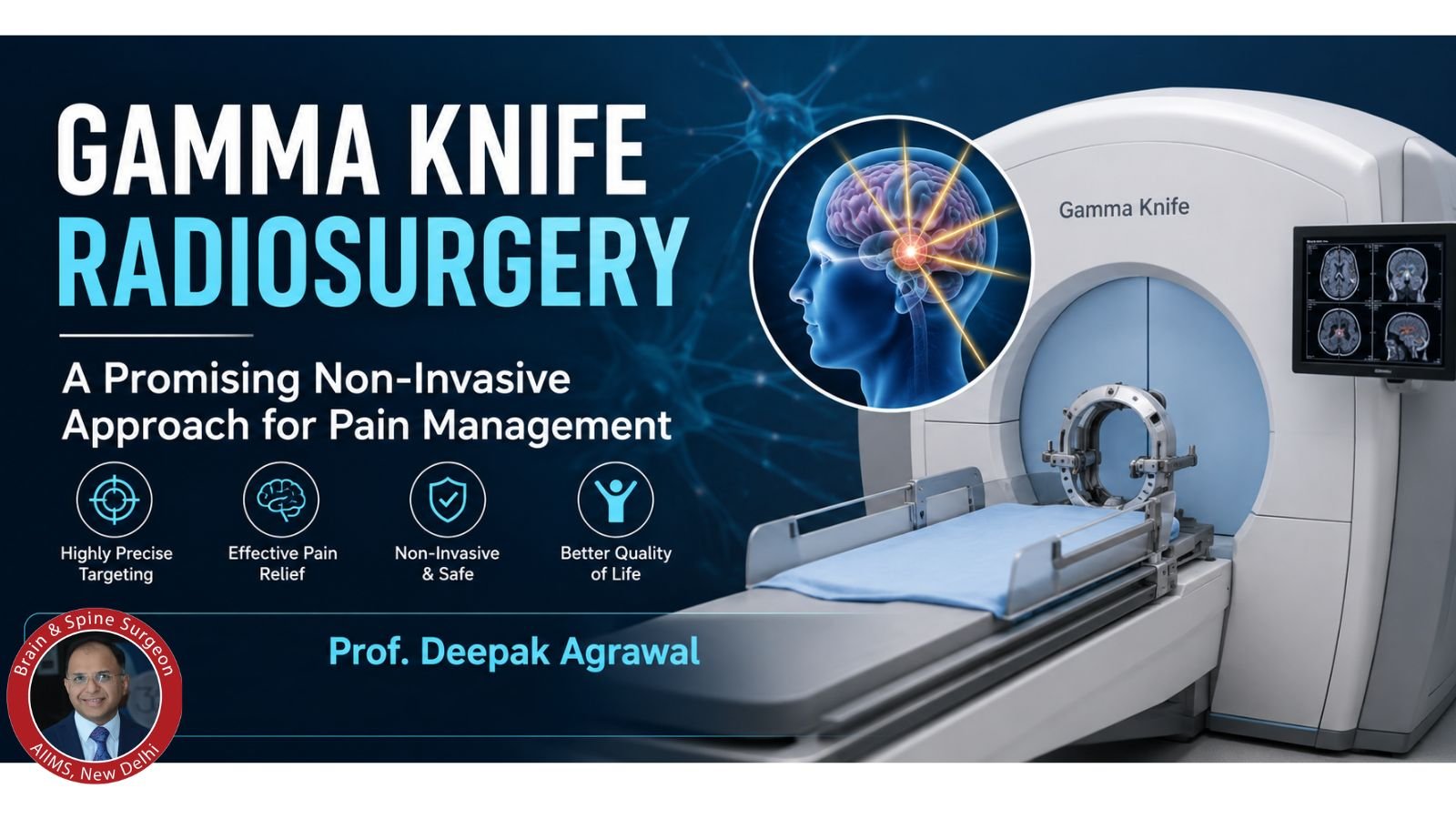
Instead of discussing the topic only from textbooks or research papers, Prof. Agrawal shared practical experiences from patients treated in real clinical settings. The session mainly focused on how this technology may help people who continue suffering despite medicines, injections, or multiple procedures.
“Pain Treatment Is Evolving”
Prof. Deepak Agrawal explained during the session that neurosurgeons frequently see patients whose lives become severely affected by chronic pain. Many patients visit hospitals repeatedly, take long-term medications, and still struggle with daily activities.
According to him, doctors are now exploring newer methods that are less invasive and more targeted. Gamma Knife Radiosurgery is one such approach that is gaining attention in functional neurosurgery and pain management.
He described Gamma Knife as a focused radiation-based treatment that works without opening the skull or performing major surgery.
What Makes Gamma Knife Different?
During the discussion, Prof. Agrawal explained that the biggest advantage of Gamma Knife treatment is precision.
Instead of operating through a large surgical opening, the system focuses radiation on selected neurological targets. Because of this precision, surrounding brain tissue receives much less exposure compared to older treatment approaches.
He also spoke about the concept of “radiomodulation.” In simple terms, he explained that lower radiation doses may influence abnormal pain pathways without destroying healthy brain tissue.
This idea is becoming increasingly important in modern neuromodulation research.
Prof. Deepak Agrawal’s Discussion on Trigeminal Neuralgia
One major part of the lecture focused on trigeminal neuralgia, a condition known for causing sudden severe facial pain.
Prof. Agrawal explained that some patients describe the pain as electric shocks affecting the face. Eating, brushing teeth, or even speaking may trigger painful episodes in certain cases.
During the presentation, he shared that Gamma Knife treatment has shown encouraging outcomes in carefully selected patients with typical trigeminal neuralgia.
According to the observations discussed:
- Many patients improve within a few weeks
- Some patients notice earlier relief
- Long-term pain control has been reported in several studies
He also pointed out that complication rates remain relatively low when treatment is performed properly.
“Repeat Treatment Can Sometimes Be Possible”
Another point highlighted by Prof. Agrawal was that some patients may undergo repeat Gamma Knife treatment if pain returns later.
He mentioned that recurrent cases are often more complex, but repeat radiosurgery has been attempted in selected situations with varying levels of success.
At the same time, he emphasized that treatment planning should always depend on the patient’s condition, symptoms, previous procedures, and overall health status.
Gamma Knife and Cancer Pain
One of the most interesting discussions during the session involved severe cancer-related pain.
Prof. Deepak Agrawal described cases where patients continued experiencing intense pain despite strong pain medications. In selected situations, Gamma Knife treatment targeting the pituitary stalk was explored as a pain-control strategy.
He shared examples in which:
- Pain scores reduced significantly
- Patients became more comfortable
- Opioid medication requirements decreased in some cases
- Clinical improvement appeared within days to weeks
He described these findings as promising but also stressed that larger research studies are still important.
Experience Shared in Acromegaly-Related Pain
During the lecture, Prof. Agrawal also discussed patients with acromegaly who continued suffering from severe pain despite hormone therapy and routine treatment.
According to the clinical experiences presented during the session, selected patients showed noticeable improvement after radiosurgical intervention.
He clarified that these are evolving experiences and that long-term scientific evaluation remains necessary.
Discussion on Rare Headache Disorders
The session also included discussion about difficult headache syndromes such as SUNCT syndrome and refractory headache conditions.
Prof. Agrawal explained that some patients with severe headache disorders who failed standard treatment approaches showed meaningful improvement after Gamma Knife targeting specific neural structures.
These observations highlighted the expanding role of radiosurgery in modern pain neuroscience.
Important Points Shared During the Q&A Session
The audience discussion included several practical questions about treatment timing, patient selection, surgical risk, and repeat procedures.
Prof. Deepak Agrawal explained that:
- Earlier intervention may sometimes produce better outcomes
- Elderly patients may benefit from non-invasive approaches
- Patients with high surgical risk are often considered differently
- Long-term follow-up is extremely important in pain procedures
He also discussed radiation safety and explained that critical structures such as the optic nerves are carefully protected during treatment planning.
A Growing Area in Modern Neurosurgery
Toward the end of the session, Prof. Deepak Agrawal described Gamma Knife Radiosurgery as an important part of the future of functional neurosurgery and pain management.
According to him, non-invasive neuromodulation techniques are becoming increasingly valuable because they offer additional options for patients who may not respond to medicines or conventional procedures.
While more scientific studies are still needed, the experiences discussed during the workshop reflected growing interest in precision-based pain treatment approaches.
About Prof. Deepak Agrawal
Prof. Deepak Agrawal is a senior neurosurgeon associated with All India Institute of Medical Sciences. His work includes neurotrauma, functional neurosurgery, neuromodulation, and advanced minimally invasive brain treatment techniques.