


One of the most prevalent malignant brain tumours in children is medulloblastoma, which develops in the cerebellum, the area of the brain in charge of balance and coordination. Advances in neuroimaging have significantly improved early diagnosis and treatment planning. Gyriform differentiation is one such significant radiological characteristic that has been identified as a possible predictor of particular histological subtypes of medulloblastoma.
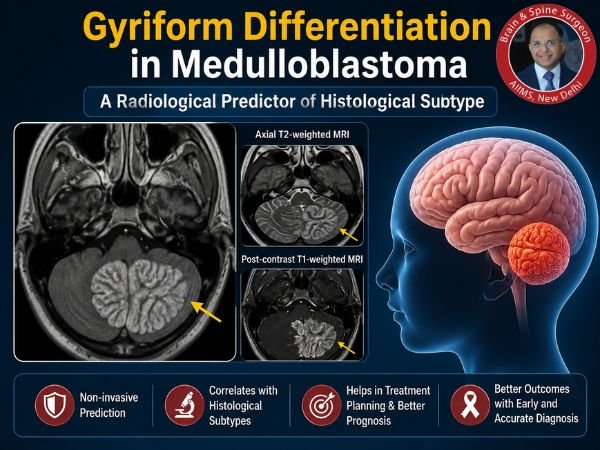
Clinicians, patients, and families can better understand disease behaviour, prognosis, and treatment options by grasping this idea.
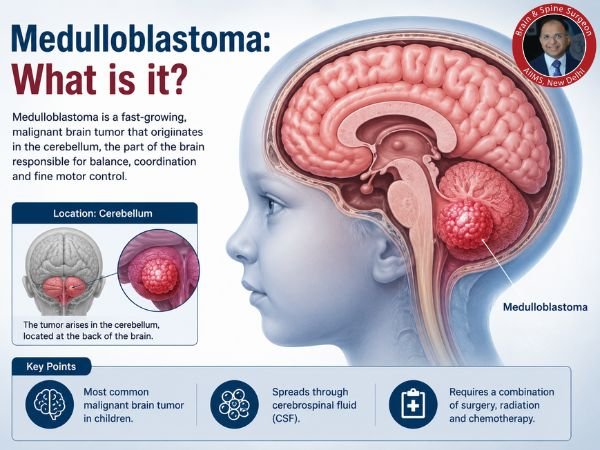
Medulloblastoma: What is it?
The posterior fossa, or rear of the brain, is where medulloblastoma, a rapidly expanding tumour, first appears. Although it can happen to adults, it mainly affects youngsters.
Important Features:
- Extremely hostile but manageable
- Spreads via the cerebrospinal fluid (CSF)
- Requires chemotherapy, radiation, and surgery

what is Medulloblastoma
Gyriform Differentiation: What is it?
The term “gyriform differentiation” describes a pattern on brain imaging, particularly MRI images, when the tumour seems to resemble the cortex’s folds, or gyri.
To put it simply:
Unlike other tumours, it appears like the tumour is producing ridges or folds that resemble brains.
What Makes Gyriform Differentiation Vital?
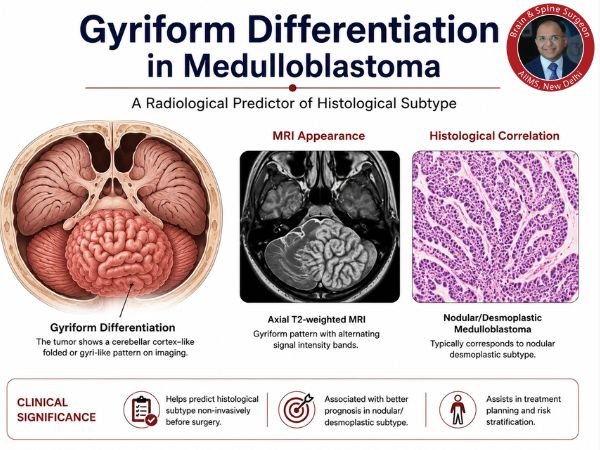
According to recent radiographic research, gyriform patterns may be associated with particular medulloblastoma histology subtypes, specifically:
- Nodular/desmoplastic medulloblastoma
- Variant of Extensive Nodularity
These subtypes frequently have:
- An improved prognosis
- Unique biological behaviour
- Various reactions to treatment
Gyriform Differentiation’s Radiological Features
Gyriform differentiation may appear in MRI scans:
- Folded or curved designs
- Signal intensity bands that alternate
- Cortical fold-like nodular architecture
Imaging Techniques Employed:
- Magnetic resonance imaging, or MRI, is the gold standard
- Improved imaging to see tumours more clearly
Medulloblastoma Histological Subtypes
Based on their microscopic morphology, medulloblastomas are divided into several subtypes:
1. Traditional Medulloblastoma
- The most typical subtype
- Tumour cells that are closely spaced
2. Nodular/desmoplastic medulloblastoma
- Connected to the differentiation of gyriform
- Improved prognosis, particularly for newborns
3. Anaplastic/large cell
- Increased hostility
- Less favourable results
4. Wide Nodularity
- Notable nodular structure
- Frequently observed in younger patients
Imaging and Histology Correlation
When gyriform differentiation is seen on imaging, it can:
- Assist in determining the tumour subtype prior to surgery
- Help neurosurgeons with their treatment planning
- Help oncologists with risk assessment
Clinical Importance:
- Early detection of advantageous subtypes
- Don’t overtreat patients who are not at risk
- Personalised treatment strategy
Medulloblastoma Symptoms
The primary cause of symptoms is elevated intracranial pressure:
- Chronic headaches
- Throwing up, particularly in the morning
- Having trouble walking or staying balanced
- Vision issues
- Modifications in behaviour
Diagnosis
Method of Diagnosis:
- Neurological assessment
- MRI of the brain
- Tumour excision or surgical biopsy
- Analysis of histopathology
Options for Treatment

Treatment is based on the patient’s age, tumour kind, and stage:
1. Surgery
The first stage of tumour removal.
2. Radiation Treatment
Frequently employed in adults and older children. Gamma Knife radiosurgery is an advanced option.
3. Chemotherapy
When combined with radiation therapy or for younger children.
Prognosis
The prognosis varies according to the subtype:
Gyriform differentiation in the Desmoplastic/Nodular subtype:
- Higher rates of survival
- Positive results
Subtypes of aggression:
- Comprehensive care
Advanced Neuroimaging’s Function
The diagnosis of brain tumours is changing thanks to modern imaging techniques:
- Early identification of minute features such as gyriform differentiation
- Non-invasive tumour biology prediction
- Better planning for surgery
In Conclusion
An new radiological diagnostic for medulloblastoma that offers important information about tumour subtype and prognosis is gyriform differentiation. Identifying this pattern on MRI can assist medical professionals in developing more individualised and successful treatment plans.
Comprehending these imaging results can provide patients and their families with comfort and clarity on the progression of the illness and anticipated results.
FAQ’s
1. To put it simply, what does gyriform differentiation mean?
It describes a tumour pattern on MRI scans that resembles the brain’s natural folds.
2. Is gyriform differentiation a positive indication?
Indeed, it is frequently linked to a better prognosis and less aggressive medulloblastoma subtypes.
3. Can the subtype of medulloblastoma be identified by MRI alone?
The subtype can be suggested by MRI, but post-operative histological analysis is necessary for confirmation.
4. Who is most impacted by medulloblastoma?
Children are more likely to experience it, particularly those under the age of ten. Pediatric brain conditions require specialized care.
5. Does treatment change as a result of this feature?
Indeed, finding advantageous subtypes may affect the severity of treatment and enhance results. Gamma Knife treatment may be considered for certain subtypes.
6. Is there a cure for medulloblastoma?
Many cases can be treated, particularly if they are identified early and handled properly.