Movement, sensation, and quality of life can all be negatively impacted by nerve damage, which can change a person’s life. Fortunately, improvements in microsurgical techniques have made it feasible to repair damaged nerves precisely. This guide explains nerve repair surgery in layman’s terms, including how it is performed, how different techniques differ, what to anticipate during recovery, and how rehabilitation is crucial to the results.
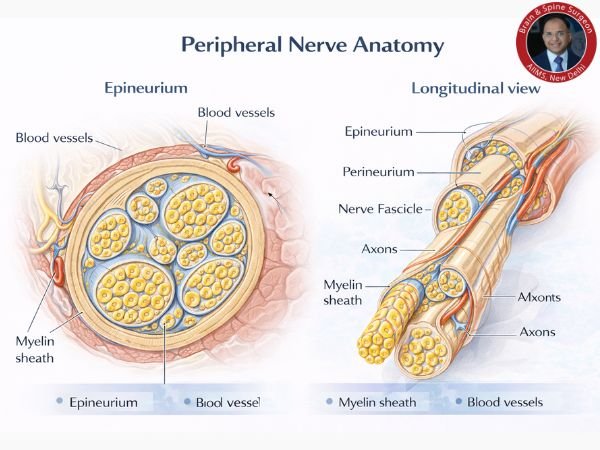
Nerve Repair: What Is It?
A specialised microsurgical technique called nerve repair surgery aims to rebuild or reconnect injured nerves to restore function. Similar to electrical lines, damaged nerves prevent the brain’s “signal” from reaching muscles or skin, which can result in weakness, numbness, or loss of function.
Restoring the damaged nerve’s continuity and allowing the body to resume brain-to-affected area communication are the two main objectives of nerve restoration.
Nerve Injury Types
Patients can better understand why surgery may be required when they have an understanding of nerve injuries:
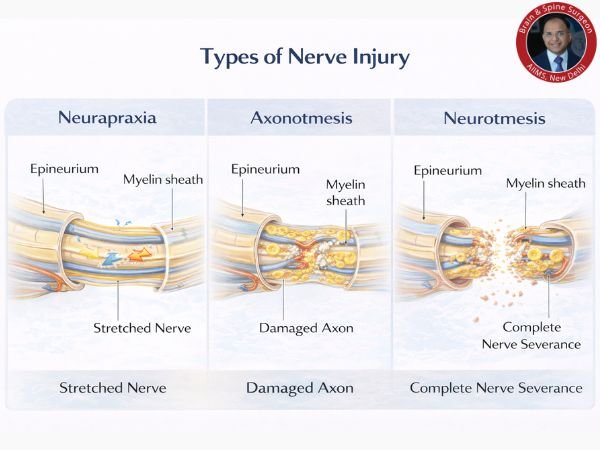
Neurapraxia: A minor injury when the nerve is stretched but not ruptured is called neurapraxia. Frequently bounces back on its own.
Axonotmesis: The exterior coating of the nerve is unaffected, but the nerve fibre itself is injured. Surgery can be necessary if healing takes a long time.
Neurotmesis: Complete nerve severance is known as neurotmesis. Almost always, surgery is necessary.
The surgical strategy and anticipated results depend on the kind and extent of the injury.
Nerve Grafting vs. Direct Repair
Two primary surgical methods were used:
Repair of Direct Nerves (Primary Repair)
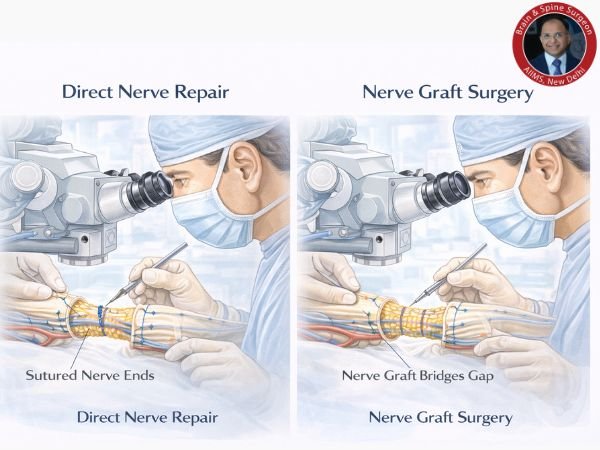
When it is possible to bring the two ends of a severed nerve together without creating pressure, this procedure is employed.
Important characteristics:
Ends are microscopically aligned and sutured.
Best option when injuries are clean and recent.
Has a high success rate for nerve repair surgery when done early in the course of an injury.
Surgery for Nerve Grafts
A nerve transplant is utilised when the distance between nerve ends is too great for direct healing.
Nerve grafting: what is it?
The gap is filled by a graft, which is frequently obtained from sensory nerves located elsewhere in the body.
Serves as a scaffold that permits nerve fibres to pass through it and reach the desired muscle or skin.
Why do grafting?
Reduces stress, which might hinder the healing process.
Increases the likelihood of nerve regeneration and alignment.
In order to precisely align nerve fibres, both methods require high-magnification visualisation and microsurgical tools.
The Significance of Surgical Timing
Time is essential. In general, the better the result, the sooner the repair is made following a nerve injury.
The importance of early surgery
Minimises the deterioration of nerves.
Keeps muscles from atrophying (wasting).
Increases the likelihood of a functional recovery.
However, if spontaneous recovery is possible, a brief period of observation may be advised.
Expectations for Recovery
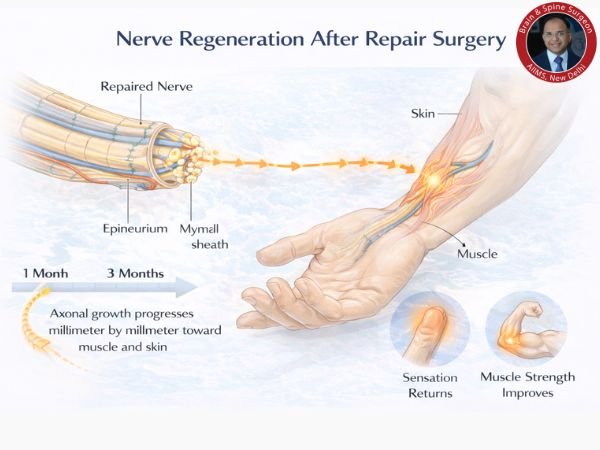
Following nerve repair surgery, each patient’s recovery is different and takes time. Nerve regeneration occurs gradually, usually at a rate of one to three millimetres every day.
What patients might go through:
Initial tingling or numbness.
Sensation gradually returns over several months.
Gradual increase in muscle power.
It’s crucial to remember that, depending on the severity of the nerve injury, age, and general health, full healing could take several months or more than a year.
Postoperative Rehabilitation
Rehabilitation is necessary to get the best results: Physical Therapy
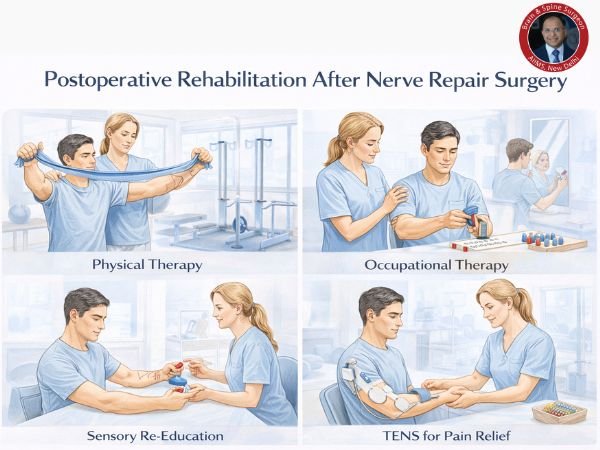
Keeps joints flexible.
Stops muscular contraction and stiffness.
Promotes the limb’s functional use while nerve healing takes place.
Occupational Therapy
Emphasises training for daily tasks.
Employs adaptive strategies to become independent.
Re-education via Sensation
Aids in the brain’s relearning of how to interpret touch and feeling.
Very helpful following the restoration of the nerves that supply feeling.
Pain Relief
May use drugs and techniques such as transcutaneous electrical nerve stimulation (TENS).
A well-thought-out rehabilitation strategy guarantees that nerve regeneration results in significant functional improvements.
In conclusion
After nerve damage that would normally result in permanent incapacity, nerve repair surgery provides an effective means of restoring function. Many patients see notable improvements with the appropriate surgical procedure, whether it be nerve graft surgery or direct repair, and a thorough rehabilitation program.
You have the best chance of recovering from a nerve injury if you or a loved one is evaluated by a specialist as soon as possible. Modern surgical methods, individualised rehabilitation advice, and compassionate care are all priorities for Dr. Deepak Agrawal and his staff.
FAQ’s
1. Is surgery for nerve repair always successful?
The degree of success varies. Results are influenced by several factors, including the kind and severity of the injury, when surgery is performed, and rehabilitation. Although complete recovery is not always certain, many individuals regain functional ability.
2. What is the average success rate for nerve repair surgery?
Success rates vary depending on a number of factors. While complex injuries may have less favourable results, neatly cut nerves and early healing frequently have higher success rates.
3. After surgery, will I have pain?
At first, little discomfort is anticipated. You will receive pain management guidance from your care team.
4. Is it possible to regain feeling after nerve repair surgery?
Yes, sensory nerves can gradually regain sensation, though to varying degrees and in different qualities.
5. Is a second operation ever required?
Sometimes, particularly if scar tissue prevents nerves from regenerating or if grafting is later needed.