Most people will at some point experience back discomfort. How can you tell if it’s a simple muscle strain or something more serious, like a slipped disc?
By being aware of Slip Disc Symptoms, you can avoid long-term nerve damage and get treatment as soon as possible. Everything is explained in this guide, including the reasons, symptoms, diagnosis, available treatments, and situations in which surgery could be necessary.
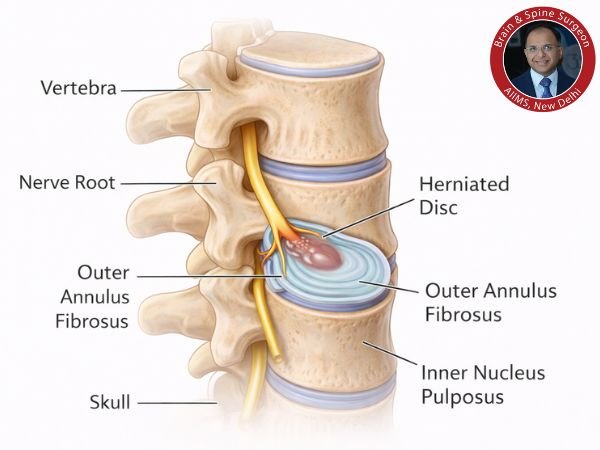
A Slip Disc: What Is It?
A herniated disc or prolapsed intervertebral disc is commonly referred to as a “Slip Disc.”
The vertebrae are the bones that make up your spine. A soft, cushion-like structure known as a disc is located between each bone. Shock absorbers are what these discs do.
Every disc has:
A protective outer layer
A flexible, gel-like core
A slip disc is created when the inner material pushes through the outer layer.
The disc does not, as the term suggests, “slip”; rather, it ruptures or bulges, putting pressure on surrounding nerves and resulting in pain and neurological symptoms.
Slip discs are most frequently found in:
Lumbar spine (lower back) Related Post: Lumbar Discectomy Surgery: Procedure, Recovery, Risks & Success
Cervical spine, or neck
Reasons:
A slide disc can result from several factors:
1. Degeneration Associated with Age
Spinal discs grow less flexible and lose water content as we age. They are therefore more likely to tear.
2. Strong Lifting
Spinal discs may experience abrupt pressure from improper lifting techniques.
3. Unexpected Injury
Discs may sustain damage from falls, collisions, or sports injuries.
4. Lifestyle Sedentary
Long periods of sitting raise disc pressure and weaken the core muscles.
5. Being overweight
The lower back is further strained by excess body weight.
6. Smoking
Speeds up degeneration by reducing the blood flow to the spinal discs.
Lower Back Symptoms
The most prevalent Lower Back Symptoms are in the lower back.
You might encounter:
Chronic pain in the lower back
Sitting-related pain that gets worse
Morning stiffness
Spasms in the muscles
Bending or twisting is difficult
The pain may begin gradually or all at once after lifting a big object.
The back may not be the only area affected if the disc presses against a nerve.
Numbness and Leg Pain
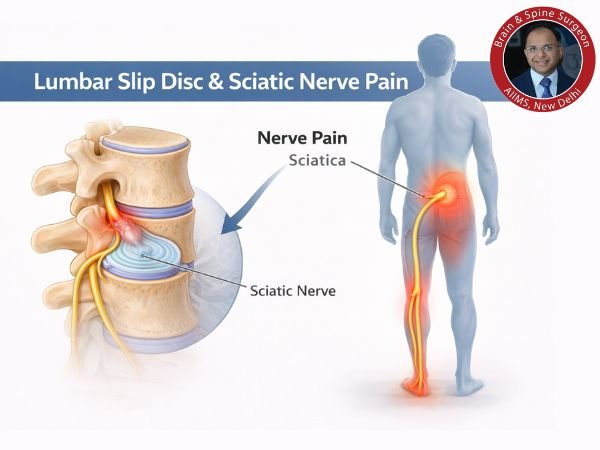
Sciatica is brought on by a sliding disc in the lower back compressing the sciatic nerve.
Sciatica is a nerve pain disorder that travels down one leg from the lower back.
Typical signs and symptoms include:
A sharp ache that shoots down the leg
A burning feeling
Pins and needles or tingling
Foot or toe numbness
Leg weakness
Serious symptoms could manifest if the disc puts excessive pressure on nerves:
Loss of control over the bowels or bladder
Extreme weakness in the legs
Numbness in the vicinity of the groin
These are emergency indicators that need to be treated right away.
Making a diagnosis
A medical assessment is required if slip disc symptoms intensify or last more than a few days.
Clinical Assessment
A spine specialist or neurosurgeon examines:
Reflexes
Strength of muscles
Feeling
Test of straight leg raising
Imaging Examinations
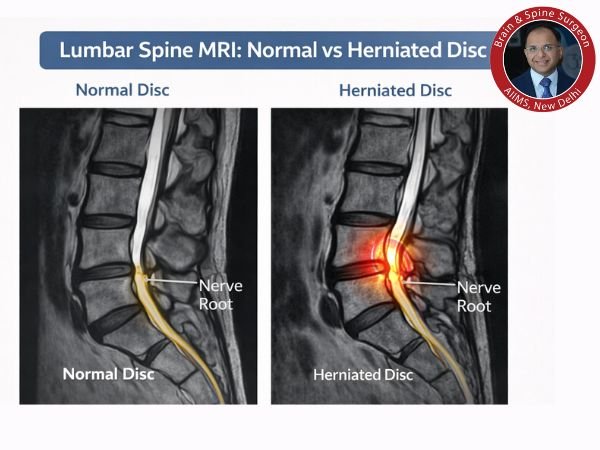
The most reliable method for identifying a slip disc is magnetic resonance imaging, or MRI. It displays:
Disc herniation or bulging
Compression of the nerves
Damage severity
CT scans or X-rays could be recommended in certain situations.
Permanent nerve injury can be avoided with early detection.
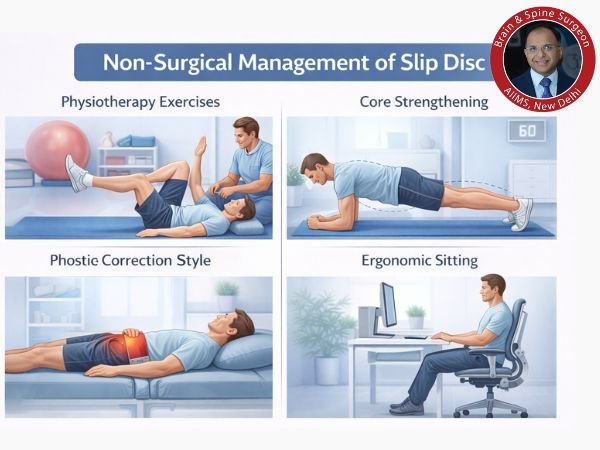
Treatment Without Surgery
Fortunately, most cases of slide discs improve without surgery.
1. Short-Term Rest
Steer clear of bending and hard lifting.
2. Drugs
Painkillers
Anti-inflammatory drugs
Relaxants for muscles
3. Physical treatment
Enhances posture and strengthens the core muscles.
4. Cold and Hot Therapy
Minimises muscular tightness and inflammation.
5. Injections of Epidural Steroids
Used when medicine isn’t working to relieve extreme pain.
With conservative treatment, the majority of patients get better after 4–6 weeks.
When It’s Time for Surgery
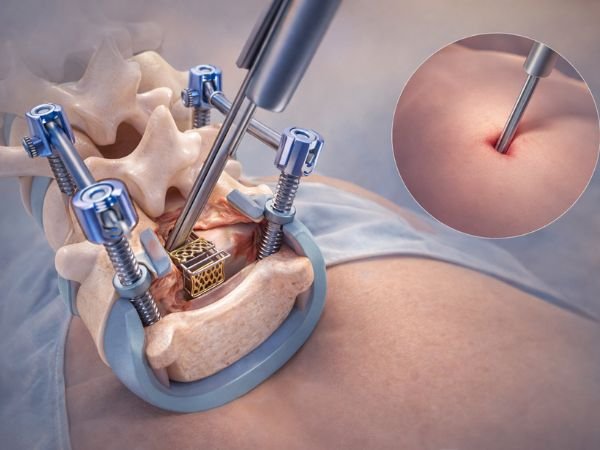
Surgery is only taken into consideration when:
Even with treatment, pain lasts longer than six to eight weeks.
Leg weakness increases over time.
MRI shows severe nerve compression.
Symptoms of the bowel or bladder appear
Typical surgical options include:
Microdiscectomy
To relieve nerve pressure, the herniated disc part is removed during a minimally invasive treatment.
Endoscopic Surgery for the Spine
Sophisticated method with a quicker recovery and a smaller incision.
Leg discomfort can often be quickly relieved with modern spine operations, which are safe and effective.
Permanent nerve injury can be avoided with early treatments.
When Is the Right Time to See a Neurosurgeon?
See a professional right away if you have:
Severe leg pain that radiates from the back
Weakness or numbness
Loss of control over the bladder and bowel
After two weeks, the symptoms have not improved
Recovery results are greatly enhanced by early diagnosis and therapy.
In conclusion
Never disregard the symptoms of a slip disc. A professional evaluation is necessary for persistent or increasing symptoms, even though many cases resolve without surgery.
Patients who receive therapy on time avoid difficulties and can safely resume their regular lives.
For an accurate diagnosis and treatment planning, get professional help if you have chronic back pain or numb legs.
FAQ’s
1. Is slipping disc a real problem?
If it harms nerves, it could be dangerous. Complications are avoided with early treatment.
2. Can a slipped disc mend itself?
Indeed, relaxation and physical therapy help with many minor cases.
3. What is the duration of slipped disc pain?
Mild cases get better in four to six weeks. Surgery may be necessary in difficult situations.
4. Does a slipped disc benefit from walking?
Walking gently is good, but avoid physically demanding activities.
5. Can paralysis result from a sliding disc?
Rarely, acute nerve compression that is left untreated might result in irreversible weakness.
6. How may a slipped disc be avoided?
Keep your posture straight.
Regularly work out
Build up your core muscles.
Steer clear of hard lifting.
Keep your weight in check.