How AI Helps Detect Ventilator-Induced Lung Injury Early
For patients who are unable to breathe sufficiently on their own, mechanical ventilation is a life-saving procedure. It is frequently used for patients with severe injuries, neurological disorders, infections, or respiratory failure in critical care units (ICUs). Ventilators help in breathing, however they can occasionally harm the lungs further. Ventilator-Induced Lung Injury (VILI) is the term used to describe this condition.
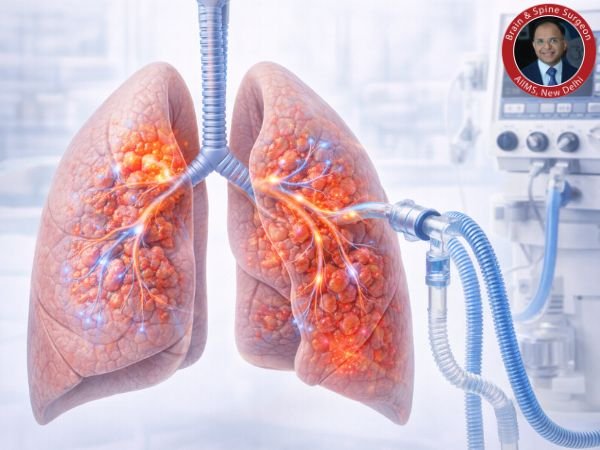
Recent developments in artificial intelligence (AI) are assisting medical professionals in identifying this lung injury earlier than in the past, enabling prompt treatment and better patient outcomes. Everything a layperson should know about ventilator-induced lung injury is covered in this article, along with how artificial intelligence is changing how it is identified and treated.
Ventilator-Induced Lung Injury (VILI): What Is It?
The term ventilator-induced lung injury describes lung tissue damage brought on by or made worse by mechanical ventilation. It happens when the lungs are stressed and inflamed by the pressure, volume, or repeated opening and closing of lung units during ventilation.
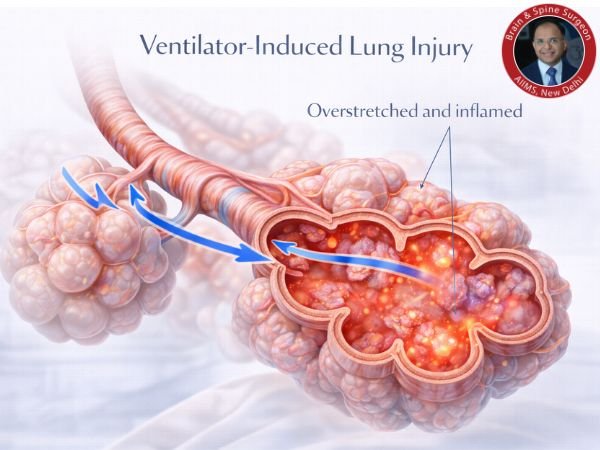
Ventilators are vital for saving lives, but incorrect settings or extended use might result in issues like:
Infection of the lungs
Buildup of fluid in the lung tissue
Alveoli damage (small air sacs)
Respiratory failure is getting worse
VILI is frequently observed in critically ill patients, particularly those with severe trauma or acute respiratory distress syndrome (ARDS).
The Significance of Early Lung Injury Detection
If ventilator-induced lung damage is not identified in a timely manner, it can rapidly deteriorate. Early detection is essential because it enables medical professionals to:
Modify the ventilator’s settings
Lower the volume and pressure that are supplied to the lungs
Stop further lung damage
Reduce time spent in the intensive care unit
Increased rates of survival
Clinical surveillance and imaging studies have historically been used to diagnose VILI, but these methods may fail to identify the injury until substantial harm has already been done.
Reasons for Lung Injury Caused by Ventilators
During mechanical breathing, lung damage may result from a number of mechanisms:
1. Trauma
Happens when the alveoli are overdistended by an excessive amount of air.
2. Barotrauma
Damage was brought on by the ventilator’s high airway pressure.
3. Atelectrauma
Lung tissue repeatedly collapses and opens during ventilation.
4. Biotrauma
Mechanical stress on lung cells causes inflammatory responses.
Respiratory discomfort, lung inflammation, and deteriorating oxygen levels can result from these processes.
Signs and Symptoms of Lung Injury Caused by Ventilators
Since ventilator-dependent patients may not always be able to communicate their symptoms directly, medical professionals keep an eye on clinical indicators like:
Reduced oxygen levels
Increased difficulty breathing
Reduced lung compliance
Increased demand for airway pressure
New anomalies on a CT scan or chest X-ray
These alterations show a decline in lung function during breathing.
Conventional Techniques for Lung Injury Detection
Several techniques are often used by physicians to diagnose ventilator-induced lung injury:
Clinical Observation
Monitoring ventilator pressures, breathing patterns, and oxygen levels.
Imaging
Lung infiltrates or fluid buildup on a chest CT scan or X-ray.
Tests in the Lab
Inflammatory indicators of lung injury or infection.
Analysis of Ventilator Data
Monitoring variations in airway pressure and lung compliance.
Despite their effectiveness, these techniques could miss minute early changes in lung damage.
How AI Assists in Early Ventilator-Induced Lung Injury Detection
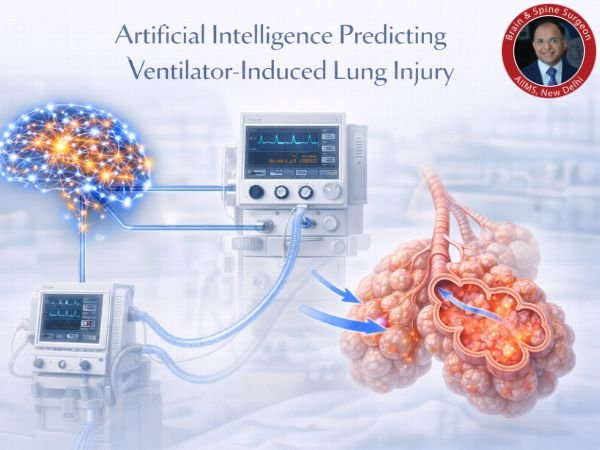
By instantly analysing vast volumes of patient data, artificial intelligence is revolutionising critical care medicine. Subtle patterns in physiological signals that might point to early lung damage can be recognised by AI systems.
1. Monitoring Ventilator Data in Real Time
Artificial intelligence systems continuously examine breathing patterns, oxygen levels, and ventilator waveforms to identify anomalies prior to clinical decline.
2. Lung Injury Predictive Models
Based on patient information, ventilator settings, and lung mechanics, machine learning algorithms can forecast the likelihood of ventilator-induced lung damage.
AI models, for instance, can evaluate the mechanical power provided by ventilators to determine whether the current settings could harm the lungs.
3. Technology for Digital Twins
By building a computerised model of a patient’s lungs, sophisticated algorithms enable medical professionals to mimic ventilator modifications and forecast the lungs’ reaction.
This aids medical professionals in choosing the safest ventilator settings for every patient.
4. Automated Ventilator-Patient Mismatch Detection
When a patient’s breathing effort is out of rhythm with the ventilator, which might raise the risk of lung damage, AI can detect this.
5. Systems for Early Warning
Before symptoms worsen, doctors can be informed by AI-powered ICU monitoring systems about early indicators of lung stress or inflammation.
AI’s Advantages for Lung Injury Detection
There are numerous significant benefits to using AI in critical care medicine:
1. An earlier diagnosis
AI can identify minute physiological changes before traditional monitoring can.
2. Customised ventilator configurations
Treatment can be customised to each patient’s unique lung condition.
3. Fewer issues
Early modifications stop the development of serious lung damage.
4. Increased ICU productivity
Healthcare workers have less work to do thanks to automated monitoring.
5. Improved results for patients
Recovery and survival chances are increased by early intervention.
Preventing Lung Injury Caused by Ventilators
To lower the risk of lung injury in ventilated patients, doctors employ a number of strategies:
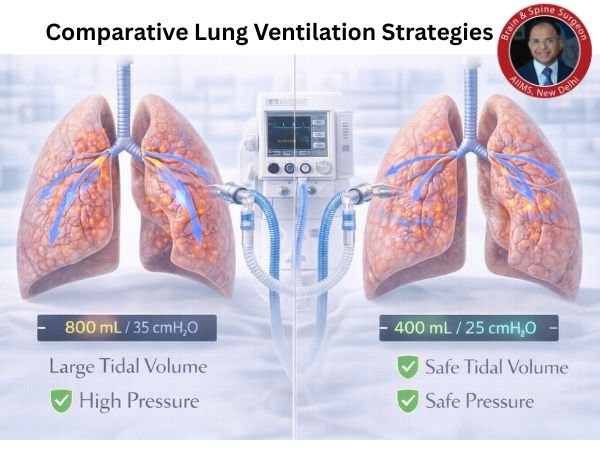
Using ventilation with low tidal volume
Keeping airway pressures safe
Using the proper amount of positive end-expiratory pressure (PEEP)
Monitoring lung mechanics on a regular basis
Modifying ventilator parameters in response to patient reaction
Complications from mechanical ventilation are greatly decreased by protective ventilation techniques.
AI’s Potential in Critical Care Medicine
Intensive care units are anticipated to see an increase in the use of AI. AI systems might in the future:
Ventilator settings can be automatically adjusted
Forecast respiratory issues several days in advance
Combine physiological, laboratory, and imaging data
Help physicians make clinical judgments more quickly
AI-assisted monitoring may become a common practice in the treatment of critically ill patients with further study and clinical confirmation.
When Do Families Need to Have Concerns?
ICU patients’ families should talk to the medical staff about the following:
Why mechanical ventilation is necessary for the patient
If lung-protective breathing techniques are applied
How the lung function of the patient is being observed
The anticipated length of ventilator assistance
Families can stay up to date on the patient’s condition by being aware of these factors.
In conclusion
Although ventilator-induced lung damage is a dangerous side effect of mechanical breathing, its effects can be greatly minimised by early identification. Because it makes real-time monitoring, predictive analysis, and customised ventilator management possible, artificial intelligence is becoming a potent tool in critical care medicine.
AI technologies have the potential to increase ICU productivity, improve patient safety, and ultimately save lives by identifying lung damage earlier than in the past.
FAQ’s
1. Ventilator-induced lung injury: what is it?
It is lung injury brought on by or made worse by mechanical ventilation, which is used to help critically ill patients breathe.
2. Is lung damage brought on by ventilators common?
Patients who need prolonged breathing, particularly those with severe lung disease or trauma, may experience it.
3. Is it possible to avoid lung damage caused by ventilators?
Indeed. The risk is greatly decreased by using lung-protective breathing techniques and close observation.
4. How can AI be used to identify lung damage?
To identify early indicators of lung stress or damage, AI examines ventilator data, breathing patterns, and physiological signals.
5. Will AI take the place of doctors in intensive care units?
No, although AI helps physicians by offering more information and early alerts, medical experts still make clinical judgments.
6. Can patients recover from lung damage caused by a ventilator?
If the injury is found early and the ventilator settings are changed appropriately, many patients recover.
Sources:
- https://pmc.ncbi.nlm.nih.gov/articles/PMC12244455/
- https://pmc.ncbi.nlm.nih.gov/articles/PMC11555733/
- https://pmc.ncbi.nlm.nih.gov/articles/PMC8792831/
- https://pmc.ncbi.nlm.nih.gov/articles/PMC10934889/
- https://pmc.ncbi.nlm.nih.gov/articles/PMC12307495/
- https://pmc.ncbi.nlm.nih.gov/articles/PMC11100474/
- https://pmc.ncbi.nlm.nih.gov/articles/PMC11928342/
- https://pmc.ncbi.nlm.nih.gov/articles/PMC10816549/
- https://www.mdpi.com/2077-0383/13/24/7535