Like any medical operation, brain surgery includes some dangers, but it can save lives. Pneumocephalus, or air buildup inside the skull, is one uncommon but dangerous consequence. Tension pneumocephalus is a medical issue that occurs when this air accumulates under pressure and compresses the brain.
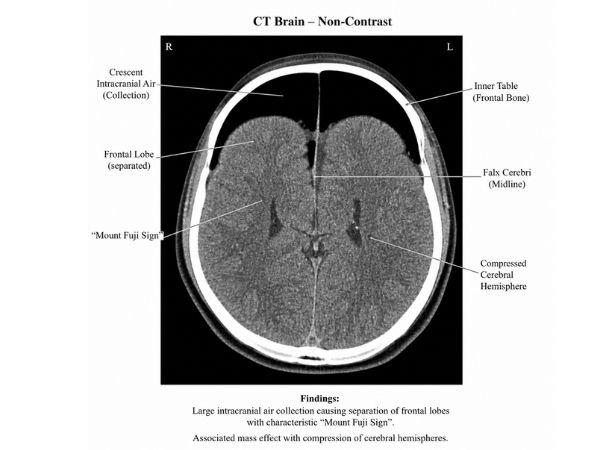
The Mount Fuji Sign in Tension Pneumocephalus, a word that aids medical professionals in promptly identifying a potentially fatal situation on a CT scan, is a crucial radiological finding used to diagnose this ailment.
This guide provides clear explanations of everything you need to know, including causes, symptoms, CT diagnosis, and emergency care.
Pneumocephalus: What Is It?
Air inside the cerebral cavity is referred to as pneumocephalus. It may happen following:
- The most frequent reason is brain surgery.
- Trauma to the head
- Fractures at the base of the skull
- Ear or sinus infections
- Neurosurgical techniques pertaining to the dura (brain covering)
Small amounts of air are usually harmless and go away on their own. Tension pneumocephalus, on the other hand, is a serious illness that needs immediate medical attention when air builds up and causes pressure.
The Mount Fuji Sign: What Is It?
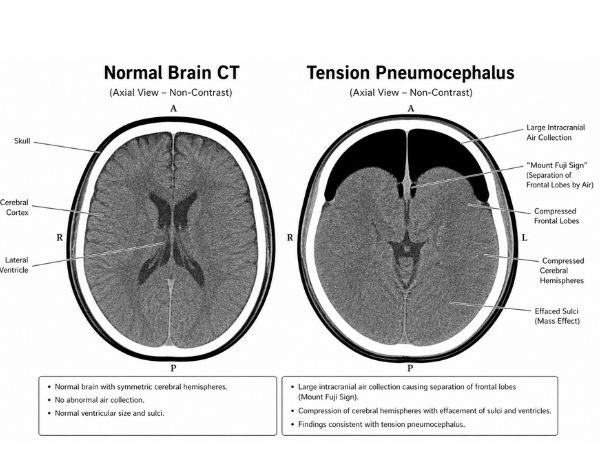
The Mount Fuji Sign in Tension Pneumocephalus is a classic result on a CT scan of the brain.
What gives it the name “Mount Fuji”?
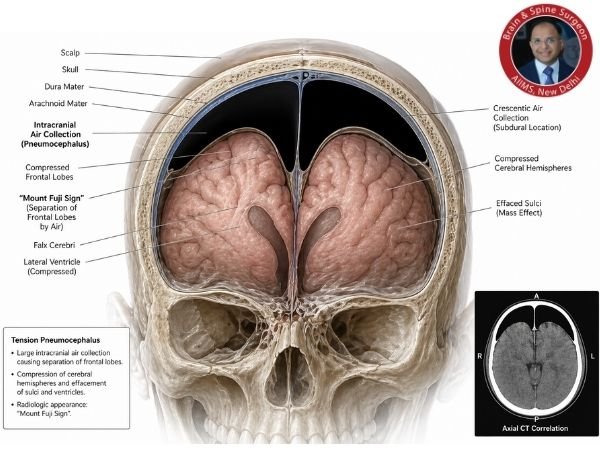
On imaging, the brain’s frontal lobes resemble the silhouette of Japan’s well-known Mount Fuji, appearing crushed and divided by air.
What it means:
- Significant buildup of air under pressure
- Brain tissue compression
- An emergency involving neurosurgery
Causes: What Makes Air Enter the Brain?
Typical reasons consist of:
Complications following surgery
Following skull base surgery or tumour excision
Brain damage caused by trauma
Cerebrospinal fluid (CSF) leak
Infections or sinus surgery
Nitrous oxide anaesthesia
(which can release trapped air)
Tension Pneumocephalus Symptoms
Early symptom recognition can save lives. Typical indicators consist of:
- An intense headache
- Vomiting and nausea
- Confusion or altered consciousness
- Anxiety or restlessness
- Neurological deficiencies or weakness
- Seizures (in extreme situations)
It is crucial to seek medical assistance right once if these symptoms follow brain surgery or a head injury.
Related Post: What to Expect Before and After Brain Surgery
How Doctors Determine a CT Diagnosis
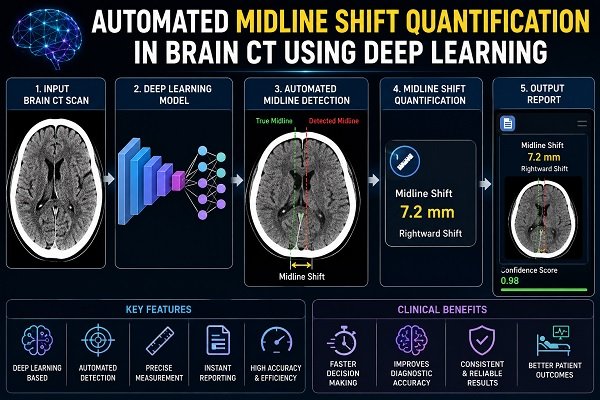
The gold standard for diagnosis is a non-contrast CT scan of the brain.
Important CT results:
- Intracranial air presence
- Frontal lobe separation
- Brain structure compression
- The Mount Fuji sign’s appearance
The significance of CT
- Quick and extensively accessible
- Highly sensitive to detect air
- Aids in distinguishing between tension and basic pneumocephalus
Handling Tension Pneumocephalus Emergencies
A Mount Fuji Sign in Tension Pneumocephalus indicates a neurosurgical emergency. The goal of treatment is to release trapped air and reduce pressure.
Included in immediate management are:
1. Oxygen Treatment
High-flow oxygen facilitates quicker intracranial air absorption.
2. Positioning
To stop additional air trapping, place the patient flat or slightly head-down.
3. Decompression by Surgery
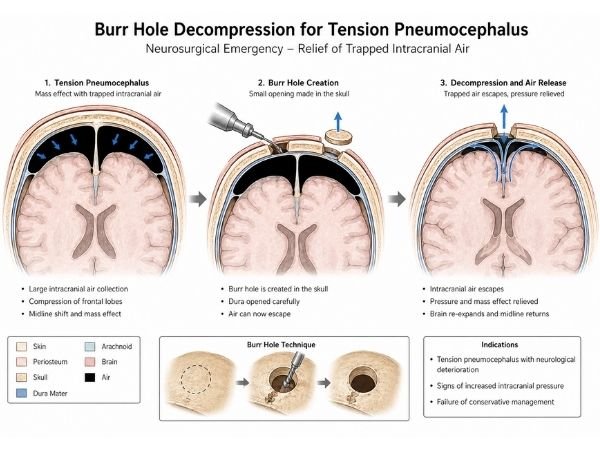
Aspiration of a burr hole or needle
In severe cases, re-exploration surgery
4. CSF Leak Repair
Stops more air entry
Related Post: Managing CSF Leak After Pituitary Surgery – Advanced Reconstruction Strategies
5. Stay away from nitrous oxide
Stops trapped air from expanding
Problems if Left Untreated
Treatment delays may result in:
- Compression of the brain
- Decreased cerebral blood flow
- Irreversible brain damage
- Coma
- Death
Related Post: Coma Vs Brain Death Vs Vegetative State
Can It Be Prevented?
Although not always avoidable, hazards can be reduced by:
- Appropriate surgical methods
- Making sure the brain is sealed tightly during surgery
- Early identification of CSF leaks
- After neurosurgical procedures, close observation
When to Consult a Physician?
Get medical attention right away if you observe:
- After surgery, a sudden, intense headache
- Unusual behaviour or confusion
- Continuous vomiting
- Seizures or weakness
A timely diagnosis has the potential to save lives.
Conclusion
The Mount Fuji Sign in Tension Pneumocephalus is a vital radiological hint that enables medical professionals to promptly diagnose an uncommon but potentially fatal illness. Preventing major consequences requires early CT diagnosis, rapid therapy, and symptom awareness.
Do not put off getting medical help if you or a loved one has unusual signs and symptoms following brain surgery or a head injury. Early action can have a significant impact.
FAQ’s
In pneumocephalus, what is the Mount Fuji sign?
Tension pneumocephalus is indicated by a CT scan finding where air separates and compresses the frontal lobes, mimicking Mount Fuji.
Does pneumocephalus frequently occur following brain surgery?
Tension pneumocephalus is uncommon and dangerous, although small amounts are frequent and safe.
After surgery, what are the signs of air in the brain?
headache, disorientation, nausea, neurological impairments, and convulsions.
What is the treatment for tension pneumocephalus?
Oxygen therapy, positioning, and occasionally emergency surgery to remove trapped air are all part of the treatment.
Is tension pneumocephalus potentially fatal?
Yes, it can cause death or brain damage if left untreated.
How quickly does pneumocephalus go away?
Simple cases go away in a few days, but stress pneumocephalus needs to be treated right away.
Sources:
- https://pubmed.ncbi.nlm.nih.gov/31561929/
- https://pubmed.ncbi.nlm.nih.gov/28665089/
- https://pubmed.ncbi.nlm.nih.gov/10987907/
- https://pubmed.ncbi.nlm.nih.gov/34044439/
- https://www.jem-journal.com/article/S0736-4679(19)30569-4/abstract
- https://www.ncbi.nlm.nih.gov/books/NBK535412/
Read Our More Post